
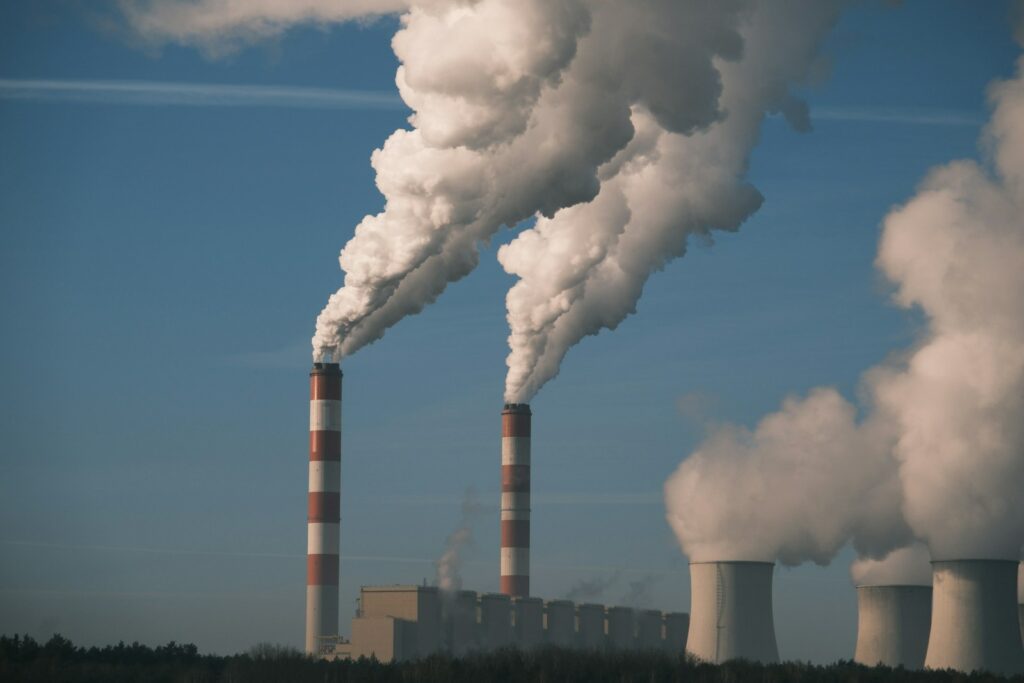
The EU’s greenhouse gas emissions fell by 3% between 2023 and 2024, taking overall reductions to 40% below 1990 levels.
The EU greenhouse gas inventory — a standardised annual record of emissions — was prepared and submitted to the United Nations climate body on 15 April on the EU’s behalf, the European Environmental Agency (EEA) announced on Friday.
The overall fall in net domestic emissions over the past 34 years was driven by a growing share of renewable energy, the use of less carbon-intensive fossil fuels, improved energy efficiency and structural economic changes.
The biggest absolute cuts since 1990 came from electricity and heat production, manufacturing and construction, residential fuel use, and iron and steel.
Energy and transport trends
Emissions from electricity and heat production were down 58% compared with 1990, reflecting efficiency gains and a shift to lower-carbon fuels, the EEA said.
Use of solid fuels at thermal power stations fell 68% between 1990 and 2024, while liquid fuels dropped 86% over the same period.
Natural gas use at thermal power stations rose 44% between 1990 and 2024, while emissions from gas have fallen by nearly 18% since 2022.
Road transport emissions increased for both passenger and freight travel even as vehicles became more efficient and more electric, because overall transport demand grew faster than those gains.
Hydrofluorocarbon emissions from refrigeration and air conditioning rose from 1990 to 2014 but have fallen for ten straight years following EU measures to phase down and phase out fluorinated gases.
The ability of forests to remove carbon from the atmosphere has weakened, mainly due to ageing forests, increased harvesting and climate impacts.
The inventory figures do not include emissions from international aviation or shipping, meaning they are not directly comparable with the EU’s 2030 climate-law target.
