
The Council of Europe’s Committee for the Prevention of Torture and Inhuman or Degrading Treatment or Punishment (CPT) published its 35th annual report last week, highlighting overcrowding and ill-treatment of people in prisons and other places of detention.
In 2025, the committee carried out a record 22 country visits: eight periodic and 14 ad hoc ones to address structural challenges, specific territorial situations, or emerging issues, including rapid-reaction visits.
Places of detention include prisons (74 prisons visited in 2025), police stations (69), mental health hospitals (17), immigration detention centres (11), and social care homes (10). After each visit, the CPT transmits a report containing its findings and recommendations to the relevant government to strengthen the protection of detained persons.
The 2025 report reads as a reminder about persisting problems in places of detention in Europe. “While the CPT has observed many good practices during its visits to places of detention, important gaps persist. Ill-treatment has re-emerged in places where there had been progress in combating it,” said CPT President Alan Mitchell, who presented the report at an online press briefing (15 April).
“The effectiveness of some oversight mechanisms has diminished, and a sense of impunity of abusive actions pervades. In some states, loss of institutional control in prisons combined with strained infrastructure is creating conditions leading to weaker safeguards, and the risk that harmful practices resurface.”
“Overcrowding, as well as insufficient staffing and lack of appropriate staff training, are undermining the proper operation of prisons as well as the reintegration of prisoners to the community,” he added. “Governments should show political will and take resolute measures to eradicate prison overcrowding and ensure respect for the human dignity of individuals in detention.”
The report does not deal specifically with cases of death in custody but points out that accountability and the fight against police impunity remain significant challenges. The committee advocates the use of visible identification by law enforcement officers, the establishment of robust complaint mechanisms, and the use of CCTV and body-worn cameras as preventive tools.
Increase in prison population
The number of people in prison in Europe has continued to rise steadily since the Covid-19 pandemic, with the result being that many prison systems are now burdened by overcrowding. In particular, the number of persons in remand detention (or pre-trial detention) has increased significantly, reaching as much as 80% of the prison population in certain prisons.
Remand detention is the holding of an accused person in custody – prison, police cells, or a psychiatric facility – by court order while awaiting trial or sentencing.
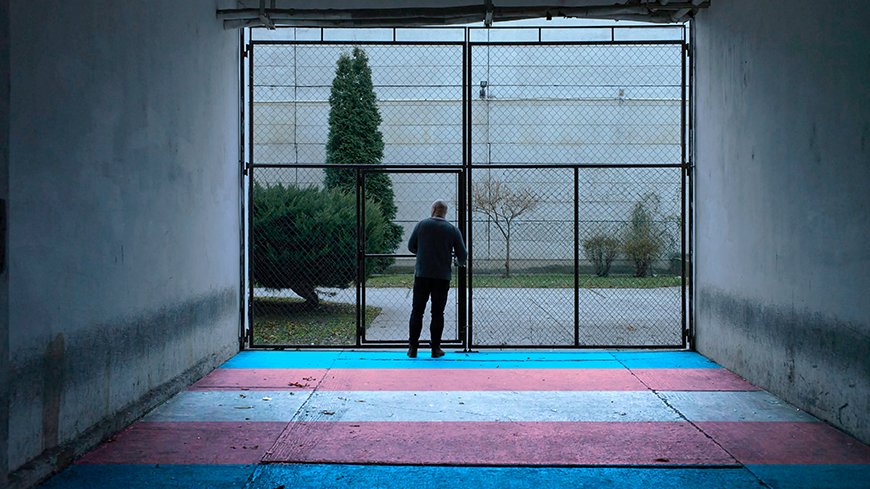
In certain places, remand prisoners require explicit approval merely to send a letter or make a telephone call. In many countries, remand prisoners are often confined to their cells for more than 22 hours a day. Such an extremely restrictive regime can last for months, and in some cases even years.
Credit: CPT
The problem of overcrowding is most acutely felt in large urban prisons. CPT has observed that overcrowded prisons risk becoming the norm in several prison systems across Europe, forcing staff and management to adapt, and transforming emergency measures into a daily routine.
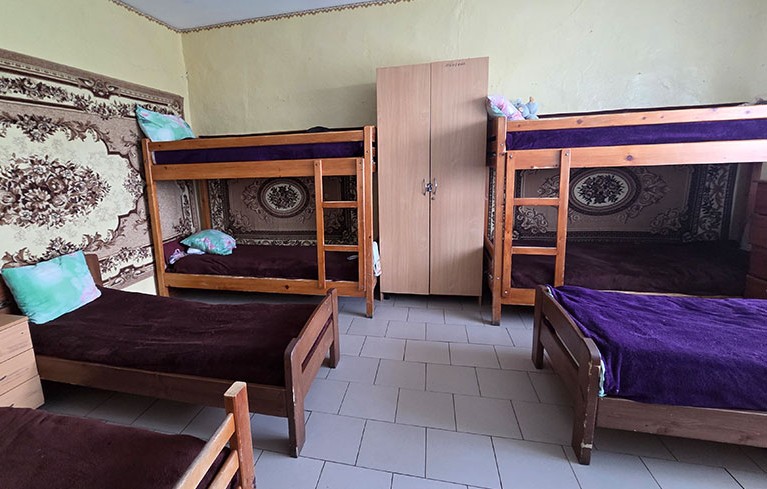
The committee writes that it was not uncommon to come across cells and dormitories which offered less than 2 m² of living space per person. For example, in one prison, cells of 6 m² were equipped with a bunk bed and two mattresses on the floor, half tucked under the bed, with the four occupants confined to their cells for most of the day.
The minimum standard advocated by the CPT is 4 m² of living space per person in multiple-occupancy cells, excluding the sanitary annexe, along with a regime which aims at eight hours of out-of-cell time.
The CPT also draws attention to the Externalisation of prisons in recent years, whereby persons sentenced to imprisonment in one country serve their sentence in a prison in another country. The CPT intends to examine the treatment of persons held in such facilities. Asked about detention centres for asylum seekers in third countries, the CPT President confirmed that the CPT has the mandate to visit them.
Use of excessive force
In many European countries, the volume of allegations of excessive use of force and ill-treatment is on the decrease, in particular during interviews of criminal suspects by police officers. On the other hand, the CPT continues to report allegations of physical ill-treatment by law-enforcement personnel, especially upon apprehension and during informal questioning.
In mental health facilities, issues around consent to treatment and the use of restrictive practices such as seclusion and (mechanical or chemical) restraint still require much more rigorous oversight and accountability. The lack of appropriate safeguards often leaves vulnerable individuals at risk of harm.
The CPT continues to document cases where patients are fixated to their beds for periods lasting up to a month or longer, frequently without the provision of necessary care or therapeutic intervention. In many countries, the CPT also finds an over-reliance on medication with too little investment in the psycho-social therapies needed for effective, modern mental healthcare.
As regards immigration detention centres, the CPT continues to find that foreign nationals, including asylum seekers and children, are frequently detained without adequate access to fundamental safeguards against ill-treatment. Such situations were encountered across a variety of settings, such as airport holding facilities, police stations, reception centres and pre-removal detention centres.
Foreign nationals are held for extended periods under restrictive regimes, without access to meaningful and structured activities. These shortcomings were often compounded by overcrowding, unsuitable premises and poor material conditions. In some cases, the cumulative effect of these deficiencies prompted the CPT to flag that they may amount to inhuman and degrading treatment.
The CPT also remains concerned about the "credible, detailed and consistent allegations" of pushbacks, whereby persons apprehended by security forces are summarily and forcibly returned across land or sea borders, outside the realms of any legal framework. It is up to the EU Member States to investigate allegations of breaches of asylum legislation, according to the European Commission.
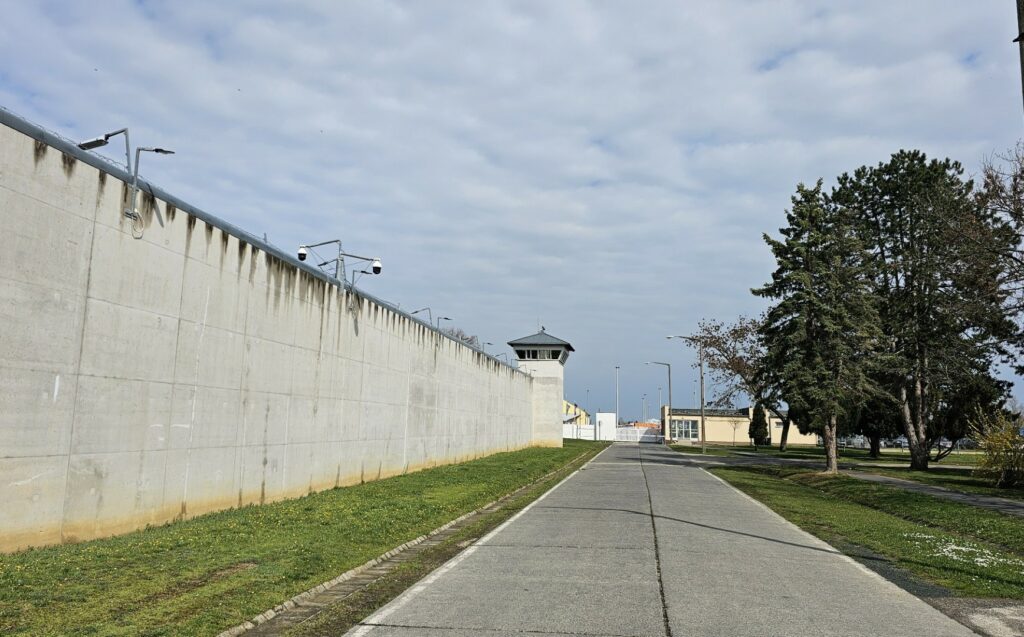
The Szombathely National Prison in Hungary was visited in 2025, credit: CPT
Non-binding recommendations work
The report includes sections on the specific findings in the countries that were visited, among others, Cyprus, Ireland, Hungary and Spain. It draws attention to long-standing CPT recommendations that are not implemented in the visited countries.
Asked about his opinion on a binding European Prison Charter, the CPT President Alan Mitchell told The Brussels Times that there was no need for it.
“I would hope that most countries are heading towards improvement,” he replied, referring to the current recommendations on good prison standards – the European Prison and Probation Rules issued by the Council of Europe.
The CPT was set up as an independent monitoring body under the 1987 Council of Europe Convention for the Prevention of Torture and Inhuman or Degrading Treatment or Punishment (ECPT).
Its work is designed to be an integrated part of the system for the protection of human rights, placing a proactive non-judicial mechanism alongside the existing reactive judicial mechanism of the European Court of Human Rights. The CPT implements its preventive function through two kinds of visits – periodic and ad hoc.
National ombudsman institutions also play a core role in supervising prisons and other places of detention. Many of them act as National Preventive Mechanisms (NPMs), focusing on preventing torture and inhumane treatment rather than just responding to individual complaints.
