Ukraine's reform progress is real but it must go further, according to the European Union’s ambassador in Kyiv, Katarína Mathernová,
Mathernová said her role in Kyiv will be her last “institutional” post, cited by the European External Action Service (EEAS) on Monday.
She noted that she had worked in private law practice, the World Bank, the European Commission and the Slovak government before becoming the EU’s envoy to Ukraine.
Representing the EU in Ukraine was “the most meaningful and impactful job”, she said, describing the country as being at war.
She also stressed she would not accept a “growing narrative” that “nothing has been achieved” in Ukraine’s justice reforms and fight against corruption, adding that such claims were “wrong”, “dangerous” and “deeply unfair”.
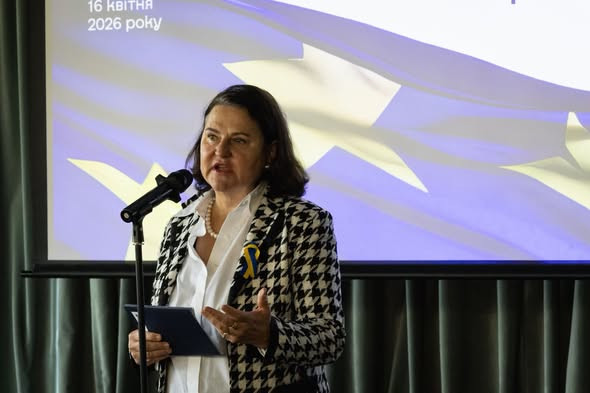
Mathernová said she made the remarks in an opening speech at an event this week called “Operation European Integration: Justice Sector Reforms”, organised by the Anti-Corruption Action Centre (Центр Протидії Корупції).
The event included Ukrainian leaders, civil society representatives, members of the diplomatic corps and other international partners.
Reforms during wartime
Ukraine is reforming state institutions “in the middle of a full-scale war”, Mathernová said.
She added Ukraine had made “enormous progress” since the start of Russia’s full-scale invasion on 24 February 2022 and Ukraine’s application for EU membership on 28 February 2022.
Judicial and anti-corruption reforms began earlier than the EU membership application and started with the Maidan protests, she emphasised.
Ukraine has made constitutional changes, adopted “key legislation” and built anti-corruption institutions that are “delivering results”, Mathernová said.
She declared the “job” was not finished and referenced a “Rule of Law Roadmap” as a guide for further work.
The ambassador said the rule of law and anti-corruption measures were “foundations of trust between the citizens and their state”.
A quote attributed by Mathernová to the head of the Office of the President, Kyrylo Budanov, said corruption ends where “manual management” is replaced by “clear and equitable rules”.
Deputy Prime Minister Taras Kachka said the rule of law is “not a museum principle” but “a living one.”
Mathernová said decisions on Ukraine’s future would be made not only in Kyiv or Brussels but also by citizens, governments and parliaments in EU member states.
