
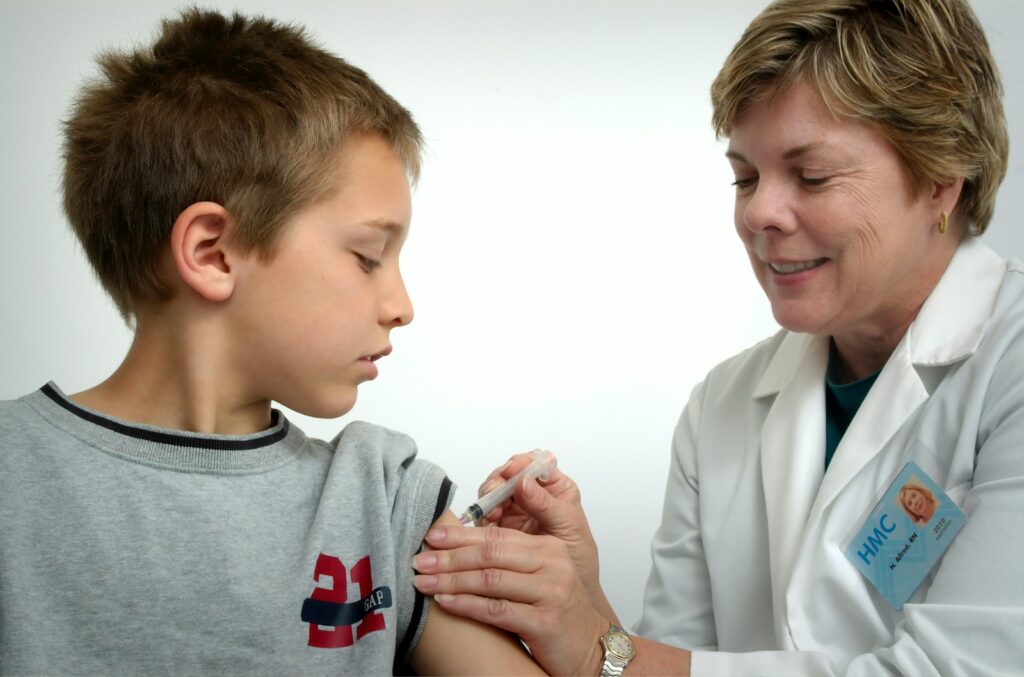
Vaccination has saved an estimated 154 million lives worldwide since 1974, the European Commission, the World Health Organization (WHO) Regional Office for Europe and UNICEF said as European Immunisation Week marked its 20th year.
European Immunisation Week was launched in 2007 across 53 countries in Europe and Central Asia to raise awareness of protection against diseases that can be prevented with vaccines, the organisations said in a joint statement on Monday.
They stressed the WHO European Region has been free of endemic polio — meaning ongoing local transmission — since 2002.
Reported cases of several vaccine-preventable diseases have fallen sharply in the region since 2000, with rubella down by more than 99%, diphtheria by 90% and mumps by 95%.
Most countries in the region now include the human papillomavirus (HPV) vaccine in routine schedules to prevent cervical and other cancers.
Outbreaks reported as some immunisation rates fall
The organisations said immunisation rates were declining in some countries, while more countries were experiencing large outbreaks.
More than 298,000 cases of pertussis — also known as whooping cough — were reported in the WHO European Region in 2024, the highest number ever recorded.
Measles cases passed 127,000 in 2024, the highest number in 27 years.
The Commission, WHO Europe and UNICEF said they would continue working together to address challenges including misinformation and uneven vaccine coverage, and reiterated that vaccines save lives.
The joint statement was signed by EU Commissioner for Health and Animal Welfare Olivér Várhelyi, WHO Regional Director for Europe Dr Hans Henri P. Kluge, and UNICEF Regional Director for Europe and Central Asia Regina De Dominicis.
