
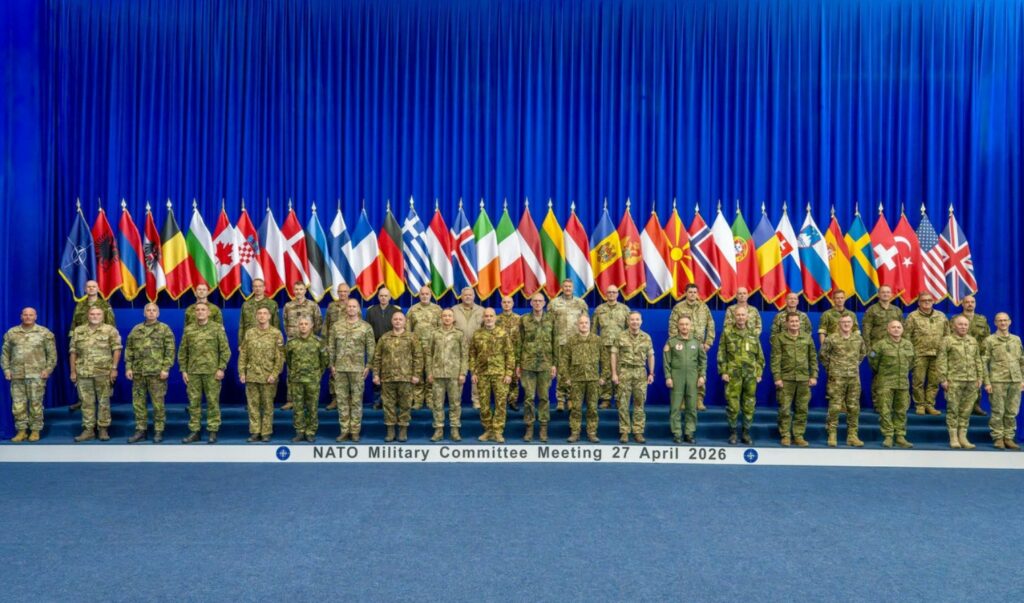
The NATO Military Committee visited the NATO-led Kosovo Force at Camp Film City in Pristina on 27 April.
The delegation was led by the committee’s chair, Admiral Giuseppe Cavo Dragone, and the visit focused on KFOR’s contribution to maintaining what NATO described as a safe and secure environment in Kosovo, the alliance press service reported on Tuesday.
KFOR commander Major General Özkan Ulutaş gave an introductory briefing that covered KFOR’s work on security and freedom of movement, and the force’s mandate under United Nations Security Council Resolution 1244 from 1999 and a Military-Technical Agreement between NATO, the Federal Republic of Yugoslavia and Serbia.
Representatives from other international missions in Kosovo also briefed the committee during the visit, including the European Union Rule of Law Mission in Kosovo, known as EULEX, the Organization for Security and Co-operation in Europe, and the United Nations Interim Administration Mission in Kosovo.
What KFOR does and who provides it
KFOR operates under Chapter VII of the UN Charter, which allows the use of force to maintain or restore international peace and security, according to NATO.
The mission has about 4,700 troops from 33 Allied and partner countries, and works in coordination with the Kosovo Police and EULEX as security responders in their respective roles.
