
EU Member States and the European Parliament agreed on a deal on Thursday morning, which will water down landmark artificial intelligence rules, spurring accusations that it has caved into Big Tech pressure.
After nine hours of negotiations, the two EU institutions reached a tentative agreement to loosen AI regulations, which are part of the European Commission's push to deregulate several new digital rules.
The package includes proposals for two regulations to simplify the EU’s digital legislative framework and to implement harmonised rules on AI.
This includes a 16-month delay in bringing in regulations against high-risk AI systems, such as those involving biometrics or related to critical infrastructure and law enforcement.
The new date is now 2 December 2027, while the previous deadline of 2 August this year had initially been planned.
Machinery will also be excluded from the AI Act because it is already subject to sectoral rules, showing the EU caved into pressure from businesses, notably from Germany.
Businesses had complained about overlapping regulations that they say hamper their ability to compete with US and Asian rivals. However, the EU has also come under relentless pressure from the Trump administration over its digital rules, aided by a huge Big Tech lobbying effort to influence discussions.
"Today’s agreement on the AI act significantly supports our companies by reducing recurring administrative costs," said Marilena Raouna, Deputy Minister for European Affairs of the Republic of Cyprus, which holds the Council of the EU Presidency.
"It ensures legal certainty and a smoother and more harmonised implementation of the rules across the Union, strengthening the EU’s digital sovereignty and overall competitiveness," Raouna added.
Civil society organisations had, on the other hand, argued that the stripping back of AI protections will lead to severe human and labour rights abuses, which will negatively impact the European economy and social model, while strengthening the big AI players in the US.
Ban on deep fake nudes.
EU negotiators also agreed to ban artificial intelligence applications that generate explicit images, known as deep fake nudes, without consent.
Controversy surrounding AI tools escalated earlier this year when Elon Musk’s X platform launched its AI assistant, Grok. The chatbot reportedly created millions of nude images of real individuals without their consent, including minors.
Before becoming law, the proposal still requires formal approval from both the Council and the Parliament. If adopted, the ban will come into effect on 2 December 2026.

This photo illustration created in Washington, DC, on November 16, 2023 shows an AI girl generator on a cell phone in front of a computer screen. Credit: Belga / AFP
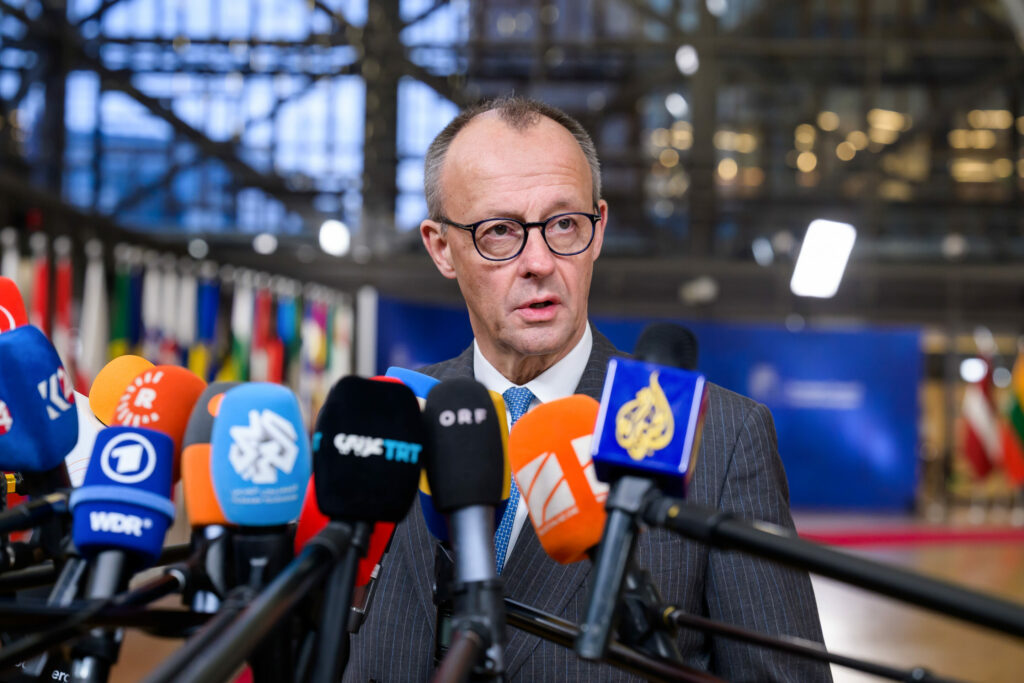
Final negotiations were due to take place last week, but were postponed due to an attempt by German Chancellor Friedrich Merz to exempt German industry, which risked plunging people and industry into huge uncertainty, according to the Greens/EFA group.
Although AI in machinery is now subject to sector-specific rules, additional attempts by the German industry to further hijack the omnibus to deregulate were prevented, according to the political group.
"By the end of this year, everyone, but especially women and girls, will be safe from horrific nudifier apps being widely available on the EU market," European Parliament negotiator MEP Kim van Sparrentak (Greens/EFA - The Netherlands) commented. "Today, we put a clear end to this kind of violence against people and children."
The Greens also welcomed that key elements like the fundamental rights impact assessments, reporting of energy use and rules for AI models like ChatGPT were left protected in the Digital Omnibus process, which is driving the simplification or deregulation agenda.
"Industry exemptions will not prevail over our safety. AI should always be safe and not discriminate or pose a danger to fundamental rights," van Sparrentak added.
According to the Greens, the Commission was very unhappy with the new fast deadlines to provide clarity for industry through guidelines and on the new rules for machinery.
The provisional agreement needs to be formally adopted by both Parliament and Council before it can enter into law.
