
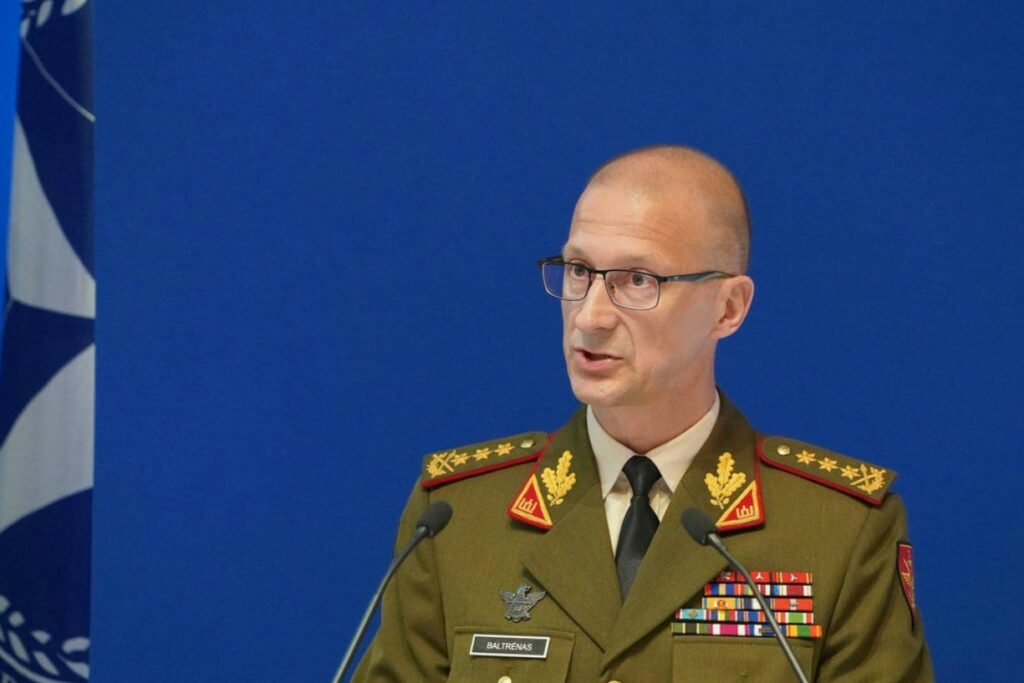
Lieutenant General Remigijus Baltrėnas told a NATO Defence College course in Rome that partnerships with non-member states and international organisations would remain central to the alliance’s approach to security.
Baltrėnas, Director General of the International Military Staff, spoke to the Generals, Flag Officers and Ambassadors Course on 8 May about NATO’s strategic military partnerships, describing them as “one of the Alliance’s greatest strategic advantages”, the alliance press service informed.
He said such partnerships support NATO’s core tasks — deterrence and defence, crisis prevention and management, and cooperative security — including by countering hybrid threats and disinformation.
Baltrėnas referred to existing partnership frameworks including the Partnership for Peace, the Mediterranean Dialogue and the Istanbul Cooperation Initiative, saying these relationships are “tailored, voluntary and mutually beneficial.”
Exercises, interoperability and support for Ukraine
He also pointed to exercises and “interoperability” initiatives — work to ensure forces can operate together — as contributors to readiness and deterrence, and outlined NATO’s support to Ukraine through joint analysis, training and co-ordinated assistance, NATO reported.
The Generals, Flag Officers and Ambassadors Course brings together senior military officers, ambassadors and civilian decision-makers from NATO and partner nations to discuss current politico-military issues affecting the alliance.
The International Military Staff, which Baltrėnas leads at NATO headquarters in Brussels, has around 500 military and civilian personnel from member countries and supports the NATO Military Committee.
