
Experts who gathered recently at a conference in Nicosia, Cyprus, warned that the overuse of antibiotics in farming across Europe is contributing to an alarming rise in antimicrobial resistance (AMR) and that fundamental change is urgently needed.
“Resistant bacteria can pass from farmed animals to people through the food chain, from environmental spread, through direct contact with the animals,” said Coílín Nunan, Policy and Science Manager at the Alliance to Save Our Antibiotics and a leading expert on farm antibiotic use.
In the EU, about 62% of all antibiotics is used in farm animals, not humans.
AMR was directly responsible for 1.14 million deaths globally in 2021, with a further 4.71 million deaths associated with resistance. By 2050, those figures are projected to rise to 1.91 million deaths directly attributable to AMR and 8.22 million associated deaths.
The Brussels Times reported in March that over 33,000 deaths across the EU are linked to AMR, with 1,300 people dying every year in Belgium due to infections caused by resistant microbes.
The impact of AMR goes beyond public health, with an estimated yearly social cost of €1.5 billion across the EU, according to the Belgian Health Ministry.
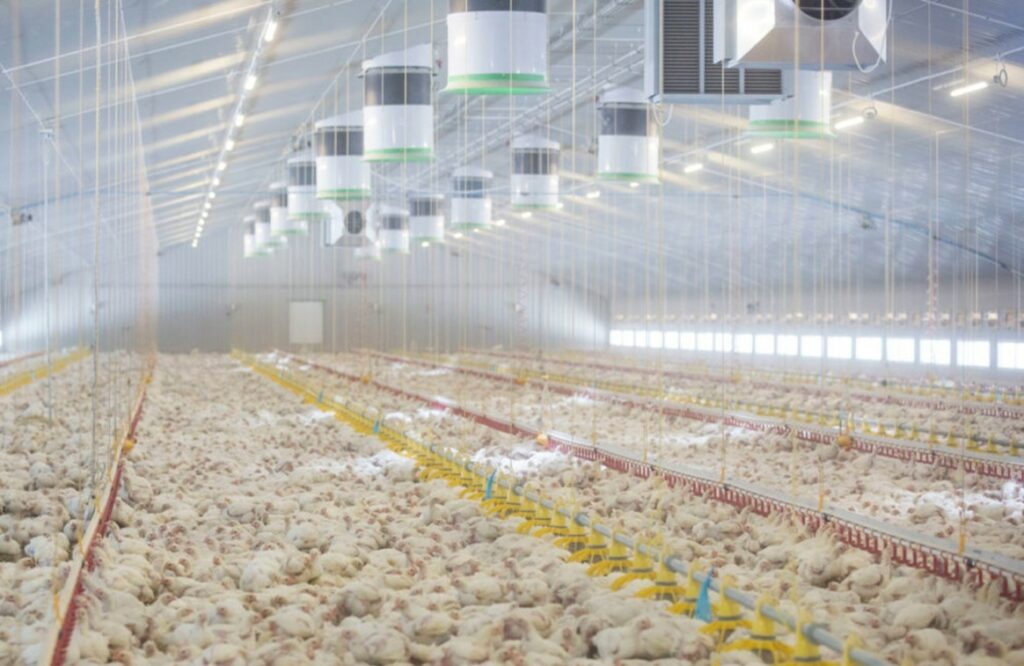
In most European countries, farm antibiotic is mainly used for group treatments, in feed or drinking water. They are used to control infections which are often caused by the highly intensive conditions in which the animals are kept.
In Sweden and Norway, just 12 to 17% of farm antibiotics are used for group treatments, compared to 85% across Europe as a whole.
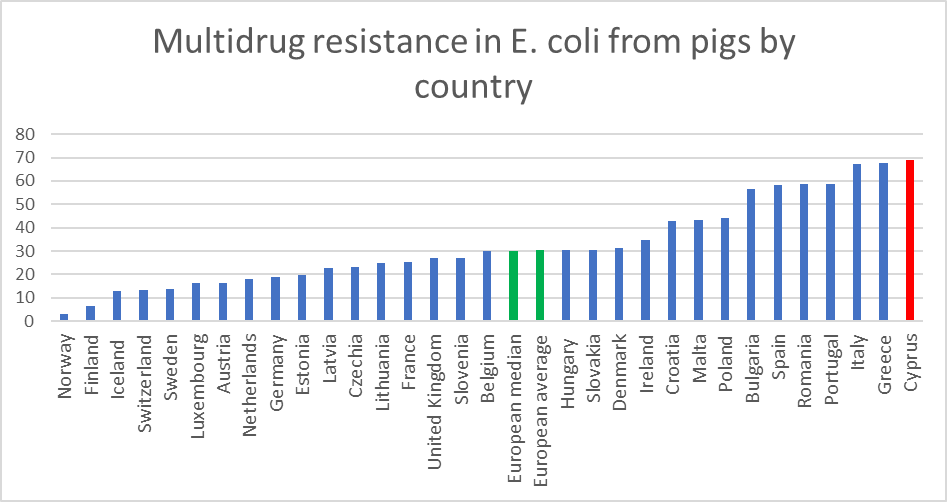
On average, 30% of E. coli in pigs in the EU are multiresistant. E-coli is a bacterial disease, clinically termed colibacillosis, which primarily attacks the gastrointestinal tract of young piglets. Source: The EU Summary Report on Antimicrobial Resistance in zoonotic and indicator bacteria from humans, animals and food in 2023–2024
According to the EU Veterinary Medicines Regulation, “Antimicrobial medicinal products shall not be applied routinely nor used to compensate for poor hygiene, inadequate animal husbandry or lack of care or to compensate for poor farm management”. EU farm antibiotic sales fell by 51% between 2011 and 2022 but have since increased.
Levels of antibiotic resistance in livestock differ widely by country with Cyprus, Spain and Poland among the highest users in the EU. In Cyprus, 85% of all antibiotics go to farm animals, compared to an EU average of 62%. The consequences are already measurable. 69% of E. coli in pigs are multiresistant — the highest rate in the EU.
There are several reasons for this. Pig and poultry production in Cyprus is highly intensive. Animals are often kept in high densities and stressful conditions, which increases the risk of disease spread. Frequent group treatments with antibiotics is common.
Cyprus also relies more on preventive and mass medication compared to countries with higher animal welfare standards.
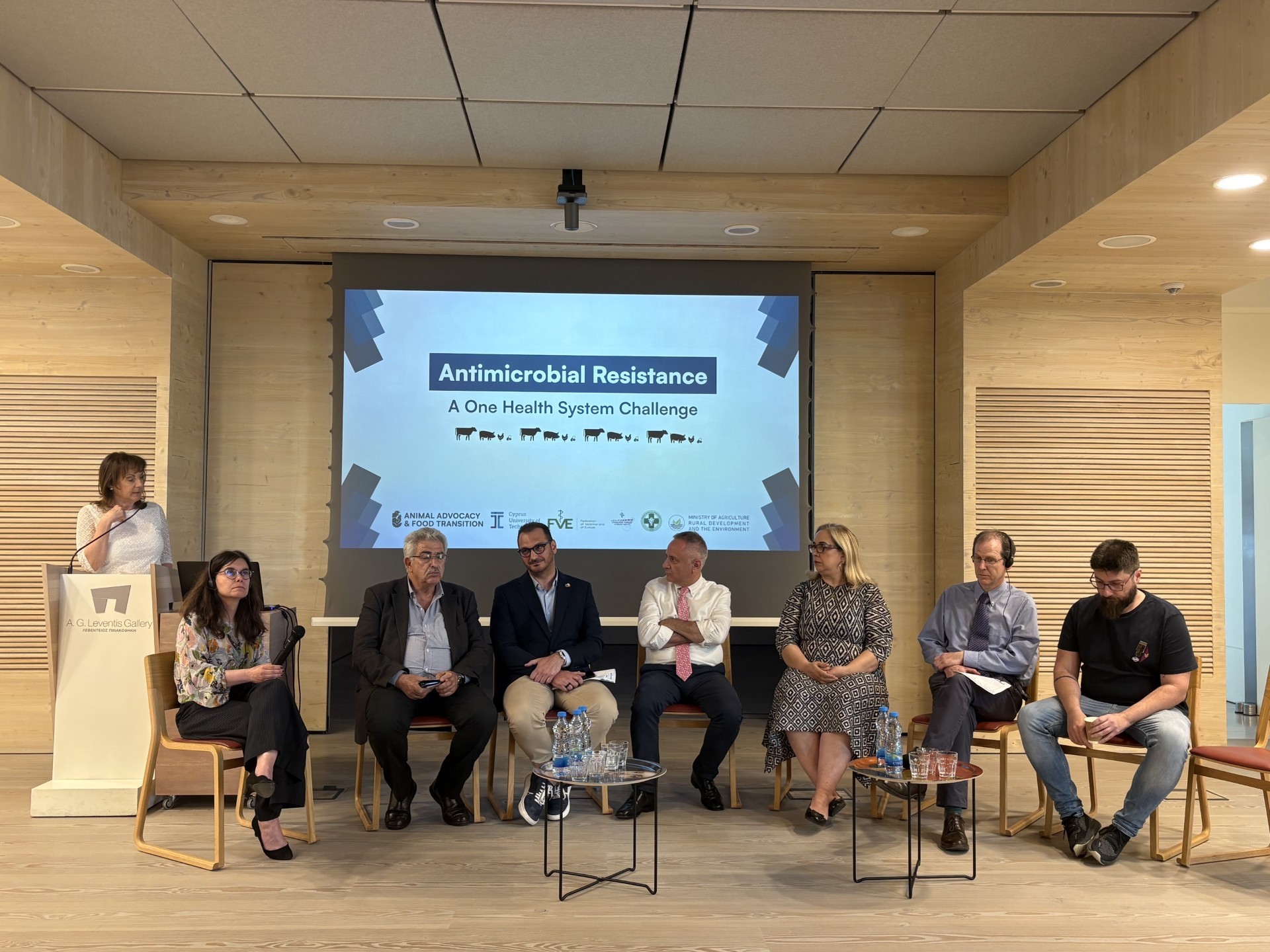
Conference on AMR, 30 April 2026
“The event aimed at raising awareness of the problem during the Cyprus EU Presidency,” Olga Kikou, Director of Animal Advocacy & Food Transition, which co-organised the event, told The Brussels Times. “We hope that it will lead to concrete measures by Cyprus and other EU Member States for further reductions in the use of antibiotics in farming.”
“In addition, we know that there have been efforts targeting the pig sector in Cyprus and they will also be expanding efforts for reductions in the poultry sector. The solution is not just fewer antibiotics. The solution is better systems. If we want to truly address AMR, we must change our approach: from treatment to prevention. And prevention starts with better conditions for animals.”
Maria Panayiotou, Cypriot Minister of Agriculture, Rural Development and Environment, agreed. “Antimicrobial resistance is a common enemy. It doesn’t distinguish between sectors or borders. Confronting it demands that we act together and Cyprus must be part of that effort.” Marios Adamides, Senior Agricultural Officer in the ministry, added that, "As humans, healthy animals don’t need medicine".
Under EU rules, the use of antimicrobials in livestock for growth or yield purposes is not allowed, nor can animals be treated with antimicrobials reserved for human infections. The EU stepped up its fight against antimicrobial resistance (AMR) this week (12 May) by updating the list of third countries authorised to export food-producing animals and animal products to the EU.
From 3 September 2026, only third countries that have provided guarantees of compliance with the rules on antimicrobials will be allowed to export food producing animals and animal products to the EU.
A Commission spokesperson told The Brussels Times that the rules are an essential part of the EU’s ‘One Health’ agenda to fight antimicrobial resistance (AMR) –one of the biggest public health threats of our time. They apply in the EU since 2022 to EU producers.
Despite being defined as a public health threat, the European Commission overlooked addressing it in the Global Health Resilience Initiative, which was adopted on Wednesday (13 May). The Initiative builds on the European Health Union and was presented by Jozef Síkela, Commissioner for International Partnerships.
When asked about AMR, he referred to the five key priority areas where the EU wants to add the 'most value to its contribution to stability and collective action in global health'. The supply of antibiotics and other medicines for populations in need are briefly mentioned by the Commission but tackling AMR as a global health threat is missing.
There was consensus at the conference in Cyprus that the upcoming EU Livestock Strategy offers an opportunity to embed animal welfare and AMR prevention into the structural design of European farming. The participants urged Cyprus to use its position to place AMR and farm animal welfare firmly on the European agenda.
A Commission spokesperson commented that “AMR is strategically embedded across multiple pillars of the GHRI, demonstrating a One Health-driven commitment to safeguarding global health security”.
Through the Antimicrobial Resistance Multi-Partner Trust Fund, the EU and its Member States are empowering low- and middle-income countries with the funding, expertise, and tools they need to implement AMR action plans and strengthen One Health surveillance.
In the GHRI, AMR is addressed as a human medical countermeasure and public health threat, rather than targeting agricultural practices or the overuse of antibiotics in farmed animals.
Asked what the Commission plans to do to reduce AMR within the EU following the seminar in Cyprus, the spokesperson replied that it is a priority of the Commissioner for Health. His mission letter states: "You will continue the work on anti-microbial resistance (AMR) as one of the major threats to health, working with Member States to reach the 2030 targets."
“The EU has taken major policy steps with the EU target to reduce overall EU sales of antimicrobials for farmed animals and in aquaculture by 50% by 2030. The Regulation on veterinary medicines lays down a wide range of complementary measures to fight AMR and to ensure prudent use of antimicrobials in animals.”
