
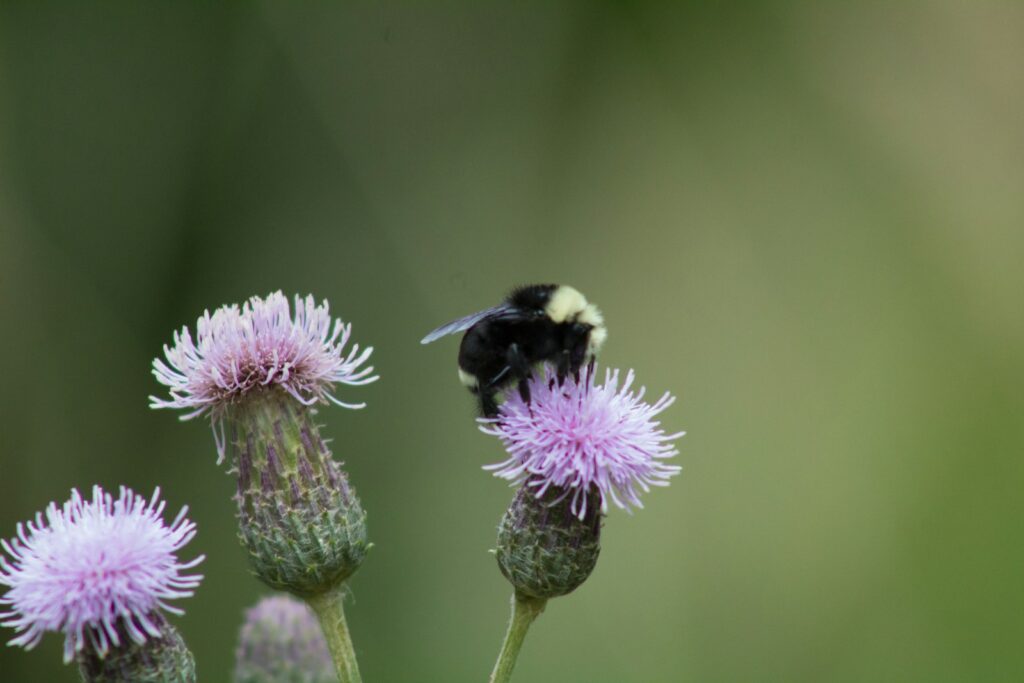
Pollinator populations are declining across Europe, and youth-led groups are carrying out projects ranging from habitat restoration to new ways of tracking species across Europe.
The work is being funded through the European Fund for Youth Action on Pollinators, which is co-funded by the European Union and implemented by IUCN Save Our Species, the European Commission informed on Wednesday.
Projects include efforts to improve monitoring and data on pollinators, which the statement describes as incomplete for many species across Europe.
In Italy, a project called POLLIN-RED is combining field surveys with genetic tools to support conservation assessments and share results with policymakers.
In Croatia, a project called eDNA for Pollinators is testing whether DNA-based methods can complement traditional monitoring.
Environmental DNA, or eDNA, is genetic material collected from the environment — such as soil or water — rather than directly from an animal.
A separate project in Spain is examining how insecticide applications after crops have finished flowering affect wild pollinators, using field data and chemical analysis.
Habitat work in cities, farms and community spaces
Several projects are focused on restoring or creating habitats where pollinators live alongside people.
In Rome, the Horti urbis project is studying how gardening practices in urban allotments influence pollinator diversity while a project in Spain is exploring how to design bee refuges in cities.
In Italy, a project called NECTAR — short for Nurturing Ecology, Communities and Training for Agroecological Resilience — combines habitat restoration with agroecology training for farmers and public education on agrobiodiversity.
In Portugal, Flor-em-Flor links river ecosystem restoration with pollinator recovery and includes monitoring, habitat work and community involvement.
Other projects are creating demonstration sites, including a youth-led pollinator garden in Transylvania, Romania, and an urban “Butterflies’ garden” in Germany that combines habitat creation with community learning.
In the Netherlands, The Butterfly Effect NL is using school gardens to create spaces for pollinators.
Some work targets particular species and habitats. In Spain, one project is restoring wet meadow ecosystems to support the dusky large blue butterfly, which the organisation described as having specialised ecological requirements.
There are also projects focused on specific groups of pollinators, including bees that rely on teasel plants. Three projects across Italy, Greece, Austria and Hungary are researching these specialist bees, including mapping their distribution and identifying key habitats.
Community involvement features across the programme, including citizen science projects that train participants to observe and monitor species, and education initiatives such as a board game project in Belgium designed to teach pollinator conservation.
