
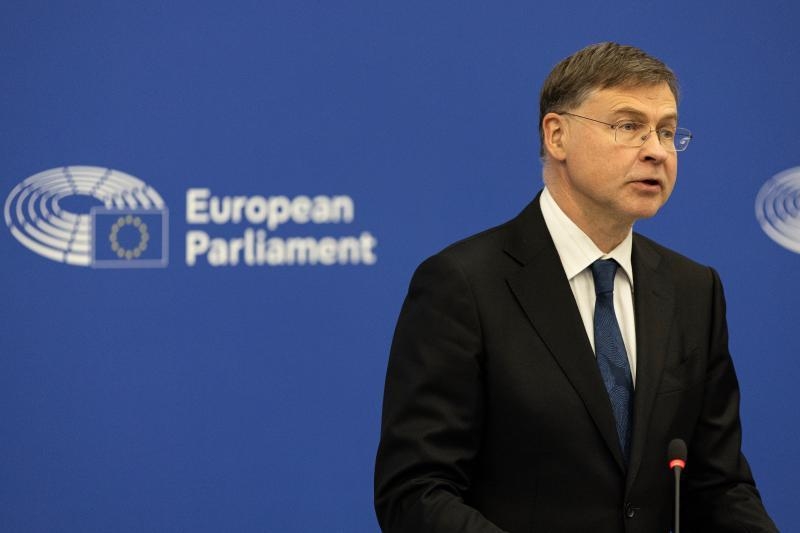
EU economies are facing a new energy shock linked to the conflict in the Middle East, with knock-on effects for inflation, growth and public finances, Commissioner Valdis Dombrovskis said after a Eurogroup meeting in Nicosia.
Higher energy prices are already affecting households and businesses across Europe, he told reporters on Friday.
Headline inflation across the EU is projected to reach 3.1% this year before easing to 2.4% next year, according to the European Commission’s Spring Economic Forecast.
Economic growth is expected to continue but at a slower pace, with EU GDP growth projected at 1.1% in 2026 before edging up to 1.4% in 2027, Dombrovskis said.
Budget pressures are also expected to increase, with 10 member states recording deficits above 3% of GDP in 2025 and the number projected to rise to 13 by 2027, he added.
The Commission projects the average EU budget deficit to increase from 3.1% of GDP in 2025 to 3.5% this year and 3.6% next year.
Digital euro and housing discussed
Eurogroup ministers also discussed the digital euro — a proposed digital form of central bank money — with Dombrovskis saying the Commission welcomed recent progress in talks in the European Parliament.
Negotiations should be concluded by the end of this year in line with the “One Europe, One Market” roadmap, he said, adding that the Commission was ready to provide technical support.
Housing was another topic, with Dombrovskis noting that policy is mainly handled at national, regional and local level.
The Commission’s first European Affordable Housing Plan, presented last year, sets out measures aimed at addressing an imbalance between housing supply and demand, he said.
Increasing housing supply would require steps including simpler regulations and permitting procedures and addressing labour shortages in the construction sector, Dombrovskis added.
