The European Commission has set out a new approach to EU humanitarian aid, including plans to expand support for aid workers, increase cash assistance, and direct more funding to local organisations.
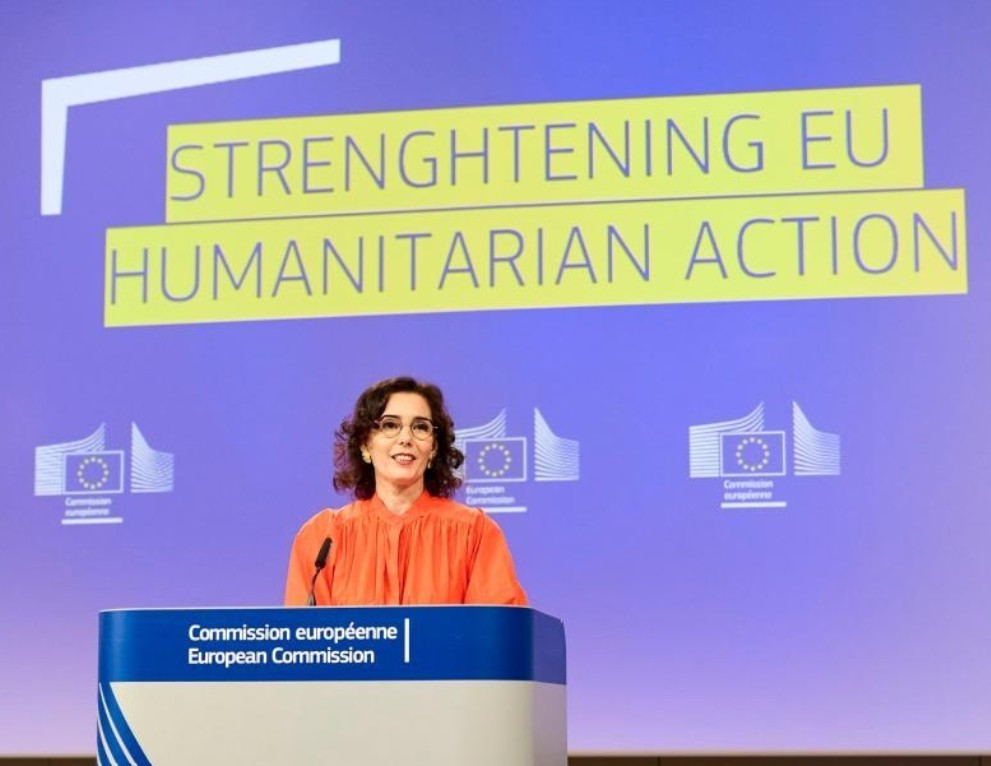
The Communication, presented on behalf of the Commission and High Representative Kaja Kallas, is structured around three priorities — “protect, perform and partner,” humanitarian aid Commissioner Hadja Lahbib said in a statement on Wednesday.
On protection, she declared the Commission wants to strengthen EU “humanitarian diplomacy” to help secure access for aid deliveries and defend international humanitarian law, the rules meant to limit the effects of armed conflict on civilians and aid workers.
Lahbib said she recently visited the Great Lakes region and met leaders in the Democratic Republic of the Congo, Burundi and Rwanda, as well as aid workers, civil society groups, refugees and AFC/M23 rebels.
Violence against humanitarian staff reached “unprecedented levels” last year, with more than 300 aid workers killed, nearly 200 injured and over 100 kidnapped, the Commissioner informed, adding that most were local staff.
More than 100 healthcare workers have been killed in Lebanon and hundreds more injured.
Lahbib added the Commission will expand its “Protect Aid Workers” programme into a global initiative, alongside support such as security training, particularly for local workers.
Cash aid, local partners and cutting logistics costs
On performance, Lahbib stated that the Commission is seeking to make humanitarian spending go further as needs rise and resources tighten, including by reforming supply chains where logistics account for 60% to 80% of humanitarian spending.
She added the EU wants organisations to reduce duplication by procuring together, pooling warehouses, sharing cargo and data, and pre-positioning supplies, including using artificial intelligence.
The Commission also plans to scale up cash assistance, saying evidence shows cash reaches 30% more people than in-kind aid with the same funding.
Cash assistance typically means providing money directly to people affected by crises, rather than distributing goods such as food parcels.
Funding for local partners is also set to rise, with a target for 25% “localisation” by 2027 — more than double compared with last year — and international partners will be asked to explain in proposals how local actors and affected communities are involved in designing and delivering aid.
On partnerships, the Commission reiterated its support for linking humanitarian aid with development and peace efforts — often referred to as the “humanitarian-development-peace nexus” — and for working with donors, international organisations, financial institutions, the private sector and philanthropies.
Syria was cited as an example of a country needing to move from emergency aid towards recovery and development.
