
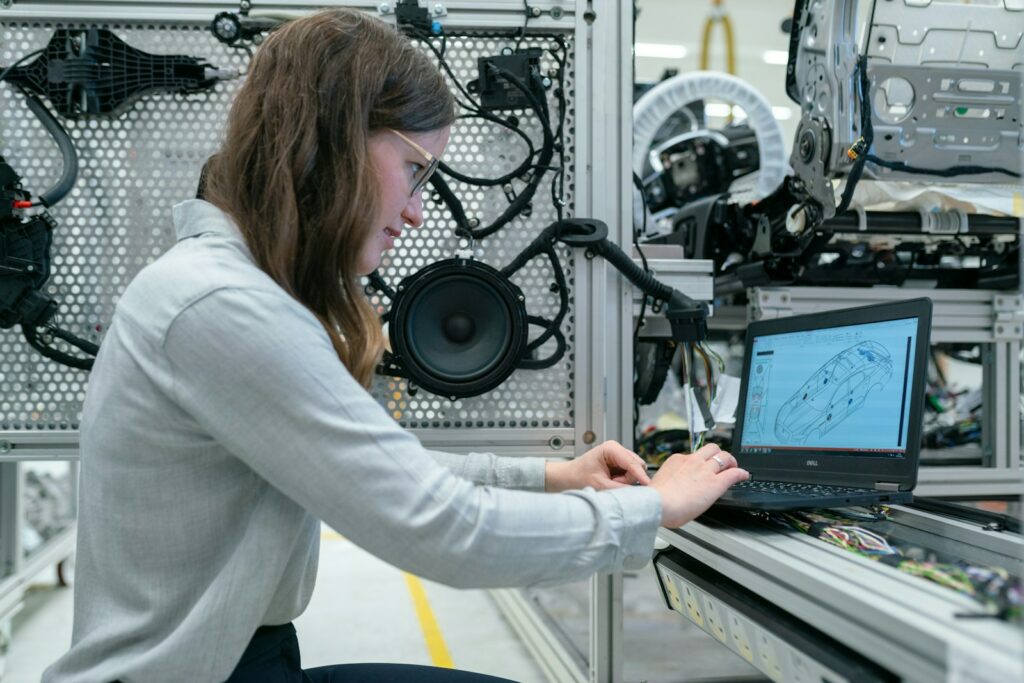
Women accounted for 52.5% of the European Union’s 81.6 million people employed in science and technology roles in 2025.
A total of more than 81.6 million EU residents aged 15 to 74 worked in science and technology last year, up 1.8% on 2024, Eurostat reported on Friday.
Over the past decade, the number has risen by 25.3%, it added.
Women made up 42.8 million of those workers and were employed mainly in service activities.
Their numbers were 2.3% higher than in 2024 and 27.9% higher than in 2015, an increase of more than 9.3 million over 10 years.
Eurostat defines science and technology occupations as roles where the main tasks require a high level of professional or technical knowledge and experience in one or more fields, including the physical and life sciences, and the social sciences and humanities.
Wide regional differences across the EU
The highest shares of women in science and technology jobs were recorded in Latvia (62.4%), the Hungarian region of Great Plain and North (61.1%) and Estonia (60.5%), Eurostat reported.
The lowest shares were in the French region of Corsica (42.7%), Malta (46.0%) and Italy’s Centre region (47.2%).
Scientists and engineers made up 24.8% of all people employed in science and technology across the EU, the organisation said. Germany had the largest number of scientists and engineers, with 4.2 million.
Women accounted for 40.8% of scientists and engineers in 2025, despite making up more than half of the wider science and technology workforce.
That share has increased by 0.5 percentage points over the past decade, while the number of women working as scientists and engineers rose by 54.4% from 5.3 million in 2015 to 8.2 million in 2025.
