
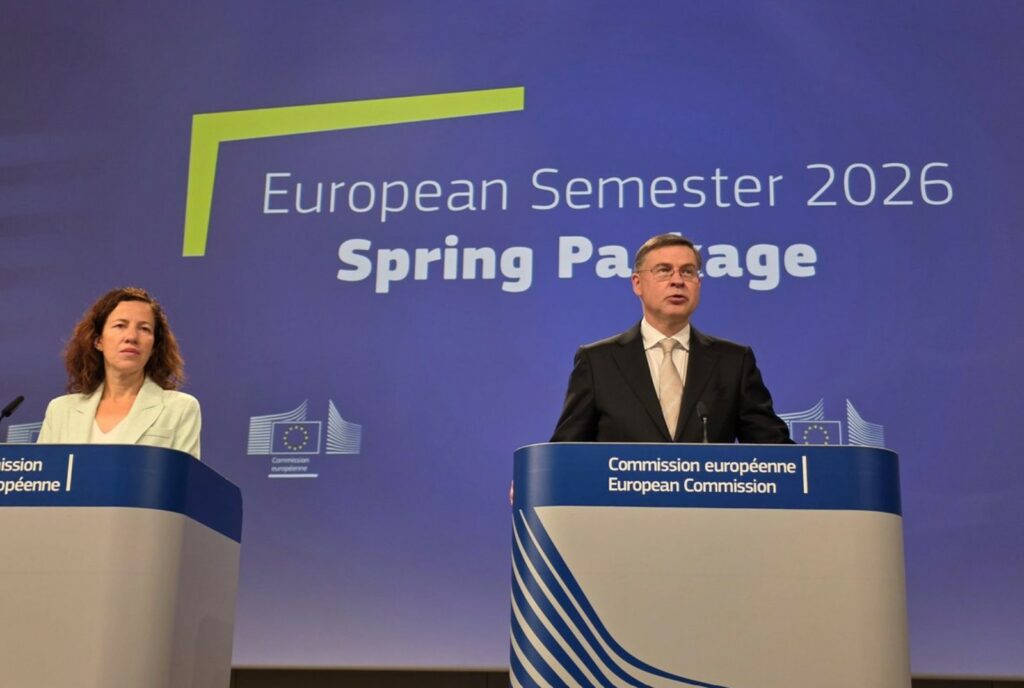
EU Economy Commissioner Valdis Dombrovskis has urged member states to follow recommendations covering public finances, innovation, energy and skills as the European Commission set out its 2026 European Semester Spring Package on Wednesday.
The European Semester is the EU’s annual cycle for co-ordinating economic and budget policies across member states, with the Commission issuing country-specific recommendations that governments are expected to reflect in national plans.
Dombrovskis said the latest recommendations focus on four areas: fiscal stability; closing the “innovation gap” and improving the business environment; energy security and affordability; and strengthening education and skills alongside “social fairness”.
He added that some recommendations address housing affordability, including regional factors, and that countries on the EU’s eastern borders have received advice tailored to “socio-economic, preparedness and security challenges”.
Fiscal rules and deficit procedures
Dombrovskis said the Commission wants member states to keep public finances “sound”, while taking account of the impact of an energy shock linked to the conflict in the Middle East.
Support measures for households and businesses should be temporary, targeted and timely, and should not increase overall demand for fossil fuels, he added.
The Commissioner said further that measures to strengthen the resilience of Europe’s energy system and speed up the shift away from fossil fuels could use flexibility already available under the EU fiscal framework.
At a member state’s request, the scope of the current “national escape clause” for defence could be broadened to cover certain energy support measures, he said, allowing a dedicated annual cap of 0.3% of GDP within an existing overall cap of 1.5% of GDP for 2026 to 2028, with a cumulative cap of 0.6% of GDP.
For countries that have already used the full flexibility under the escape clause to increase defence spending, this could allow them to go beyond 1.5% of GDP, subject to an additional sustainability assessment.
