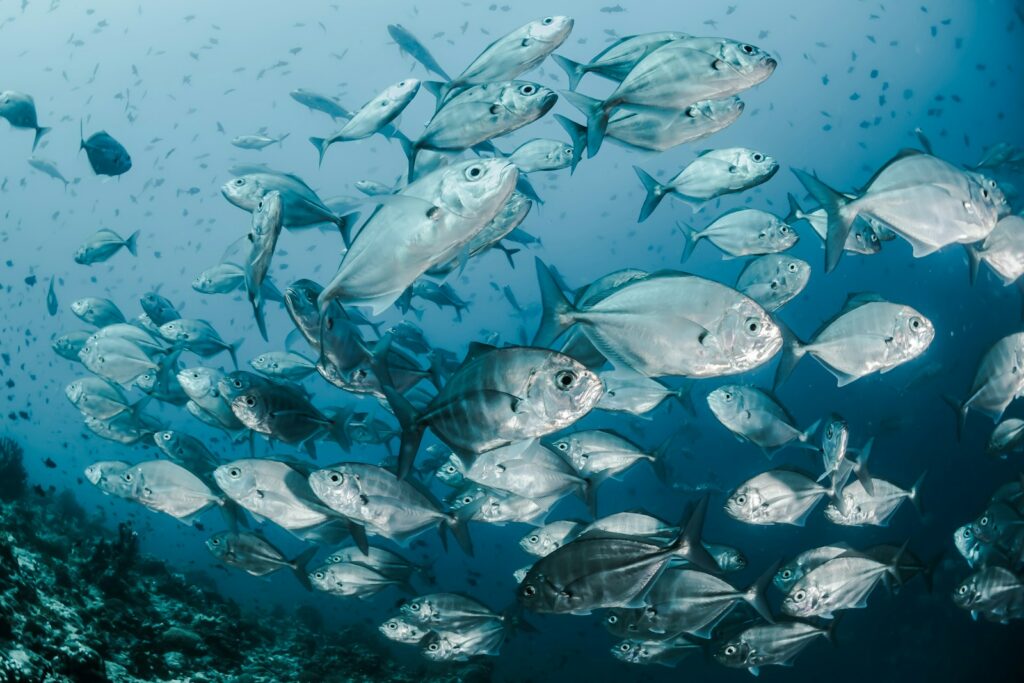
The European Commission said EU fisheries have continued a long-term move towards more sustainable fishing, but warned that the number and size of fish stocks are falling in the North-East Atlantic and that key commercial stocks remain under pressure in the Baltic and the Western Mediterranean.
The Commission’s annual update on the state of EU fisheries released on Friday said fishing — alongside other factors — remains a major contributor to the condition of fish stocks, and that efforts to improve sustainability need to continue.
The EU fleet comprises about 69,000 vessels and employs more than 155,200 people in coastal communities.
It added that the fleet’s capacity to catch fish was reduced again in 2025 as part of a longer-term adjustment towards better alignment with available fishing opportunities.
Fuel support and next decisions on catch limits
A crisis mechanism under the European Maritime, Fisheries and Aquaculture Fund (EMFAF) was activated for the second time after the Middle East conflict triggered a sharp rise in fuel prices, unlocking €760 million in direct compensation through national programmes, the Commission said.
Member states can decide whether to offer the support and are responsible for administering payments to fishers and aquaculture operators.
The Commission also adopted a Middle East Crisis Temporary State Aid Framework (METSAF) on 29 April 2026, allowing member states to grant State aid to companies in fisheries, agriculture and transport affected by fuel cost increases.
Member states can cover up to 70% of additional fuel costs incurred since 28 February 2026.
Stakeholders and members of the public can submit views on fishing opportunities for 2027 by 31 August.
After the consultation, the Commission will present three proposals for 2027 catch limits covering the Atlantic and North Sea, the Baltic Sea, and the Mediterranean and Black Seas, based on scientific advice from the International Council for the Exploration of the Sea (ICES) and advice and analysis from the Scientific, Technical and Economic Committee for Fisheries (STECF).
EU ministers will then discuss the proposals and seek agreement on total allowable catches for 2027 at Council meetings in October and December.
