
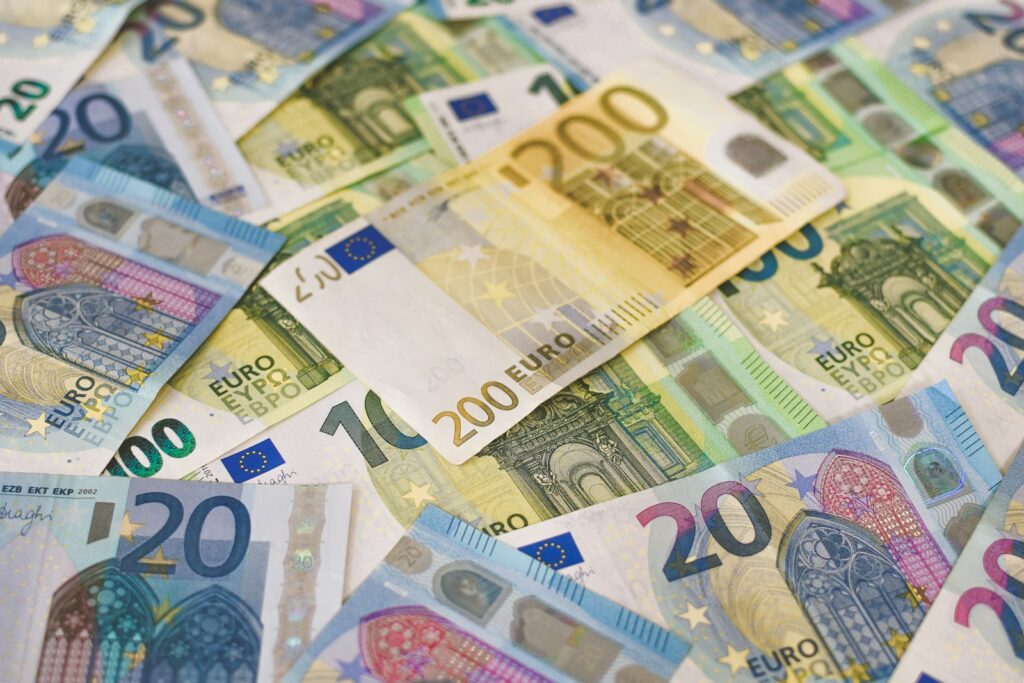
Euro-area governments had virtually all of their debt issued in euros at the end of 2025.
All or almost all — more than 99.5% — of general government gross debt (the total debt of central and local government) in every euro-area member (EA20) was denominated in euro, Eurostat reported on Monday.
Outside the euro area, Czechia and Sweden also had most of their government debt in their own currencies, with more than 90% denominated in national currency.
Only Bulgaria and Romania had more than half of their government debt denominated in foreign currencies at the end of 2025, at 75% and 53% respectively.
In Bulgaria’s case, 71% of its total debt was denominated in euro, which was still a foreign currency for the country in 2025, before it joined the euro zone on January 1, 2026.
Hungary, Poland and Denmark also recorded sizeable shares of foreign-currency debt, at 32%, 26% and 24% respectively.

Borrowing costs mostly steady or slightly higher
In most EU countries where data were available, the “apparent cost” of government debt — a measure of the effective interest cost on outstanding debt — slightly increased or remained stable between 2024 and 2025, Eurostat said.
Romania recorded the highest apparent cost among countries with data, at 5.2%, followed by Poland (4.5%), Czechia (3.1%) and Italy (3.0%).
Ireland had the lowest figure at 1.4%, followed by Luxembourg (1.5%), the Netherlands (1.7%) and Germany (1.8%).
The apparent cost of debt fell in 2025 in seven EU countries, with the largest decreases in Estonia (down 0.8 percentage points), Sweden (down 0.3 points) and Croatia (down 0.2 points).
