
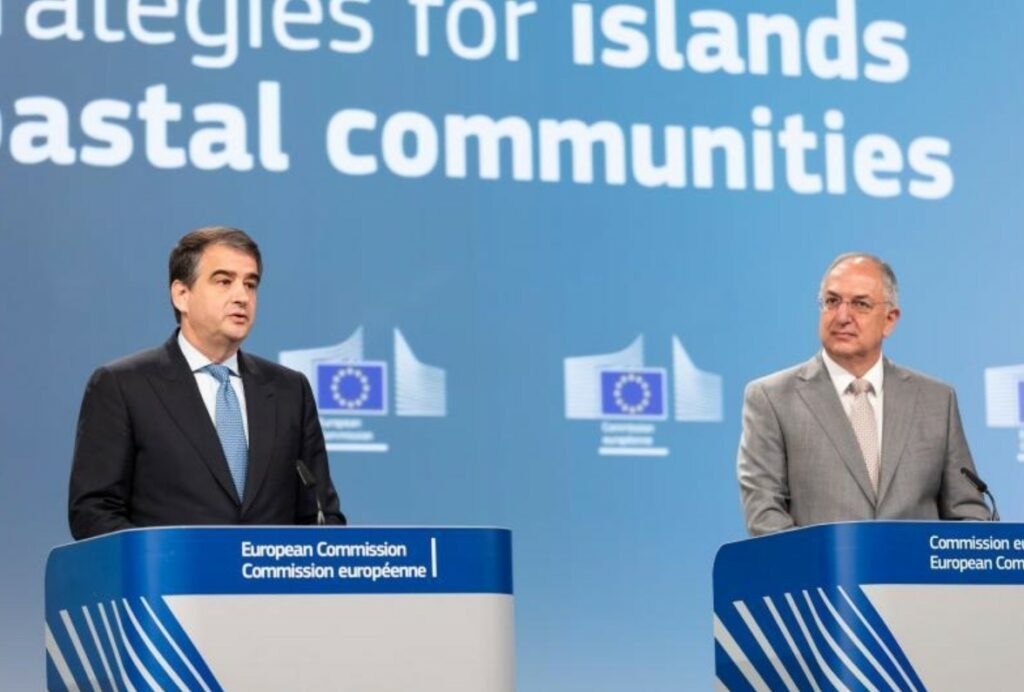
The European Commission has adopted two new strategies focused on EU islands and coastal communities, setting out planned actions on issues including transport links, energy, housing and security, and pledging €1.5 billion in funding.
More than 4,000 inhabited islands are home to around 17 million people in the EU, with Cyprus, Ireland and Malta counted as island member states, the Commission's Executive Vice-President for Cohesion and Reforms Raffaele Fitto and Commissioner for Fisheries Costas Kadis noted in remarks as they presented the strategies.
They pointed out that transport costs, housing prices and the cost of providing public services are higher in island municipalities than on the mainland because of “insularity”, creating long-term economic effects for households and businesses.
The islands strategy is organised around four areas: economic development and connectivity; energy, climate and the environment; people and quality of life; and security and crisis preparedness.
Planned measures include support for transport and digital infrastructure, a review of how islands are treated in relevant state aid frameworks, and an “in-depth analysis” of the cost of insularity.
On energy, Fitto and Kadis said the Commission will extend the Clean Energy for EU Islands initiative through 2030 and set up a voluntary platform for island network operators — organisations involved in running island energy systems.
The Commission ran a call for evidence that drew 358 contributions from stakeholders in 18 member states, including citizens, public authorities, businesses, universities, NGOs and island networks.
More than €1.5 billion is being redirected to support strategic priorities in island territories through the mid-term review of cohesion policy, Fitto and Kadis informed, referring to the EU’s funding programme aimed at reducing regional disparities.
Coastal communities: prosperity, resilience and liveability
Europe’s coastal areas are home to around 95 million people across 70,000 kilometres of coastline in 22 coastal states, and generate about €265 billion in gross value added each year, Fitto and Kadis noted.
Coastal territories face pressures including climate change, pollution, unbalanced tourism and demographic decline, they said.
The coastal strategy is built around three objectives — “prosperity, resilience and liveability” — and includes 13 flagship actions.
It includes support for traditional sectors such as fisheries, aquaculture and tourism, and mentions diversifying the “blue economy”, including “pescatourism”, described as using fishing vessels for both tourism and fishing activities.
On resilience, the Commission officials said the strategy sets out how coastal areas can be supported to develop climate adaptation strategies and will explore, with the European Investment Bank, investment possibilities and capacity-building support for adaptation projects.
Housing is identified as a main issue for coastal communities, with the Commission pointing to an upcoming Pan-European Investment Platform for affordable and sustainable housing being launched with the European Investment Bank, and a forthcoming Affordable Housing Act.
Both strategies are due to be presented on 26 June in Cyprus and in Paphos, in collaboration with the Cyprus presidency.
