
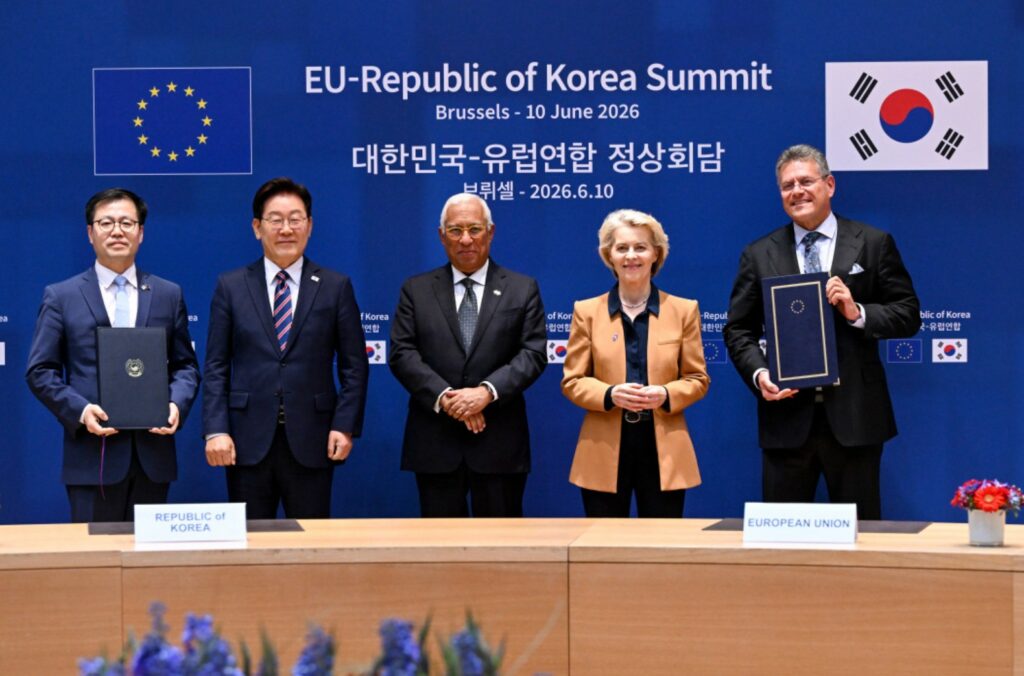
The EU and the Republic of Korea signed a Digital Trade Agreement at their summit in Brussels on 10 June.
The agreement adds digital trade rules to the EU–Korea Free Trade Agreement, which has been in force since 2011, the European External Action Service (EEAS) informed on Thursday.
It includes provisions recognising the legal validity and enforceability of electronic contracts and enabling the use of electronic signatures.
Online consumer protection measures are also included, with the deal setting out rules intended to support consumer safety and confidence in the digital economy.
The agreement allows cross-border data flows and bans requirements to transfer source code, while both sides will keep their existing protections for personal data and privacy.
Source code refers to the human-readable instructions that make computer software work.
Ratification still required
The deal was signed by EU Commissioner for Trade and Economic Security Maroš Šefčovič and Korean Trade Minister Yeo Han-koo, the EEAS said.
It will now go through ratification procedures on both sides, including consent from the European Parliament on the EU side, before being formally concluded by the Council.
In 2023, more than one third of total trade in services between the EU and Korea was digitally delivered, worth €11 billion.
The EU has previously signed a standalone digital trade agreement with Singapore.
“Goods and services are nowadays traded electronically at an unprecedented rate,” Šefčovič stated.
“With this agreement we will unlock new markets, contribute to legal certainty for businesses and safer online environment for consumers,” he added.
