
In the beginning was the Word, and the Word was with me, and the Word was Brexit.
I coined it in 2012, in a moment of pessimistic whimsy, never imagining it would name an era. Like Vichy or Versailles, it has become a leitmotif for national retreat.
And for the disenfranchised citizens that retreat leaves behind.
It pains, this small lexicographical fame. Not only because a passionate Remainer gifted the enemy their slogan, but because David Cameron, the Prime Minister who recklessly agreed the Brexit referendum, had once dispatched me to Brussels precisely to stop his MEPs, in his immortal phrase, "banging on about Europe". Twenty years on, I am the witness to a heroic failure.
When I arrived in 2006, the Parliament was full of gung-ho, English-speaking, continental-wide doers. Thatcher's Single Market and Major's enlargement drive had built a British-vibe Europe in all but name. For Thatcher before her notorious Bruges speech, Major before the beef embargo, Blair before Iraq, Britain's place was one of the top three at the heart of a Europe going places. Meanwhile, Nigel Farage sat in O'Farrells nursing a red wine with his red-faced revolutionaries. They were never going to upend our manifest destiny.
Were they?
Rupture
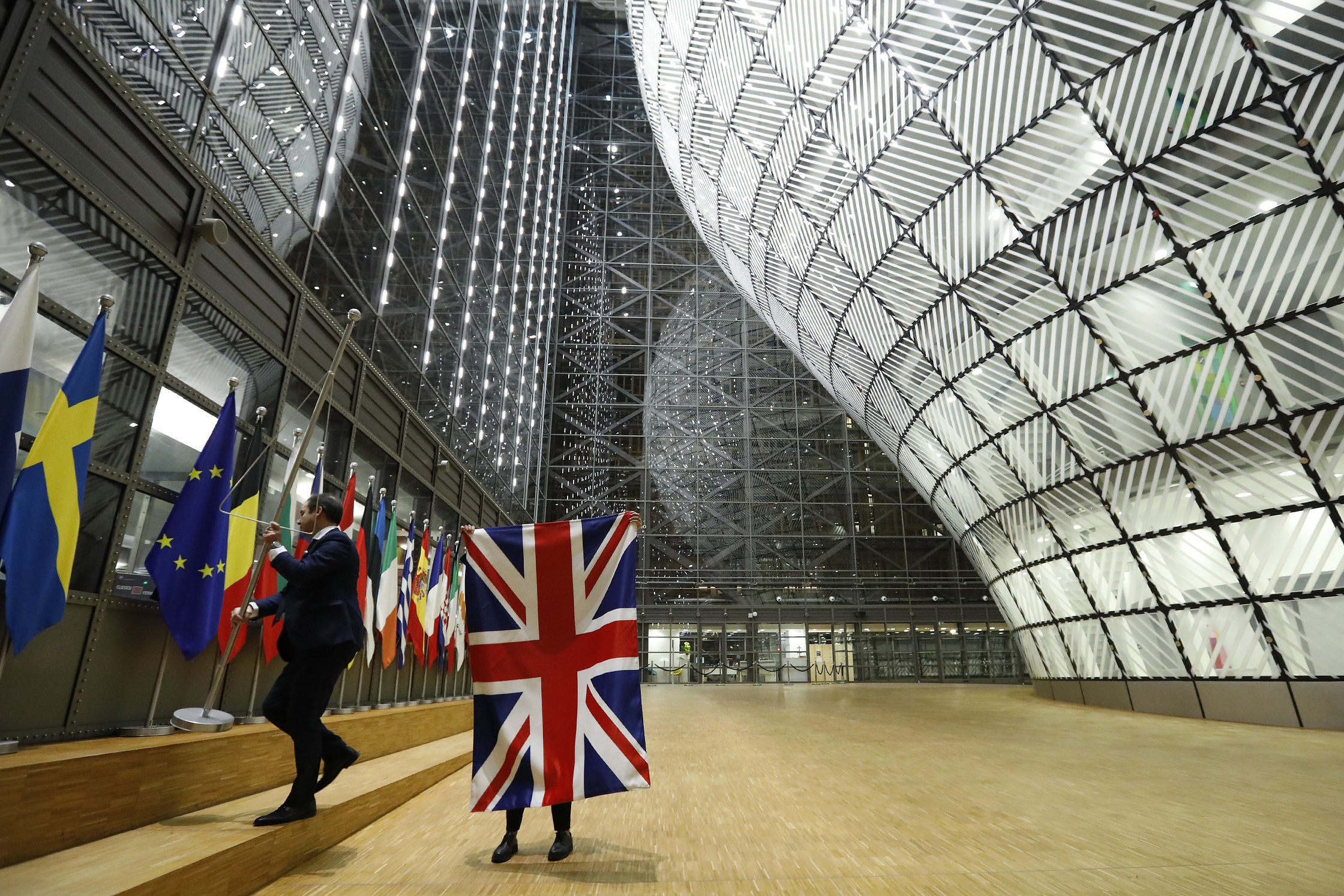
Ten years on, après le déluge, I live in Brussels, married to a European Commission official who has since taken Belgian nationality. The sun has long set on British influence in the Berlaymont. When the United Kingdom left the European Union on January 31, 2020, 20,000 Britons had their entire professional lives, mortgages, marriages, school fees and pensions knotted into the constitutional fabric of the bloc their countrymen had voted, by a slim majority, to quit.
There were roughly 2,500 UK nationals in EU service, half of them in the European Commission alone.
But what happens when your army withdraws, and the Union Jacks flags are folded away? When all the MEPs and the Britosphere, vanish bag and baggage?
And you are left.
Denise Baines, an English teacher of decades' standing, called it "a bereavement": "the bottom fell out of our world." Robert Innes, the Anglican Bishop in Europe based in Brussels, said: "Frankly, many of us are deeply ashamed of our country...So, we've got to the point where we feel, is this a country that I identify with as strongly as I used to?"
What future then for us stateless Brits after what one Berlaymont staffer called "a zombie apocalypse”? Jean-Claude Juncker could legally have given every British official notice on the day Article 50 was triggered. The Belgians refused to naturalise those who had paid their taxes to the EU budget rather than the Belgian Treasury.
Translators, junior researchers, IT specialists, were let go automatically with the loss of EU citizenship. A mini exodus had begun.
Staying on
I have never been able to shake off an old film. Staying On stars Trevor Howard and Celia Johnson as the last British couple in a Himalayan hill station, left behind when the 1st Battalion of the Somerset Light Infantry sailed from Bombay and the British pulled out of India. They watched the sun set on their way of life. In Paul Scott's tender phrase, they had become "people who used to run things". And niggling at the back of my mind these 10 years since that fateful vote was: mustn’t this be like what my grandparents' generation felt when the union jacks went down all over the world?
At independence, there were perhaps 155,000 Britons in India and 468 Indian Civil Service officers still serving; most went home. In the late 1990s I was privileged enough to meet one who didn’t – Teddy Young, the last British tea planter in Darjeeling. None are left now.
In 30 years, will hacks be interviewing Robert Madelin, a former Commission Director General, as the last Brit in Brussels?
But whilst the Brits in India all left, in Europe a new home was offered. And taken.
Juncker wrote to staff promising they would be treated "as Europeans" regardless of passport – because, as he put it, "they deserve it". The Belgians U-turned on naturalisation.
Though the registered British population in Belgium has fallen by roughly a third since the referendum, to 14,000, and the EU Brits are down to 350, the community – British-born or British-passport-holding individuals whether or not they have additionally taken Belgian or Irish citizenship – has shrunk by far less, perhaps 15%.
Some 9,000 Britons took Belgian citizenship since 2016, roughly half the entire pre-Brexit British community. Globally, 244,000 Britons changed or added a second EU citizenship in the eight years after the referendum – a population larger than the city of Reading.
The parallel is imperfect and I know it. Brexit was an act of national will in 2016, not of imperial collapse. The EU was a voluntary club we had joined for 47 years, not a subcontinent we had run for 200. The British in Brussels kept no servants, barred no locals from their clubs, extracted no wealth. They earned salaries from Brussels and paid taxes to Brussels. They were colleagues, not colonels.
And yet the gnawing feeling of national disenchantment and loss persists. It is a star mislaid. The slow recognition that you are now a guest where you were once a host. The small administrative kindnesses. The children quietly adopting the local nationality. The empty pews at Holy Trinity. The Old Hack, shuttered. The UK Perm Rep demoted. The Commission's British staff shrinking inexorably to zero – not with a purge, but with a pension.
We did not plan to become a demographic curiosity. But then, neither did Teddy Young.
And, like him, we find ourselves staying on – because we are here, and because, in the end, Brexit was a retreat which did not turn, for its abandoned citizens, into a rout.
Peter Wilding is the founder of the League of Nations international power tracker, author of What Next? Britain’s Future in Europe, and, on June 23, Brexit at 10: The Reckoning
