
The European Economic and Social Committee has backed an EU initiative known as the New European Bauhaus as part of the response to Europe’s housing crisis, saying it needs to move beyond pilot projects and be delivered at scale.
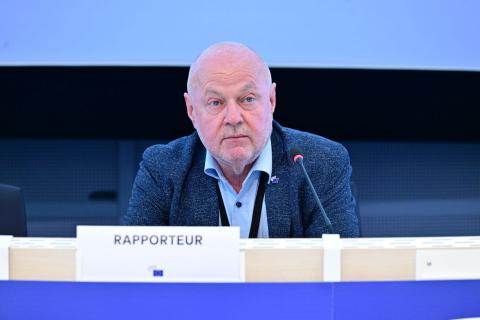
The EESC announced in a statement on Tuesday that it adopted a new opinion at its June plenary session on “Implementing the New European Bauhaus”, drafted by committee member Rudolf Kolbe.
The EU is facing a housing crisis alongside rising energy costs and widening social divides linked to income, age and origin.
The New European Bauhaus is an EU initiative that links environmental policy with “everyday living spaces” by promoting sustainability, inclusion and aesthetics.
Kolbe said the initiative was “not a building programme nor a design trend” and called for civil society to be “fully part of it.”
Recommendations on housing, procurement and participation
The committee said addressing housing would require turning isolated New European Bauhaus projects into “widespread and adaptable solutions” tailored to different places.
It called for key performance indicators — measurable metrics — to track whether the initiative’s principles are being reflected across EU policies and laws.
Public authorities should prioritise life-cycle and quality criteria in the upcoming revision of the EU’s public procurement rules for services that shape the built environment.
Affordable housing policy and the New European Bauhaus “are inseparable”, the EESC said, linking delivery to EU tools including the Energy Performance of Buildings Directive and the “renovation wave” programme to upgrade building stock.
Funding should be easier for small municipalities and civil society groups to access, including through simpler guidance and lower administrative barriers.
It also warned that greater reliance on digital participation tools could lead to age discrimination and exclude other groups, calling for broad participation “without digital exclusion.”
The European Commission set out its future plans for the New European Bauhaus in December 2025, including a communication titled “New European Bauhaus: From vision to implementation” and a proposed Council recommendation.
