
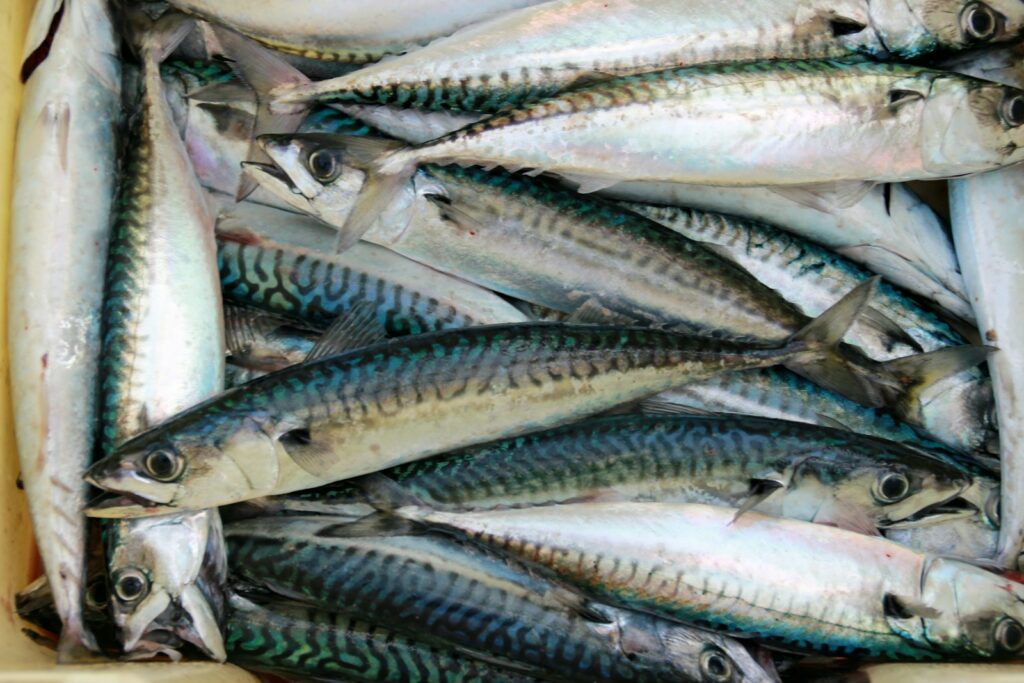
Limits on Russian mackerel fishing in the North-East Atlantic will take effect from 28 August 2026 after an agreement by the region’s fisheries management body, according to a European Commission statement.
The North-East Atlantic mackerel stock is in a “critical conservation status” after years of overfishing, with the Russian Federation singled out for increasing its catch levels, the Commission said.
Russia unilaterally raised its 2026 quota to 22.5% of the Total Allowable Catch (TAC) — the overall cap set for how much can be caught — equal to 67,548 tonnes, it added.
Other members of the North-East Atlantic Fisheries Commission (NEAFC) agreed measures “except Russia”, including the EU, the United Kingdom, Denmark (in respect of the Faroe Islands and Greenland), Norway, and Iceland, the statement said.
Under the measures, Russian catches of mackerel in international waters will be limited to 1,495 tonnes, according to the Commission.
NEAFC members will also be barred from facilitating Russian fishing that exceeds that limit, including through transhipping — transferring fish between vessels at sea — or providing refuelling services to Russian vessels above the cap, it said.
Port access restrictions in EU, UK and Iceland
The EU, the UK and Iceland will apply the restrictions not only in international waters but also in their own waters, including banning Russian vessels carrying mackerel above the agreed limit from entering their ports, the Commission said.
The measures are expected to enter into force on 28 August 2026 despite Russia’s objection, it added, with the European Commission preparing to implement them in EU law.
The Commission called on other NEAFC “like-minded partners” to apply the measures in their own waters and to consider additional steps, including a ban on transhipments at sea across the NEAFC area.
More than 100 transhipments a year are carried out by Russian vessels in the NEAFC area without proper monitoring, the statement said.
NEAFC is a regional fisheries management organisation responsible for conservation of fishery resources in the North-East Atlantic and has six contracting parties: the EU, Denmark (for the Faroe Islands and Greenland), Iceland, Norway, the Russian Federation and the UK, according to the Commission.
