
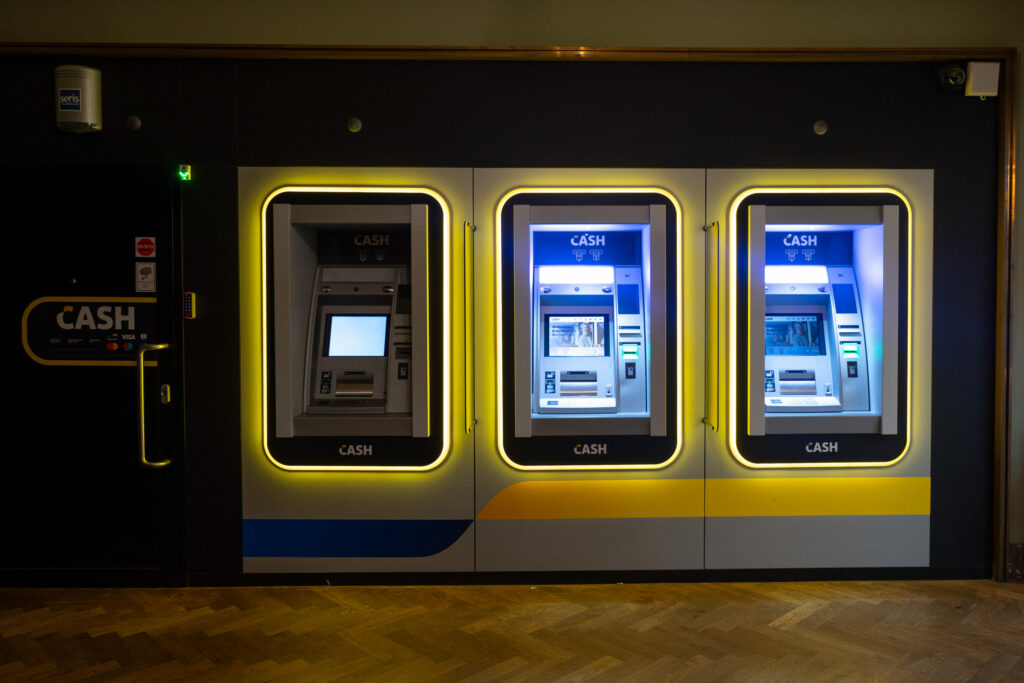
The digital euro is one step closer to becoming reality, as the European Parliament approved the long-awaited currency last week – which would reduce the EU's dependence on US payment systems.
With the growing geopolitical tensions having placed the debate over Europe's financial sovereignty high on the agenda, the Economic and Monetary Affairs Committee approved the single currency package last Tuesday.
"With the single currency package, we are protecting citizens' freedom to choose how they pay. We are strengthening access to and acceptance of cash, while making central bank money available in digital form," said rapporteur Fernando Navarette Rojas (EPP - Spain).
The digital euro would be a free, electronic form of money issued by the European Central Bank (ECB), would work online and offline, and is intended to offer a high degree of privacy.
Consumers would be able to hold digital euros in a dedicated wallet, subject to a holding limit (which has not been determined yet).
What is it?
Now, people use two different forms of money: ECB money and commercial bank money. While banknotes and coins are ECB money, the money in bank accounts is from commercial banks.
As the digital euro would be issued by the ECB, which would also provide the underlying infrastructure. Meanwhile, commercial banks and payment service providers would offer digital euro services to customers.
Basic services, such as opening an account, holding and managing funds, and getting at least one payment instrument, would be free of charge.
However, payment service providers (PSPs), including banks, e-money providers, post offices, and regulated crypto-asset providers, could charge for extra services, with the exception of account maintenance, inactivity penalties or service bundling.
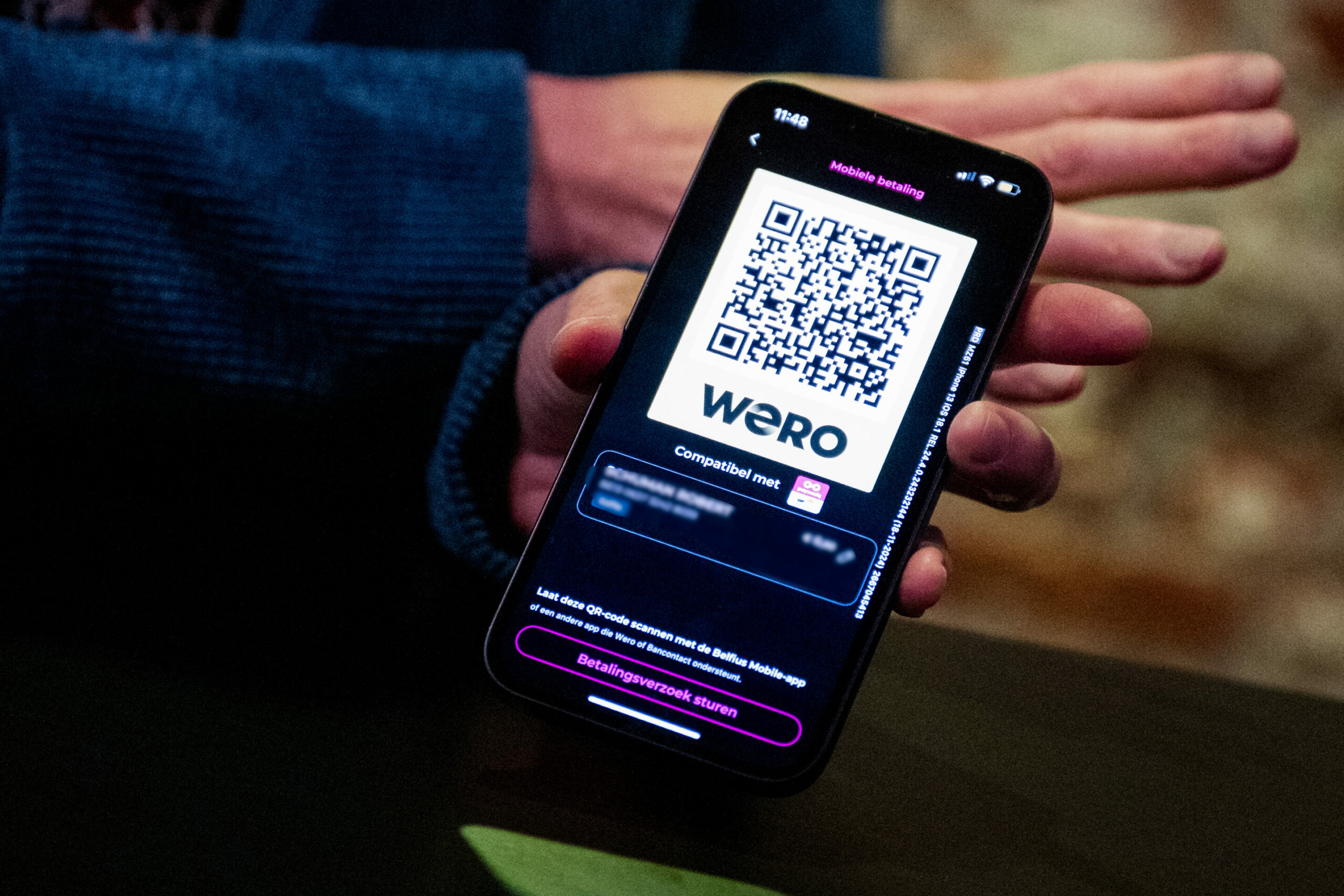
The Wero mobile app pictured during the launch of Wero, the new digital payment solution from the European Payments Initiative (EPI), November 2024. Credit: Belga/Jasper Jacbos
Fees for merchants and inter-providers would be capped, while offline payments would be entirely fee-free.
Financial institutions are expected to be compensated for their participation in the scheme, while retailers will be required to pay fees. However, those are expected to be lower than those for current transactions.
Online payments would be processed through an account-based system, while offline payments would work directly via local storage devices.
"The digital euro will complement cash, never replace it," stressed Navarrete Rojas. "No one should be forced away from cash, and no one should be left without a secure, resilient and genuinely European digital payment option."
Strategic autonomy
The digital euro is one of the measures put forward to strengthen Europe's strategic autonomy. Currently, US payment companies Visa and Mastercard account for 61% of card payments in the Eurozone and almost all cross-border card transactions, according to data by the ECB.
"Europe does not have to choose between the digital euro and successful private payment solutions. We need both to work together. The agreement rightly recognises the dual approach: existing standards and infrastructure should be reused wherever possible," Navarrete Rojas said.
"This will allow European payment solutions to connect to a common acceptance infrastructure and become interoperable across borders," he added.
Additionally, the agreement also ensures that privacy will be built into the digital euro from the outset, as privacy-by-design and privacy-by-default principles would be built into the digital euro.
Credit: Belga/ Virginie Lefour
Cutting-edge technologies, such as "zero-knowledge proofs", would allow transactions to be verified without exposing personal data, which would be processed only to the extent strictly necessary for the system to function. The ECB would not have access to personal identification data.
The ECB stressed that it welcomed the approval of the single currency package, which they said will "safeguard euro cash as legal tender while also shaping the digital euro".
The negotiating mandates for the texts will be announced at the start of the July plenary session. The final legislation will still have to be negotiated with the Council before coming into force.
The digital currency is expected to launch by 2029.
