
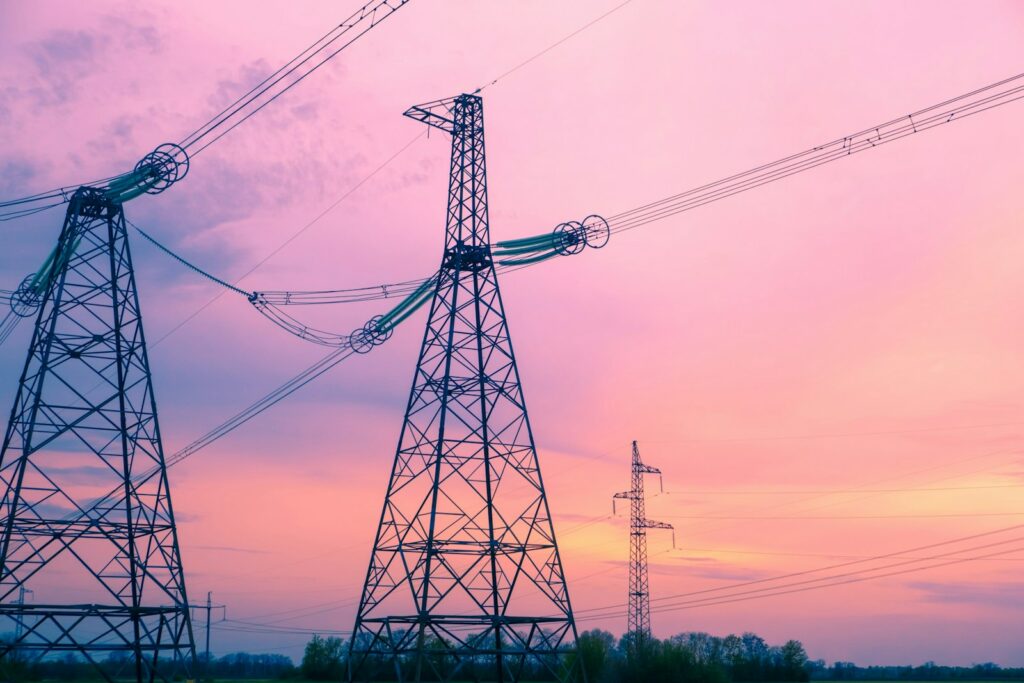
EU member states have agreed a negotiating position on new rules to modernise Europe’s energy grids, covering cross-border infrastructure planning and faster permitting for projects.
The “European grids package” brings together a revision of the EU’s trans-European energy infrastructure (TEN-E) regulation and a new permitting directive, the Council of the EU declared in a statement on Friday.
TEN-E sets the framework for cross-border energy projects that connect countries’ networks.
Member states backed measures to improve planning for electricity, hydrogen and gas networks using a shared approach, including a “central scenario” to be developed by the European Commission using input from governments and stakeholders.
The scenario is meant to identify long-term gaps and bottlenecks, and to take into account national energy and climate plans, regional differences and disparities in energy prices.
The Council also agreed on rules to reinvest a portion of unspent “congestion income” into cross-border projects designed to ease bottlenecks between electricity trading areas.
Congestion income is money collected when there are constraints on the grid between areas where electricity is traded — known as bidding zones — and it can build up if not used.
Under the Council’s position, the share earmarked for such cross-border work would start at 10% from 1 January 2028 and rise by five percentage points each year to reach 25% by 2031.
If the funds are not spent, they would be made available after eight years for member states to use under existing EU electricity market rules.
Security projects and shorter permitting
Ministers also created a new category of priority projects focused on the security and resilience of existing electricity infrastructure, amid what the Council described as a growing risk of sabotage and physical or cyber-attacks.
The category would allow funding for critical components needed for emergency repairs of electricity interconnectors — the links that transmit power between countries.
On permitting, member states endorsed faster and more transparent procedures, including digital portals for simplified applications.
Governments could also decide that if authorities fail to reply at intermediary steps, this would count as tacit approval.
The Council said countries would seek to avoid excluding renewable energy development across large areas, and backed measures to promote citizen engagement in renewables projects, including dialogue supported by an independent facilitator and benefit-sharing for nearby communities.
The package was proposed by the European Commission in December 2025, with the Council citing low interconnectivity between member states and the need to adapt the energy network for climate neutrality. Negotiations with the European Parliament are due to begin once it adopts its position, with the Council saying the goal is to reach a final agreement “as soon as possible” in 2026.
