
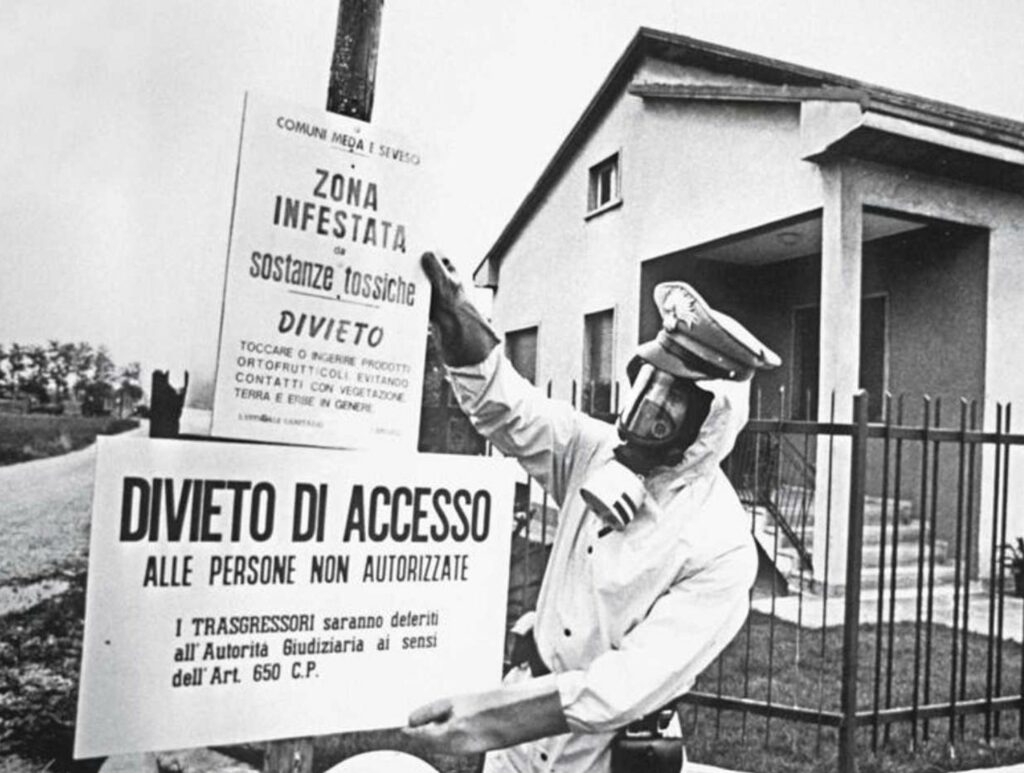
The EU said it will keep updating and enforcing its industrial safety rules as the Seveso chemical disaster in Italy marks 50 years since a toxic dioxin cloud exposed thousands of people and contaminated wide areas.
A major accident at a plant in Seveso on 10 July 1976 released dioxin — a long-lasting environmental pollutant — prompting the EU to adopt the Seveso Directive, which entered into force in 1982, the European Commission noted in a statement on Friday.
The law sets safety requirements for sites that handle large quantities of dangerous substances, including stricter risk assessments, land-use planning rules and emergency preparedness measures.
Around 11,000 industrial sites are covered across the EU, including chemical and petrochemical plants and oil refineries, with companies required to prevent major accidents and limit consequences while public authorities oversee compliance and safety.
Recent incidents cited
Risks remain despite a “significant reduction of risk of major accidents in the EU” linked to the directive, the Commission said, pointing to the 2019 Lubrizol fire in Rouen, France, and a 2021 explosion at chemical factories in Leverkusen, Germany.
The Commission said it will continue working with EU member states, industry, emergency services and civil society to keep the Seveso framework “fit for purpose” as industrial, environmental and security conditions change.
The EU’s Preparedness Strategy includes cross-sector risk assessment intended to improve crisis prevention, preparedness and response, it added.
“Fifty years after Seveso, the lesson remains clear: prevention saves lives,” Environment Commissioner Jessika Roswall stated.
