
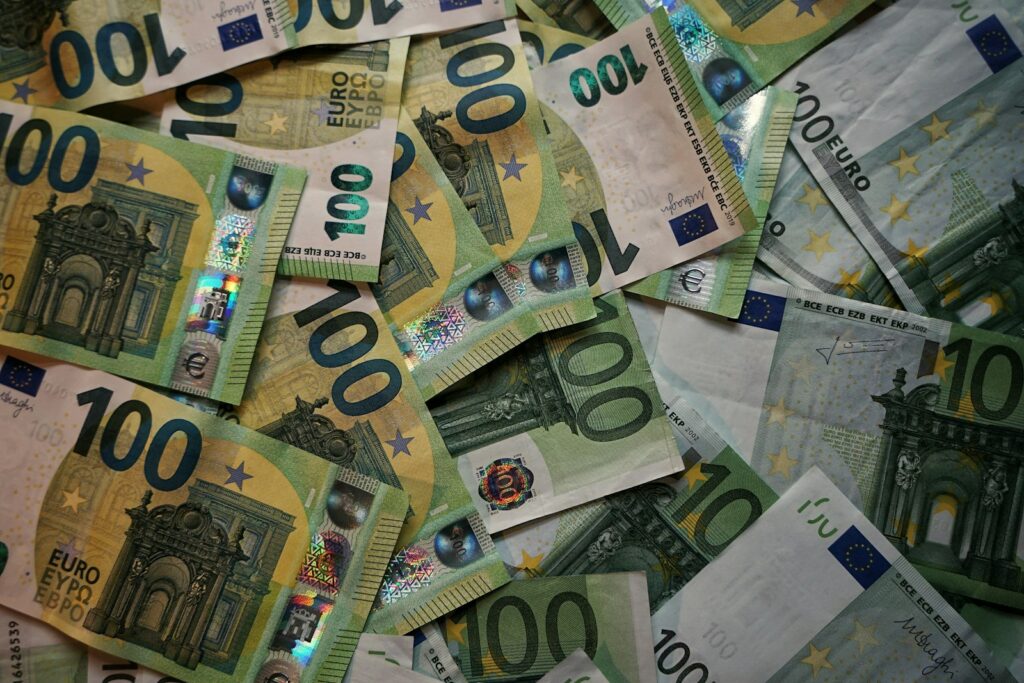
EU governments held €1,266 billion in currency and deposit assets in the first quarter of 2026 — equivalent to 6.7% of GDP.
The total represents money held in cash and in bank accounts for day-to-day payments, and made up 16.5% of EU general government total financial assets, according to new quarterly government finance figures published by Eurostat on Tuesday.
The figures cover the EU’s “general government” sector, which includes central, state and local government as well as social security funds.
Eurostat said currency and deposit holdings typically rise in the first quarter of each year and fall towards the end of the fourth quarter.
Payments are often executed by the end of the year in some budget systems, reducing year-end balances.
Debt issuance being concentrated in first quarters also contributes to the rise in deposit assets early in the year.
Pandemic peak in 2020
EU governments increased their deposit assets sharply in the first half of 2020, when new debt liabilities rose by more than was needed to finance deficits, Eurostat said.
Currency and deposits peaked at €1,495 billion — 11.0% of GDP — at the end of the third quarter of 2020.
In recent quarters, the stock of currency and deposits has been below pre-pandemic levels when measured as a share of GDP.
