
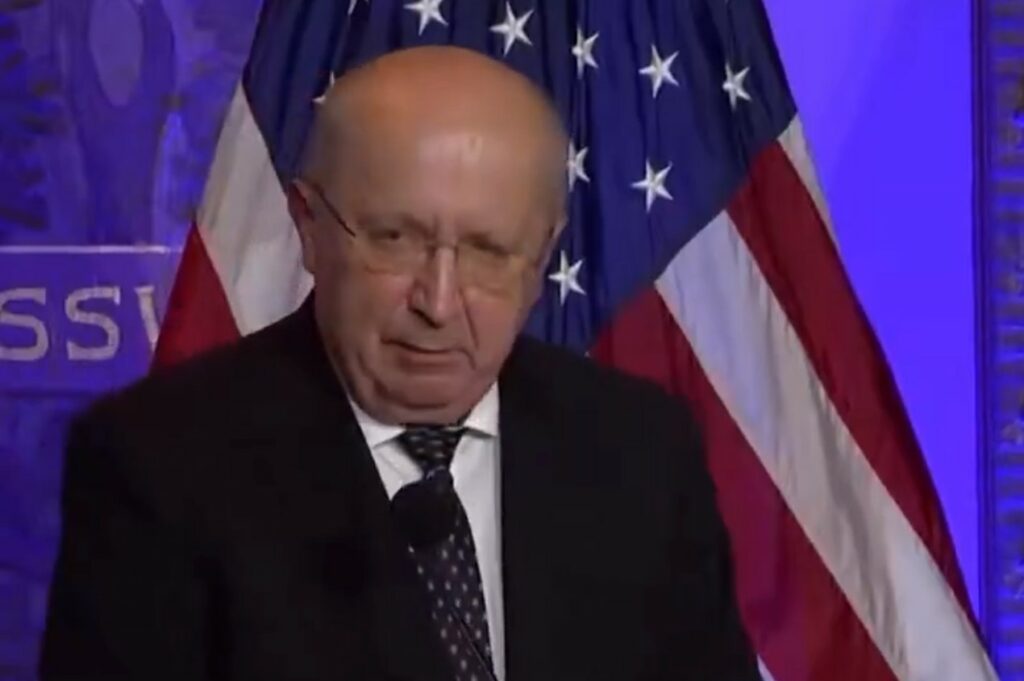
EU Defence Commissioner Andrius Kubilius said European countries were on course to outspend the United States on defence by 2030, as he set out plans to expand EU-backed weapons production and deepen industrial cooperation with Washington.
Speaking at “EU Defense Night” in Washington, D.C., Kubilius described Russia as “the biggest threat on the continent of Europe” and said it was spending “50% of its national budget” on its “war machine,” as cited by the European External Action Service (EEAS) in a release on Tuesday.
He said eight European countries were already spending a higher share of GDP on defence than the US, adding that the Baltic states and Poland were spending more than 5% of GDP on “core defence”, while the US was at 3.2%.
European defence spending by national governments could reach “one trillion dollars” in nominal terms by 2030 if current trends continue, he said.
Kubilius also stated EU measures had helped scale up ammunition production in Europe from 200,000 rounds a year to two million since 2023, citing an EU instrument known as ASAP.
EU funding, procurement and Ukraine
EU member states are expected to spend €7 trillion on defence over the next decade through to 2035, he said, while describing EU-level defence funds as much smaller than national budgets.
He highlighted several EU funding plans, including €150 billion in loans under a scheme called SAFE and a €60 billion Ukraine-related loan for defence, and said the next long-term EU budget from 2028 to 2035 included “around €130 billion” for defence and space, according to his remarks.
Kubilius said nearly 90 US companies were already taking part in EU defence programmes, and claimed Europeans buy 40% of their defence equipment from the US while the US buys 1% from Europe.
He also criticised US export controls known as ITAR — rules that regulate the export and use of American defence technology — saying European governments were cautious about buying systems without guarantees on how they can be used, and that some firms were marketing products as “ITAR free.”
On Ukraine, he said EU institutions and member states had provided more than €180 billion in support since Russia’s full-scale invasion, and that SAFE loans could be used to procure jointly “with Ukraine and for Ukraine.”
Kubilius said the EU and Ukraine had signed an “EU – Ukraine defence industrial pact” last week and that an alliance between EU and Ukrainian industry had been established to jointly produce drones and counter-drone systems.
