
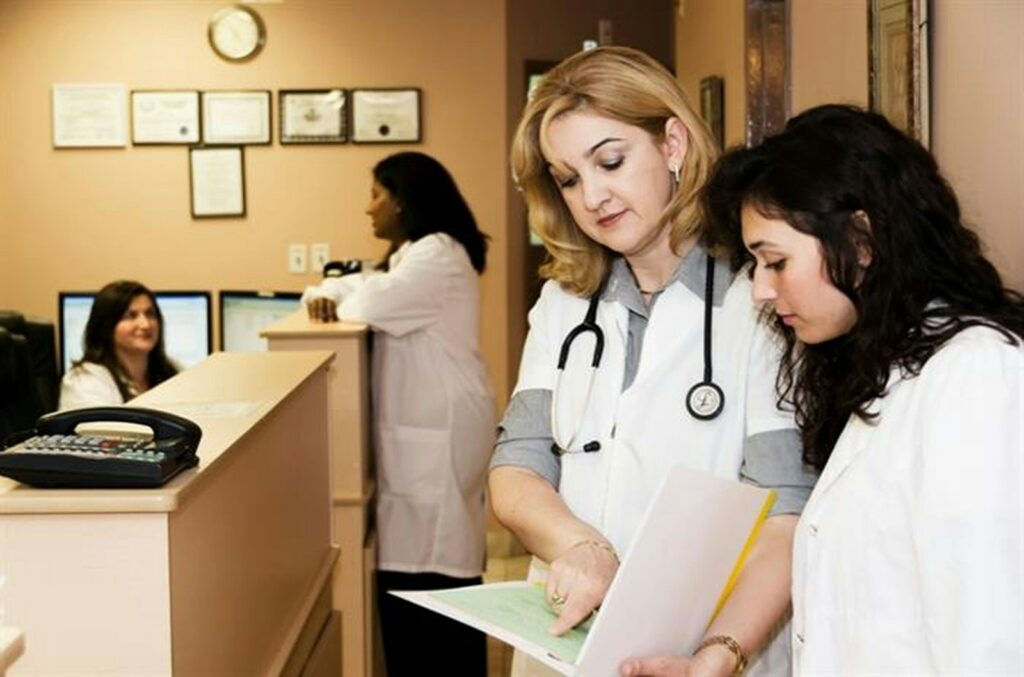
Doctors in Armenia, including refugee health professionals, have taken part in a Council of Europe workshop in Gyumri focused on improving communication with patients and helping them navigate the healthcare system.
The Council of Europe described the training in a release on Tuesday as an intensive workshop for dozens of healthcare professionals, centred on health literacy — the ability to find, understand and use health information.
A participant identified only as Dr Mariam, described as a refugee doctor with more than a decade of medical experience, said she faced challenges in adapting to a new healthcare environment after crossing into Armenia.
The organisation said nearly half of Europe’s population — particularly people in vulnerable situations — struggle to find, understand and use basic health information.
Participants practised communication skills through role-play, guided debates and real-life scenarios, according to the Council of Europe.
It said the training covered explaining diagnoses in understandable language, supporting patients to make informed decisions about their care, and ensuring services, including digital services, are accessible to all.
Focus on communication and patient understanding
“We learned that health literacy is a two-way street,” Mariam said, adding that institutions often expect the public to understand them, while healthcare workers should help patients understand the system.
Armenia is working with Council of Europe support to strengthen the relationship between health institutions and the people they serve, and to ensure access to healthcare is not determined by where someone was born, what language they speak, or how they arrived in the country.
The work is guided by the European Social Charter and the Convention on Human Rights and Biomedicine, also known as the Oviedo Convention.
Council of Europe Secretary General Alain Berset said on World Health Day 2026 that strengthening equitable access to care, promoting health literacy and safeguarding human dignity reinforce “resilient, inclusive, and stable communities”.
