
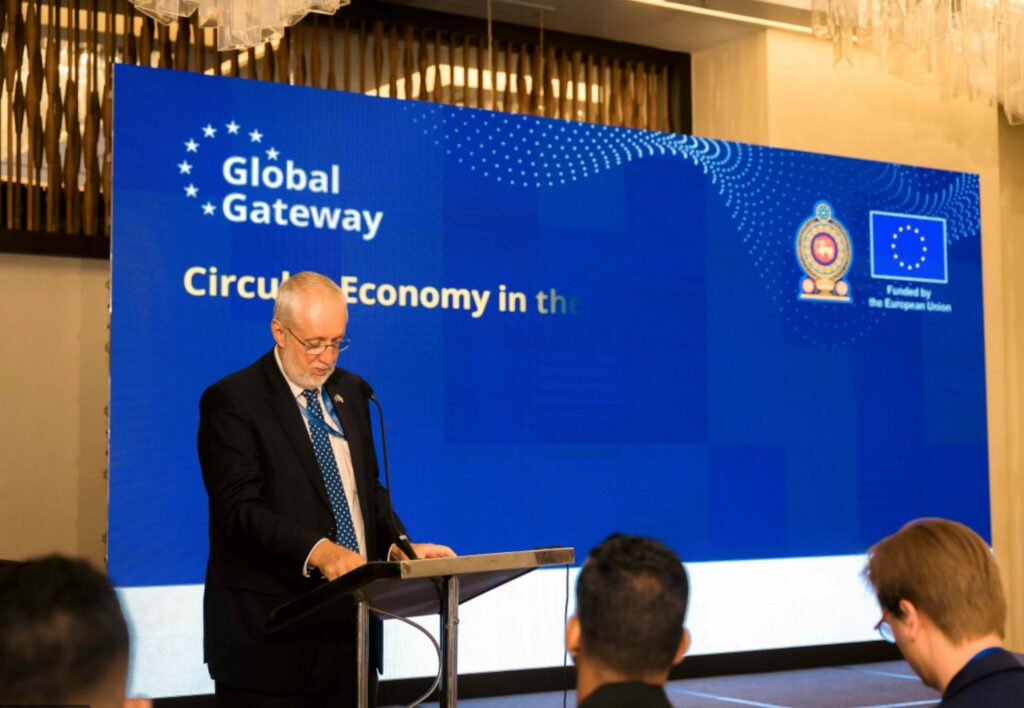
Sri Lankan exporters to the European Union are facing new packaging rules from 12 August, after the EU’s Packaging and Packaging Waste Regulation (PPWR) began applying across the bloc.
The regulation entered into force in February 2025 and sets legally binding requirements for all packaging placed on the EU market, including imported goods, the EU Delegation to Sri Lanka and the Maldives noted in a release on Tuesday.
It said the rules introduce new obligations covering packaging recyclability, recycled plastic content, reuse, harmonised labelling, Extended Producer Responsibility (EPR) — where producers are made responsible for the cost of managing packaging waste — and traceability.
Export sectors likely to be affected include tea, spices, seafood, processed food, beverages and fast-moving consumer goods, as well as local packaging manufacturers supplying export-focused industries.
A two-day seminar in Colombo on 13–14 July brought together more than 100 representatives of Sri Lankan businesses to discuss how to prepare for the changes, the Delegation informed.
“As the Packaging and Packaging Waste Regulation begins to apply, early preparation will be essential to help businesses adapt smoothly [and] preserve access to the EU market,” Dr Johann Hesse, Head of Cooperation at the EU Delegation to Sri Lanka.
What the seminar covered
The event was held with EU support through the CIRCULAR — Circular Economy in the Food Sector Project, which is jointly implemented by Expertise France, the UN Food and Agriculture Organization (FAO) and the German development agency GIZ, according to the Delegation.
International experts set out the regulation’s timeline and five “core pillars”: recyclability, recycled content, reuse, harmonised labelling and waste prevention.
Key milestones discussed included a ban on per-and polyfluoroalkyl substances (PFAS) in food-contact packaging from August 2026, and a requirement for tea bags and certain packaging formats to be industrially compostable from February 2028. PFAS are a group of synthetic chemicals used in some packaging materials.
Participants also worked through packaging redesign, material selection, supplier checks, certification, traceability and technical documentation, using case studies and compliance mapping exercises.
The seminar helped attendees build a “definitive and comprehensive roadmap” for meeting EU requirements, Sri Lanka Institute of Packaging President Nishan Perera said.
