
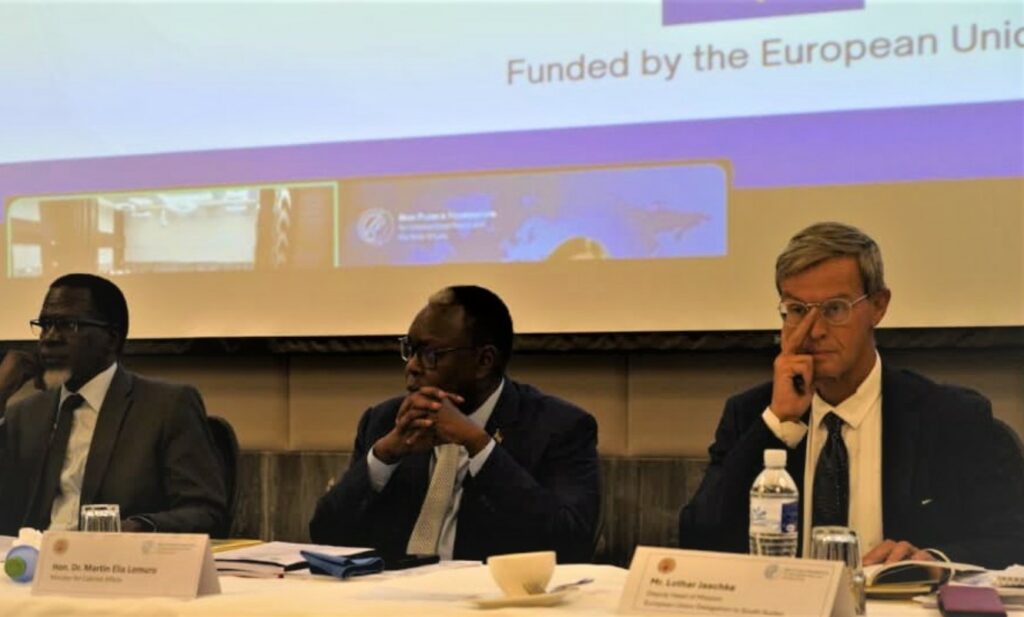
South Sudan’s constitutional process has made “great progress” in recent months, but elections planned for December 2026 will be held under the transitional constitution rather than a permanent one, the EU’s Delegation to South Sudan said in remarks delivered in Juba.
The comments were made by the EU Delegation’s Charge d’Affaires at a civic education and public consultations event on 19 August, the European External Action Service (EEAS) informed on Thursday.
A permanent constitution is intended to set out how the country is governed and to define citizens’ rights and state responsibilities, the EU Delegation said, describing it as a “contract” between those who govern and those who are governed.
The diplomat called on the government to continue supporting the next steps in the process, including establishing a Constitutional Drafting Committee and holding a National Constitutional Conference.
The EU Delegation also highlighted the work of the Max Planck Foundation, saying it organised workshops and produced handouts and reading materials on constitutional processes.
Dispute over changes to the peace agreement
Progress on the constitution-making process was presented to the board of the Reconstituted Joint Monitoring and Evaluation Commission (RJMEC) on 2 July by the chair of the National Constitutional Review Commission (NCRC), Hon Dr Riang, the EU Delegation said.
Riang told the RJMEC board that the permanent constitution could be finalised before the end of the transitional period if stakeholders “pull in the same direction”, while the Minister of Cabinet Affairs, Hon Elia Lomuro, acknowledged and appreciated the progress made.
Amendments to the 2018 peace agreement have entered into force so that elections will be run on the transitional constitution rather than a permanent constitution, the EU Delegation said, adding that it understood “with regret” that time was too short for a permanent constitution if elections are held in December 2026.
The EU Delegation noted the “due process” for changing the peace agreement was not respected, stating that the RJMEC board was not consulted as required under the agreement.
During the 2 July meeting, Minister Lomuro said pending tasks under the peace agreement would be shifted to “post-election R-ARCSS arrangements”, referring to steps to be addressed after the vote under the Revitalised Agreement on the Resolution of the Conflict in the Republic of South Sudan.
