
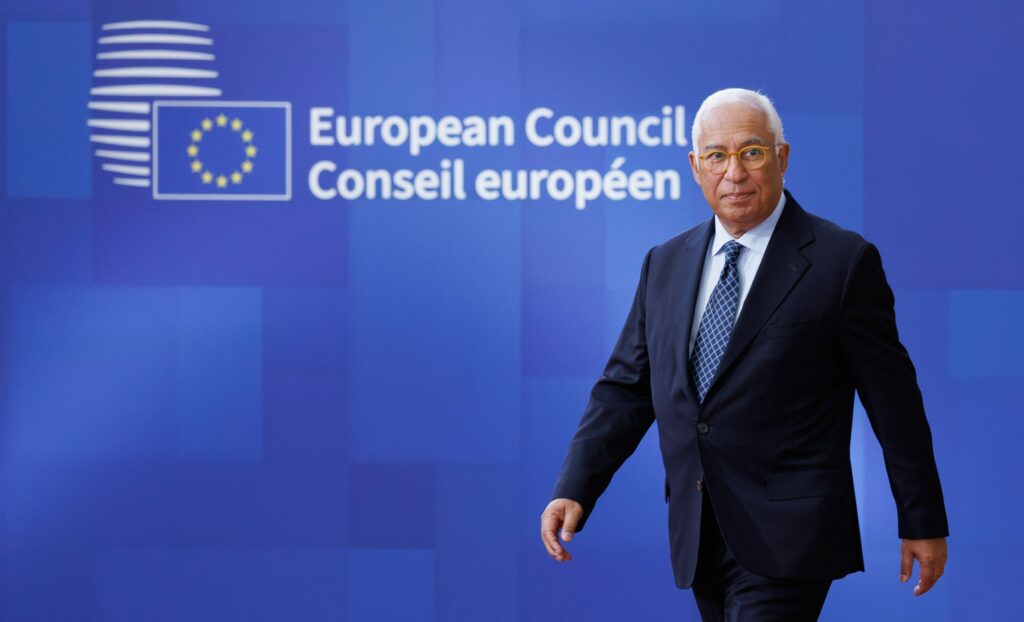
European Council President António Costa has said he will visit each EU member state every year for bilateral meetings with national leaders, with this year’s talks focusing on defence, competitiveness, EU enlargement and support for Ukraine, according to an op-ed that he published in different media outlets on Wednesday.
Costa said the annual tour of capitals is intended to keep him “closely attuned” to the concerns and priorities of EU leaders and the citizens they represent, while also allowing him to share his view of challenges and opportunities facing the bloc.
He pointed to everyday examples of EU integration, including border-free travel, the shared euro currency across many member states, common standards on issues such as health and the environment, mutual support during natural disasters such as this summer’s forest fires, and the end of mobile roaming charges when travelling within Europe.
Costa wrote that the EU has set itself the objective of ramping up Europe’s defence readiness by 2030 by strengthening the European defence industry, reducing strategic dependencies and jointly developing priority military capabilities, adding that Russia’s ongoing aggression against Ukraine has “shattered” peace on the continent.
He also set out elements of EU plans to strengthen competitiveness, including cutting red tape, mobilising private investment, completing the single market, strengthening supply chains, diversifying trade relations and ensuring access to critical raw materials and affordable, clean energy produced in Europe.
Focus on the next long-term EU budget
Costa declared that leaders face a key decision this year — reaching an agreement by the end of 2026 on the EU’s next multiannual financial framework, the bloc’s long-term budget covering 2028 to 2034.
He said agreement is needed by that deadline because the EU and member states would then require about a year to put in place the legislation and administrative arrangements needed to avoid interruption to the next budget’s implementation, warning of potential disruption to funding for farmers, businesses, students, researchers and innovators.
The EU budget has for decades supported investment in areas including agriculture, regional development, research, and the green and digital transitions, and will continue to do so, Costa wrote, adding that it must also reflect evolving priorities such as defence, security and competitiveness.
He noted that most of the EU budget is financed through member states’ national contributions and argued these should be kept “within reasonable limits”, adding that a package of new “common resources” would be an essential part of an overall agreement.
Costa’s op-ed was published across multiple European outlets, including El País, Le Figaro, La Repubblica, Frankfurter Allgemeine Zeitung and The Irish Examiner, among others.
