
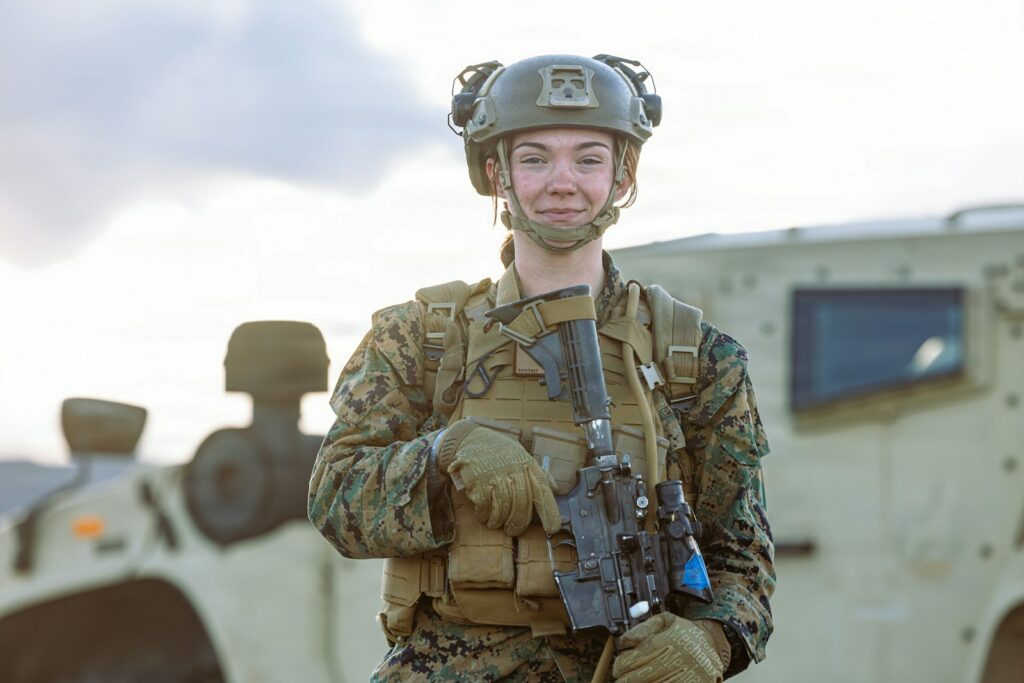
NATO’s International Military Staff Office of the Gender Advisor held a session on 10 June examining how armed forces and the Alliance’s bodies handle recruitment and career management with a focus on gender perspectives.
The discussion covered “HR and personnel management” — terms that refer to how organisations recruit, develop and retain staff — and was framed around participation as one of the four pillars of the Women, Peace and Security agenda set out in NATO’s 2024 policy, NATO informed on Thursday.
Panellists included Major General Mirsad Ahmic of the Armed Forces of Bosnia and Herzegovina, Rebecca LaFleur, Head of Civilian Personnel Recruitment at NATO’s Supreme Headquarters Allied Powers Europe (SHAPE), and Colonel Giorgios Kostis and Major Evmorfia Pitsiava from the Hellenic Armed Forces’ personnel department.
Colonel Kostis and Major Pitsiava outlined a voluntary conscription programme for women in the Hellenic Armed Forces, including training, certifications and opportunities to serve in specialised units.
The programme allows volunteers to remain as short-term re-enlisted soldiers after completing service and to earn merit points that can be used in future recruitment processes for professional soldier roles.
Bosnia and Herzegovina reforms and NATO recruitment misconceptions
Major General Ahmic described reforms to human resources frameworks in the Armed Forces of Bosnia and Herzegovina, including an institutional review of more than 327 regulations, NATO said.
The work was taken forward by three implementation teams with senior leadership support, and included identifying infrastructure improvements and mentorship opportunities for women.
Women’s representation in the Armed Forces of Bosnia and Herzegovina rose from 4.7% in 2007 to 12.5% in 2026, NATO said.
More than 20% of young officers at OF-1 and OF-2 ranks are now women, it added, using NATO’s officer rank codes for junior commissioned officers.
LaFleur stated that prospective applicants often have misconceptions about working at NATO, including assumptions that a military background is required, that fluency in both English and French is necessary, or that jobs are only based in Brussels.
SHAPE seeks gender representation on recruitment boards and monitors longlisting and shortlisting rates, NATO said, while adding that fewer women applying in the first place limits the impact of process changes.
Women outnumber men in internship applications, but that has not translated into leadership roles, LaFleur told the session.
