
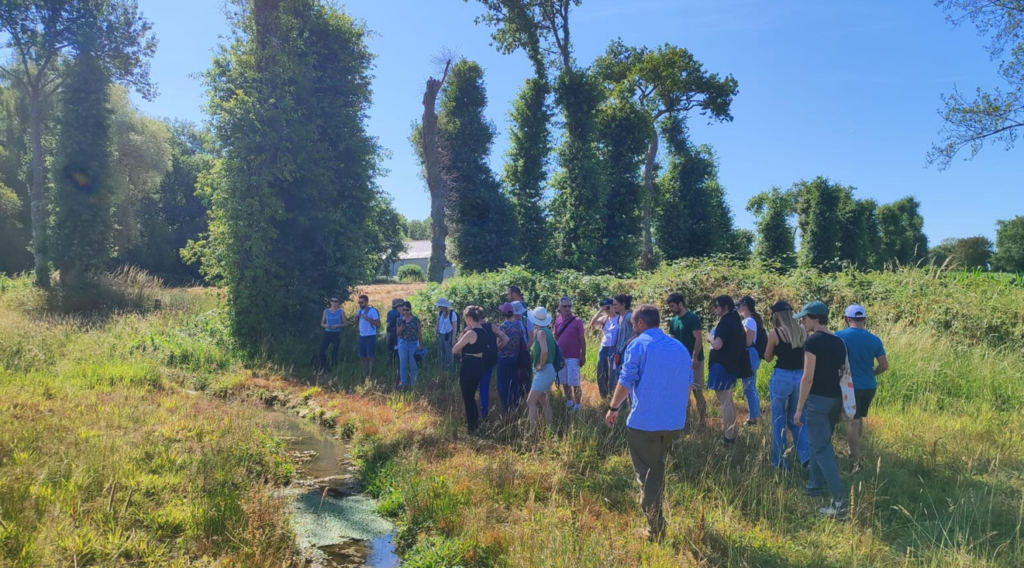
More than 450 policymakers, researchers and local authorities met in Rennes in July to share ways of expanding “nature-based solutions” — measures that use natural systems such as wetlands and green spaces — to help communities adapt to climate change..
The Adaptation & Nature Forum was held on 7–8 July 2026 and brought together practitioners and beneficiaries of the EU’s LIFE Programme, which funds environmental and climate projects, the European Climate, Infrastructure and Environment Executive Agency (CINEA) announced on Friday.
The event was organised by the French Biodiversity Agency as part of the LIFE ARTISAN project, with discussions focusing on how healthy ecosystems can support communities facing extreme weather.
Eva Radek of LIFE ARTISAN said: “We must accelerate the deployment of NbS – in cities, rural areas, corporate sites, and beyond.”
Projects presented from across Europe
Several projects funded under LIFE presented work already under way, CINEA reported.
LIFE BiospherAdapt set out “ecosystem-based adaptation” approaches developed with UNESCO Biosphere Reserves — protected areas that combine conservation with sustainable local development — to help territories prepare for climate change.
A Dutch project, NL-NASCCELERATE, showed how “integrated projects” can support implementation of climate adaptation policies at national and regional level.
Another project, LIFE4ZOO, presented the use of constructed wetlands — engineered wetland areas designed to treat and reuse water — to improve water management, increase drought resilience and reduce pressure on freshwater resources.
Participants also visited a LIFE ARTISAN demonstration site on the Néal River, where aquatic and wetland ecosystems are being restored to help nearby communities adapt to increasingly frequent extreme rainfall.
