
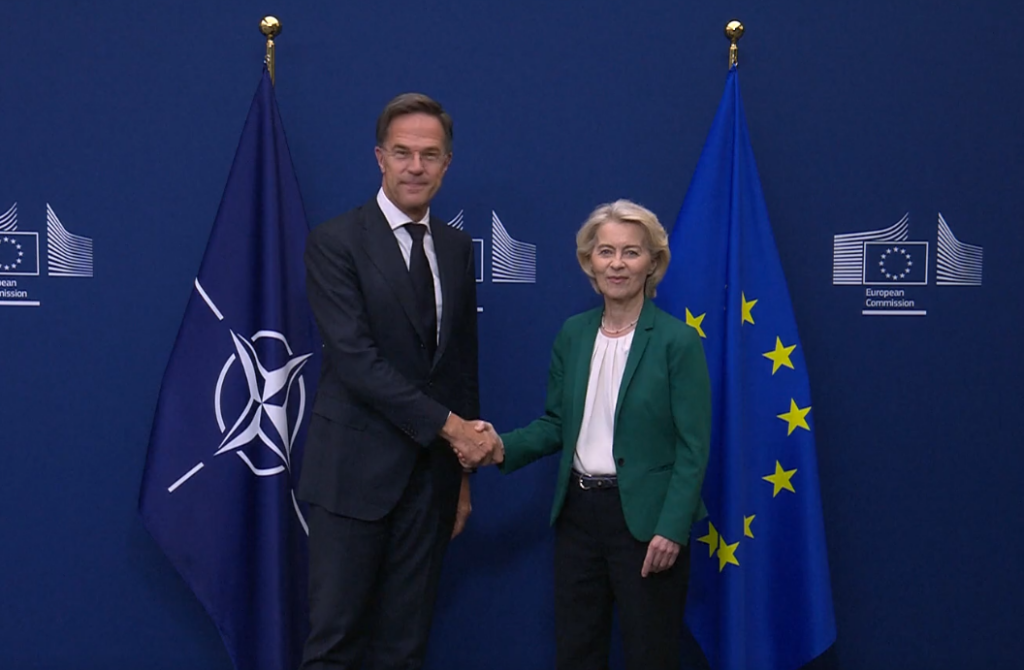
European Commission President Ursula von der Leyen said Germany has identified Russia as being behind an attempted attack on cargo planes at Leipzig/Halle Airport, and she discussed the incident with NATO Secretary-General Mark Rutte during talks on European security.
Von der Leyen said the attempted attack involved “military-grade material” and was “carried out by Russian operatives on EU soil”, adding that it could have caused “enormous damage” and “possibly even loss of life” if it had succeeded, according to her remarks published by the European Commission on Wednesday.
She declared that the EU stood in “full solidarity” with Germany, and that “intimidation will not work."
Von der Leyen described the Leipzig case as “a new escalation on European soil” and placed it alongside what she called a “broader pattern” of incidents including “repeated incursions into our airspace”, drones that “paralyse our airports”, and interference with “critical infrastructure."
She said the EU already has Rapid Response Teams that can respond to such attacks “whether they occur inside or outside our Union.”
Sanctions and Ukraine support discussed
Von der Leyen said EU foreign affairs ministers meeting in Ireland were discussing “new listings” linked to sanctions, and that the Commission was looking at ways to “cut even deeper into Russia’s war chest.”
She said the EU could prepare additional sanctions to impose “as soon as such dangerous, life-threatening acts are attributed.”
On Ukraine, von der Leyen stated the EU had received a new payment request worth “several billion euros” that would cover air defences, including PAC-3 Patriot systems — a type of interceptor missile used to counter aircraft and missiles.
She said EU member states were examining the request and that it was “going in the right direction.”
Von der Leyen also said Europe was working with Ukraine on a project called FREYA to build “our own anti-ballistic missile defences”, according to her remarks.
She cited a “90 billion euro support loan” for Ukraine already in place and said that since June the EU had issued €8.5 billion for drones and missiles for Ukraine, adding that the funding could also be used to buy fighter jets from European industry.
Von der Leyen said she and Rutte discussed closer EU-NATO co-operation, including the need for “a faster, more integrated alert system across Europe” and quicker interception of threats.
She pointed to an “800 billion euro defence investment plan”, including €150 billion through a mechanism she referred to as SAFE, as part of the effort.
