
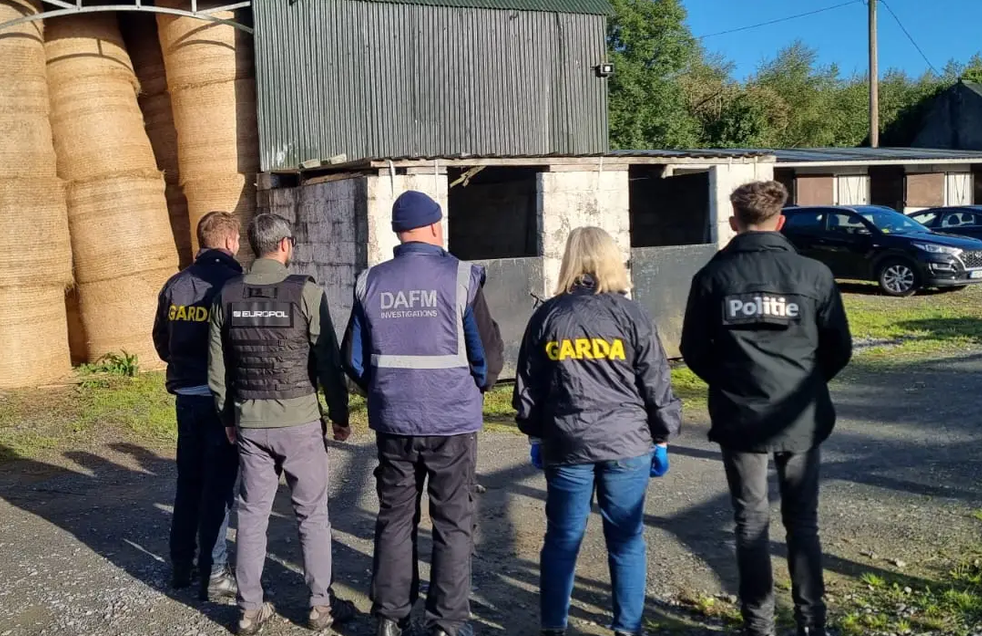
Thousands of horses have been caught up in a suspected trafficking network that used forged documents and altered microchips to move and resell animals across Europe.
The operation took place on 8 and 9 September across Belgium, France, Ireland and the Netherlands, with nearly 200 officers and officials involved, Europol informed on Thursday.
Belgium is leading the investigation into what Europol described as a large-scale trade in horses whose identities and histories were allegedly manipulated to enable cross-border movement and resale.
Some of the animals may have been diverted into the food chain without their true origin and history being known.
Investigators believe forged horse passports and manipulated microchips were used to give horses new identities, obscuring where the animals came from, their previous history and whether they were allowed to enter the food chain.
Searches across four countries
Authorities carried out 24 searches — four in Belgium, six in Ireland, seven in France and seven in the Netherlands — as part of the coordinated action, Europol said.
More than 1,000 horses were checked during the operation, with seized evidence now being analysed.
Investigators are working to establish the final destinations of the horses, with suspicions that some were resold under false identities while others may have entered the food chain.
Europol said it supported the case by helping countries exchange information and by providing operational coordination and analytical support, including checks against its databases during the action days.
