
The European Commission has updated the EU’s list of “dual-use” goods and technologies that require export controls, adding items linked to sectors such as semiconductor manufacturing, advanced computing and additive manufacturing.
The changes align the EU list with decisions taken in 2025 by three international export-control groupings — the Wassenaar Arrangement, the Australia Group and the Nuclear Suppliers Group — and include additional commitments accepted by EU Member States within the Wassenaar Arrangement, the Commission informed on Monday.
Dual-use items are civilian goods, software or technology that can also be used for military purposes, and the EU requires export authorisation for listed items under its Dual Use Regulation.
Among the newly listed items are certain semiconductor manufacturing and testing equipment and materials, including equipment for developing and inspecting extreme ultraviolet masks and reticles used in chipmaking, and single-wafer cleaning equipment.
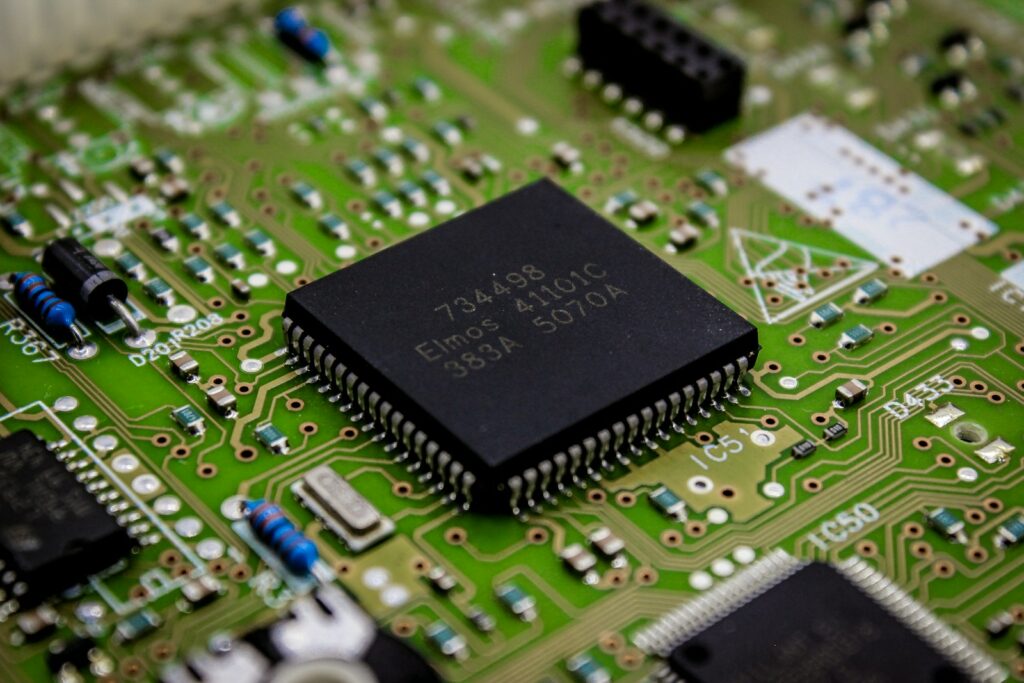
The update also adds some advanced computing integrated circuits and electronic assemblies, including chips that incorporate one or more digital processing units.
Other additions include ceramic matrix composites reinforced with mullite for high-temperature uses, rotary encoders based on inductive sensing technology, additive manufacturing equipment for energetic materials, and chemical vapour deposition equipment used to produce silicon carbide fibres.
When the new rules apply
The updated EU control list will enter into force once it is published in the EU’s Official Journal, after a two-month scrutiny period for the Council of the European Union and the European Parliament.
The Commission also said it is updating some technical definitions and modifying certain control parameters as part of the annual amendment to Annex I of the EU Dual Use Regulation.
