
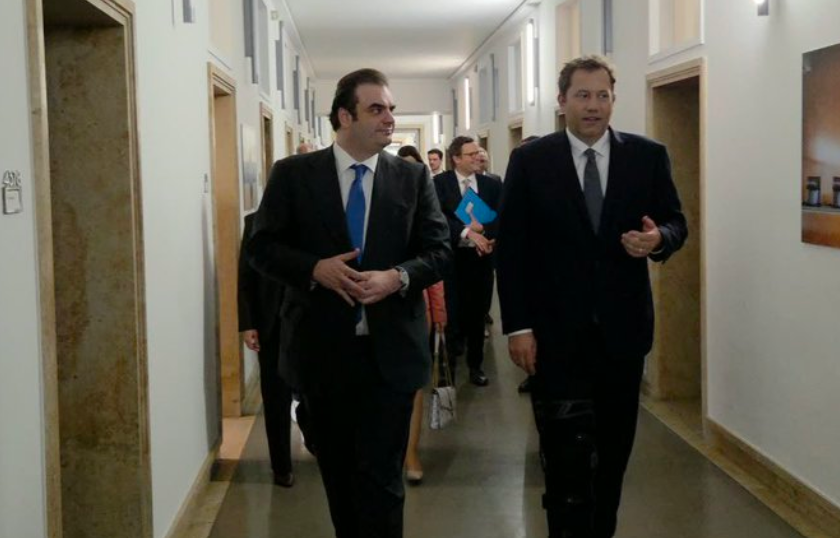
Eurogroup President Kyriakos Pierrakakis said he and Germany’s Vice-Chancellor and finance minister, Lars Klingbeil, discussed the eurozone economy and the group’s priorities for the months ahead after meeting in Berlin.
Pierrakakis said the economic outlook was being shaped by “ongoing war in Ukraine”, “instability and uncertainty in the Middle East”, and “persistently high energy costs and inflationary pressures” affecting businesses and households across Europe, the Eurogroup informed on Tuesday.
He noted that growth in the eurozone had “held up better than what was originally feared” so far, while adding that economic performance needed strengthening without losing sight of “the sustainability of public finances”.
Pierrakakis said “fiscal space” — the room governments have to raise spending or cut taxes — would be “increasingly limited”, with spending pressures growing “especially for defence” and because of “ageing and climate change”.
Eurogroup agenda: public finances, markets and AI
Over the next few months, the Eurogroup would “take stock” of shared challenges and opportunities in public finances, including “expenditure, revenue and governance”, Pierrakakis stated.
He also listed areas he said Europe needed to address, including deepening the EU single market, accelerating the “savings and investments union” — an EU initiative to make it easier for savings to flow into investment across member states — and overcoming fragmentation in the energy market.
Pierrakakis said the Eurogroup would continue work to deepen financial integration and remove barriers to cross-border business and investment, and would seek to advance what he called the “market integration and supervision package”.
He declared that the Eurogroup would also promote a more “strategic discussion” on technology, artificial intelligence and technological change, citing what he described as their “growing macroeconomic potential” and impact on Europe’s “technological sovereignty”.
Pierrakakis referred to Greece’s experience of reforms during its debt crisis, saying the country was “de-escalating its debt more quickly than any other country in the world” and had a “positive growth rate and primary surpluses.”
