
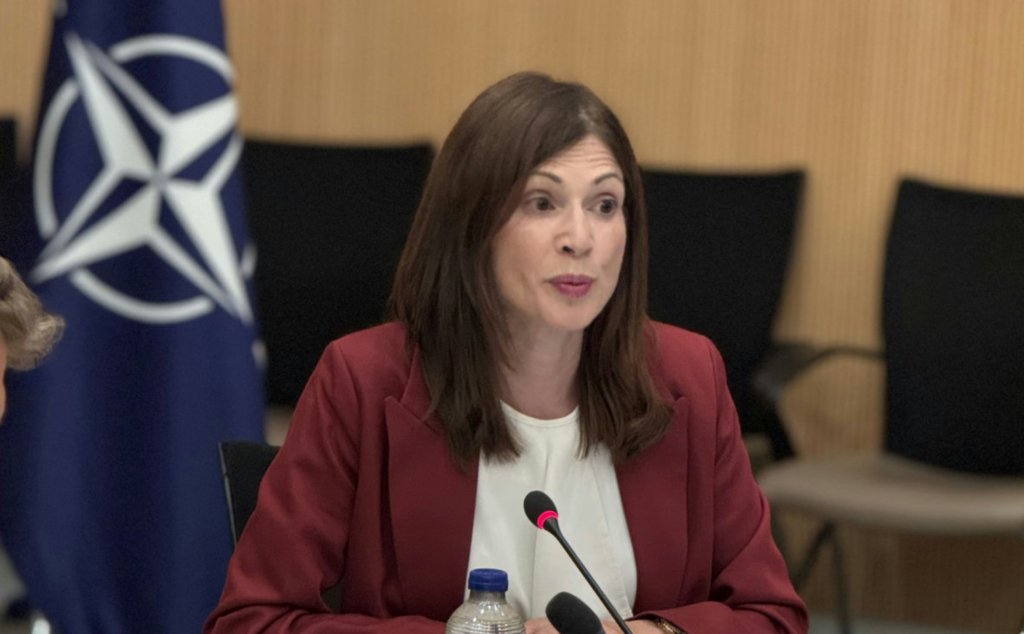
NATO hosted a two-day meeting in Brussels on 10–11 September bringing together military officials, international organisations, NGOs and academics to discuss ways to mitigate and respond to harm to civilians during military operations.
The meeting of the International Contact Group on Civilian Harm Mitigation and Response (ICG-CHMR) was held at NATO Headquarters in collaboration with the Netherlands and the United Kingdom, NATO announced on Friday.
It was organised under the leadership of Irene Fellin, the NATO Secretary General’s Special Representative for Women, Peace and Security and for Human Security, who opened proceedings alongside the UK’s ambassador to NATO, Angus Lapsley, and the Netherlands’ ambassador to NATO, Marcel de Vink.
“Civilian harm mitigation is not simply an ethical aspiration or a legal obligation. It is also an operational necessity,” Fellin said in opening remarks.
Focus on infrastructure, training and the maritime domain
NATO said the first day centred on four areas — civilian harm mitigation in coalition operations, protecting critical infrastructure and essential services, integrating civilian harm considerations into training and exercises, and challenges in the maritime domain.
Participants examined the wider effects of damage to civilian infrastructure and services including energy, transport, communications and healthcare, with discussion drawing on Ukraine’s experience of sustaining civilian infrastructure during wartime.
In the maritime domain, the talks covered the potential impact of military activity on commercial shipping, fishing communities, offshore energy infrastructure, undersea cables and coastal populations.
The second day was held behind closed doors and included exchanges on lessons learned, scenario-based exercises, and joint reporting mechanisms and investigations.
The ICG-CHMR is an informal multinational working group established in 2022 that brings together military practitioners, policy experts, civil society, academics and international partners to share practices and lessons on reducing civilian harm, NATO said, adding that it has taken part as an observer since the group was created.
