
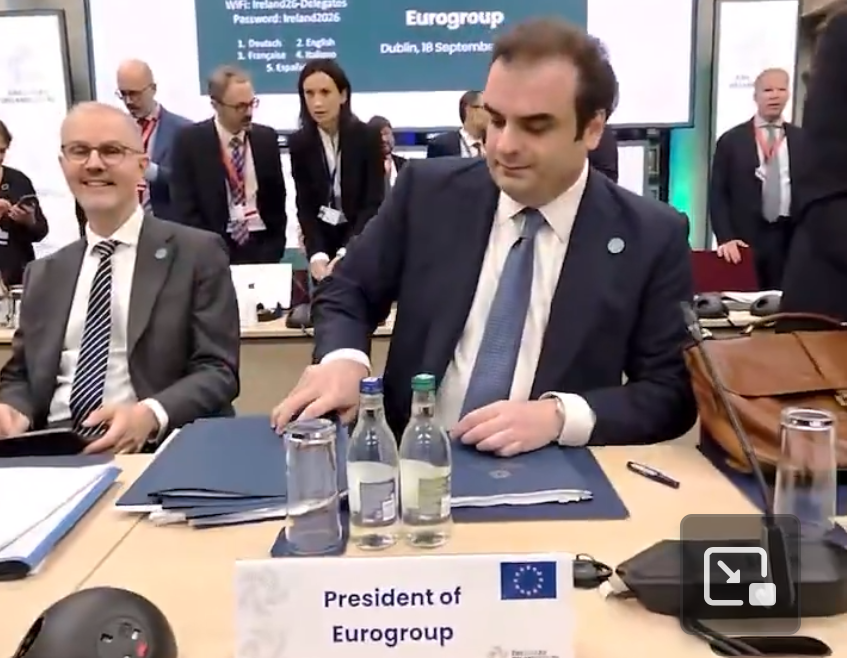
The euro area economy grew more strongly than expected in the second quarter of 2026 and is on track to keep supporting activity through the end of the year, Eurogroup President Kyriakos Pierrakakis said after finance ministers met in Ireland on 18 September.
Pierrakakis stated that the ministers discussed the latest economic developments with assessments from the European Commission and the European Central Bank, alongside input from the European Parliament’s Committee on Economic and Monetary Affairs, the Eurogroup informed on Friday.
He said developments in the Middle East were again putting upward pressure on oil and gas prices, with direct consequences for citizens and businesses.
Global financial conditions are tightening and this is being reflected in higher sovereign bond yields, which increases pressure on national budgets if it continues, he said.
Bond yield spreads within the euro area — the difference between countries’ borrowing costs — remain contained compared with past periods of stress, Pierrakakis added.
He noted that euro area countries should stick to the fiscal path already agreed, and any new measures responding to higher energy prices should be targeted, temporary and consistent with fiscal rules.
Pierrakakis also said the Eurogroup discussed increasing investment in defence, digitalisation and energy, and would return to the question of how to make public finances more effective next month.
Productivity and savings in focus
A second main discussion at the meeting focused on productivity and growth, with OECD Secretary-General Mathias Cormann presenting the organisation’s assessment of Europe’s challenges, Pierrakakis said.
He disclosed that the ministers reviewed progress since the Draghi report two years earlier and the Eurogroup’s competitiveness priorities set in November 2024, and discussed what should come next and how quickly.
Human capital was identified as a priority, with Pierrakakis saying Europe needed to invest more in skills and adapt education systems as technology and artificial intelligence change the economy.
He also pointed to the need to direct capital, labour and technology to where they are most productive, raise productivity in services, and spread innovation more quickly across the economy.
Mobilising European savings and deepening the Single Market were singled out as central to channelling resources into productive investment and companies that can grow across Europe.
