
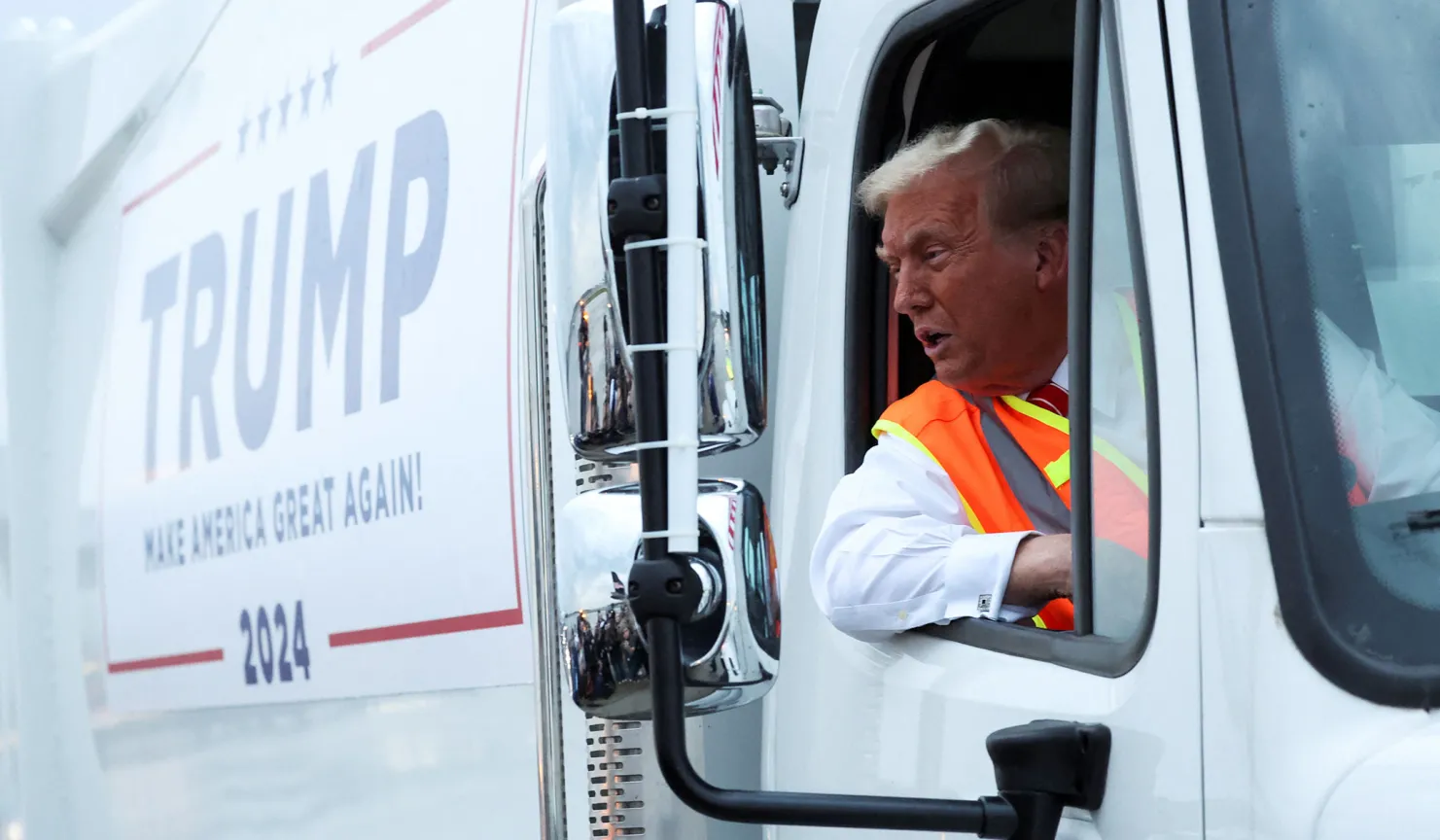
United States President Donald Trump thinks banning the export of diesel is a good idea. Europe’s reliance on the fuel is a weakness but yet another energy market shock could trigger something more ambitious in the longer term.
Earlier this week, Donald Trump said that banning the export of diesel would help push prices down at home, where they’ve hit record highs. Ahead of November’s midterm elections, the president is scrabbling around for anything that’ll help him in the polls.
Even though energy department chief Chris Wright added that a ban is not a good idea, Trump has a habit of replacing erstwhile loyal lieutenants with new goons who will implement his policy ideas, regardless of if they’re well thought out.
So the smart money is on some sort of export curbs in the near future. If that happens, then Europe is dangerously exposed, given that the US provides more than half of all imported diesel. It’s yet another energy dependency that might be our undoing.
Four in 10 cars on EU roads are powered by diesel and the vast majority of trucks run on the fuel as well. The new bus market is now predominantly electric but when you factor in the existing fleet, more than 95% of them still need diesel.
Prices are already squeezing wallets, with motorists paying hundreds of euros more at the pump than they did in past periods. Supply chain disruption caused by the turmoil in the Middle East has played havoc and there is no real end in sight.
Clean mobility group Transport & Environment suggested in a report this week that there are a couple of short-term bandaids that could be used to stem the flow of the black stuff, including more teleworking so motorists don’t have to commute as much.
Reducing motorway speed limits, investing in more public transport options and making sure drivers know how to look after their cars properly so they run efficiently are also on the list of quick fixes.
Longer-term though, it is the electrification of road transport that will win the day, reduce dependencies on untrustworthy overseas suppliers and provide Europe with a sense of security that has long been missing.
Electric car purchases are accelerating but it still boggles the mind that European legislators have caved into automotive industry demands to water down emission rules. At just the time when decisive action is needed, the EU has missed the turnoff.
For buses, the trend is only going in one direction. The likes of Bulgaria, Denmark, Estonia and Latvia now only buy electric and the numbers will only increase when fleet renewals start coming around. There is no comparison when you're a passenger, as it's a choice between loud and smelly and quiet and smooth.
For trucks, it was only rather recently that the electrification of the sector was still in doubt. Concerns still persisted about range, pulling power and technical feasibility. Alternative solutions like hydrogen and synthetic fuels were still persisting.
But now it’s not a question of if trucks can be electrified but when, as battery technologies advance and become ever cheaper. Top manufacturers like Scania and Volvo are selling more and more models, providing hauliers with more choice.
The cost of buying a new e-truck still outweighs the cost of a new diesel-powered truck quite significantly but the longer this fuel uncertainty goes on, the more the case for batteries increases. Total cost of ownership is what haulage companies factor in when buying vehicles and they operate them for decades.
As far as charging goes, if truckers can charge at their depots and if there is enough infrastructure along key cargo routes, then another obstacle is removed. The German government announced a €1 billion scheme last week aimed at doing just that.
Big logistics hubs like the ports of Antwerp and Rotterdam have also started rolling out charging infrastructure.
Companies that have made the switch have only good things to say about their new vehicles too and few yearn for the old days of diesel power.
No engine means more room in the cab, so more room to sleep, stretch tired legs and have essential mod-cons like fridges. No pistons means a quieter and smoother ride, no gears means less stress when making sure you can get up a steep bit of road.
When e-truck charging points are strategically placed where truckers would need to take their mandatory breaks anyway, then the supposed problem of longer charging times is also a moot one.
If the economics can be worked out then quality of life for workers in the trucking sector would improve dramatically, perhaps attracting a younger generation to take it up as a profession. Hauliers also hope it will attract more women to what is still a male-dominated job.
Donald Trump’s impact on the energy transition might well extend to prompting a revolution in the truck sector. Our towns and cities will owe him a debt of thanks if diesel fumes and horrendously loud engines are finally banished from them.
If the current president keeps this up, then maybe Europeans will start supporting his bid for an unconstitutional four more years!
Want more updates and analysis of what is happening in the world of energy and climate? Interested in finding out more information about public tenders and consultations? Sign up to our Energy Rundown newsletter here!
