
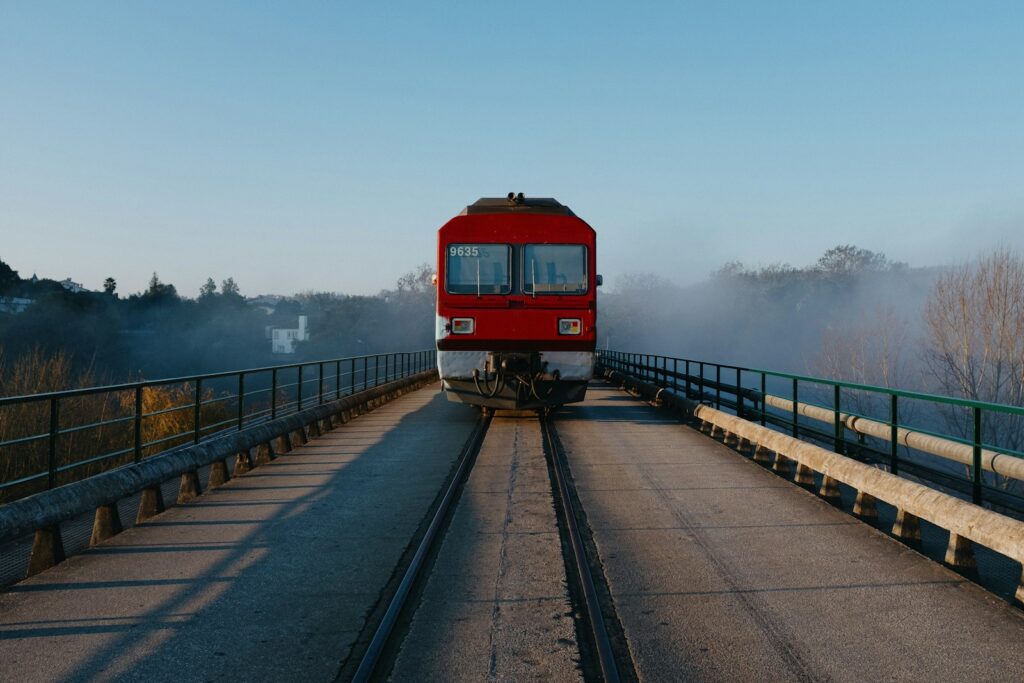
Plans to cut journey times between Lisbon and Madrid and expand EU transport funding were set out by European Commission President Ursula von der Leyen in a speech at the Connecting Europe Days 2026.
A new high-speed rail link across the Iberian Peninsula is being built because there is currently no direct train between the two capitals, with nearly 40 flights operating daily on the route, she said in a speech on Tuesday.
Passengers are expected to be able to travel directly between Lisbon and Madrid in five hours by 2030, falling to around three hours by 2034, according to Von der Leyen.
She linked the project to the EU’s Trans-European Transport Network, or TEN-T — a long-term plan to connect railways, roads and waterways across member states — and said the focus was on removing cross-border “bottlenecks” and turning “27 national systems into one truly European network”. Completing the network could increase Europe’s GDP by 2.4% by 2050, equivalent to €467 billion.
Von der Leyen said the Commission had proposed more than €50 billion for transport under Connecting Europe in the EU’s next long-term budget, describing it as more than twice the funding available today.
Electric trucks, autonomous vehicles and climate resilience
Europe has 26,000 zero-emission trucks on its roads, and that could rise to 400,000 by 2030, she said.
She added that the Commission is working with member states on cross-border charging corridors, with EU-funded projects rolling out high-power charging infrastructure along main European transport routes.
On autonomous vehicles, Von der Leyen said testing across several member states currently involves different national permits and procedures, and that 18 member states agreed this summer to work together on large-scale cross-border testbeds with common principles for approvals and co-ordinated permitting.
She also referred to disruption linked to climate change, including heat affecting railways, floods closing roads and tunnels, and drought lowering water levels on major waterways.
A new European framework for climate resilience will be presented next month, she said, adding that EU investment is helping protect infrastructure at Milan Malpensa Airport from flooding.
Von der Leyen said the EU was supporting new and upgraded transport links between Moldova and Romania, as countries including Ukraine, Moldova and the Western Balkans move closer to the bloc.
