
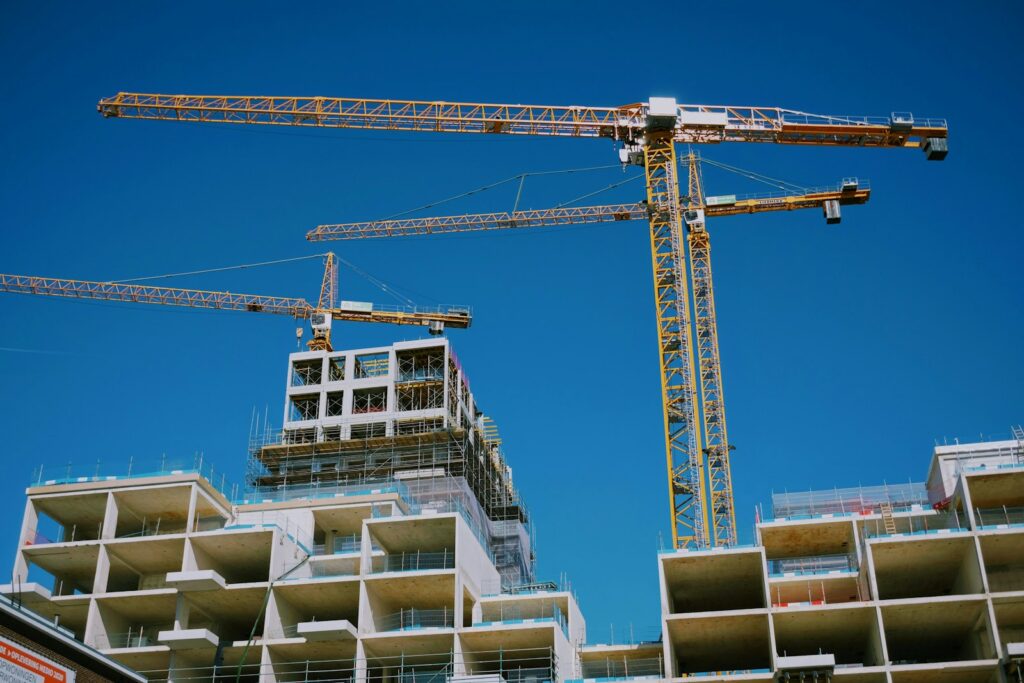
Modern construction methods such as modular and prefabricated building could help reduce housing costs and increase supply across the EU, but must be matched with quality standards and respect for workers’ rights, according to the European Economic and Social Committee (EESC).
“Modern methods of construction” often involve off-site manufacturing — where parts of a building are made in a factory and assembled on site — alongside newer on-site techniques designed to speed up delivery and improve consistency, the Committee said in an opinion released on Tuesday.
Modern methods can only support affordable housing if “innovation, quality, workers’ rights and public interest objectives advance together”, John Comer said
They should be treated as part of wider social, labour market, affordability and industrial policy planning rather than as a purely technological or market issue, Thomas Kattnig added.
The opinion was drafted by Comer and Kattnig after a request from the Irish Presidency of the Council of the European Union, and focuses on conditions needed to increase the supply of repurposed, renovated and new homes.
Investment, standards and oversight
Boosting the use of modern methods will require greater industrial capacity to manufacture systems for prefabrication and off-site construction, with targeted investment to expand production, the Committee stated.
It also called for efforts to reduce regulatory fragmentation by promoting standardisation and ensuring that systems linked to modern methods are certified and monitored, adding that member states, the European Commission, the Housing Alliance and other stakeholders all have a role.
The Commission should contribute to national housing plans and support cross-border cooperation while housing remains primarily a national competence, the EESC said.
The Committee also backed the creation of a central EU funding mechanism to help small and medium-sized enterprises invest in digitalisation, saying it should be used not only for construction projects but also to support labour rights, working conditions and consumer interests.
House prices in the EU have risen by more than 60.5% since 2013, while rents increased by 28.8% between 2010 and 2025.
The housing cost overburden rate — the share of people spending a high proportion of income on housing — was 8.2% on average in 2024.
Mortgage interest rates have doubled and the number of building permits issued in the EU fell by 25% between 2021 and 2024.
