
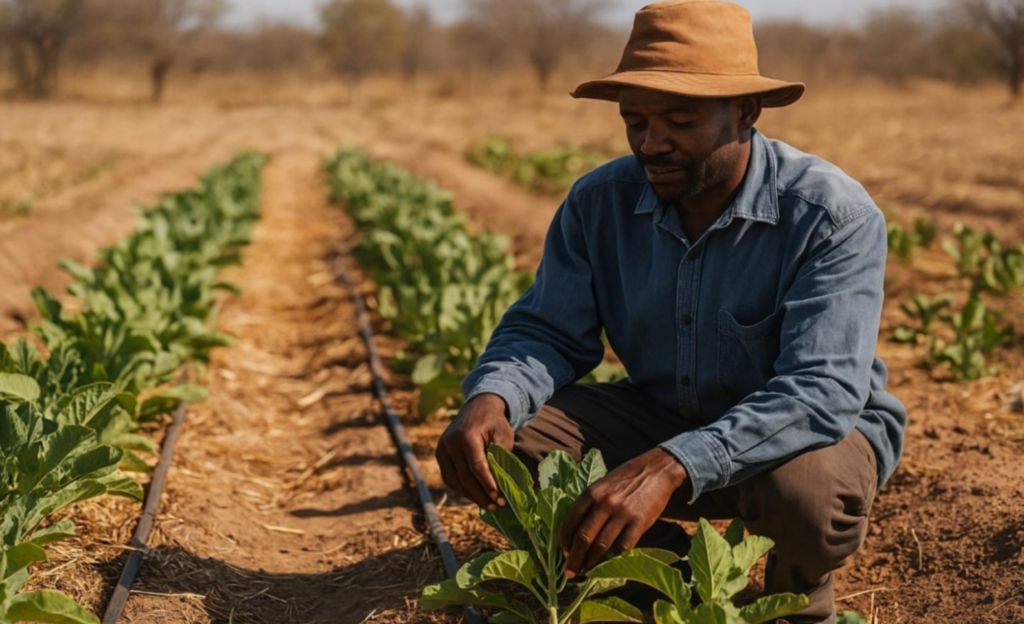
The EU and the International Fund for Agricultural Development have launched a €14 million programme to support smallholder horticulture farmers in Zimbabwe, Zambia and Botswana.
The initiative, called Agroecological Transitions for Horticulture in Arid Zones (ATHAZ), is funded by the EU and will run from 2026 to 2030, according to the EU Delegation to Zimbabwe, cited on Thursday by the European External Action Service (EEAS).
ATHAZ will work with farmers on measures including more efficient water use, resilient seed systems, integrated pest management and approaches described as sustainable production, while strengthening links to markets and opportunities for value addition.
Integrated pest management is a way of controlling crop pests by combining methods such as monitoring, biological controls and targeted use of pesticides.
The programme aims to reach about 15,000 smallholder farming households across the three countries — representing around 75,000 people — with particular attention to women and young people.
Francesco Rispoli, IFAD’s country director for Zimbabwe, said the programme builds on IFAD investments in irrigation and market access in the country.
Innovation hubs and value chains
ATHAZ will be implemented by IFAD in partnership with the International Centre of Insect Physiology and Ecology, the Research Institute of Organic Agriculture and Biovision Africa Trust, working with national research and extension systems, farmer organisations, governments and private-sector actors, according to the EU Delegation to Zimbabwe.
Across Zimbabwe, Zambia and Botswana, the programme will establish nine “innovation hubs” and strengthen 30 horticultural value chains — the steps involved in getting produce from farms to buyers.
Francesca Fabbri, chargé d’affaires a.i. at the EU Delegation to Zimbabwe, said the programme would work alongside farmers, “especially women and young people”, to help them “grow more with less water” and reach buyers.
