
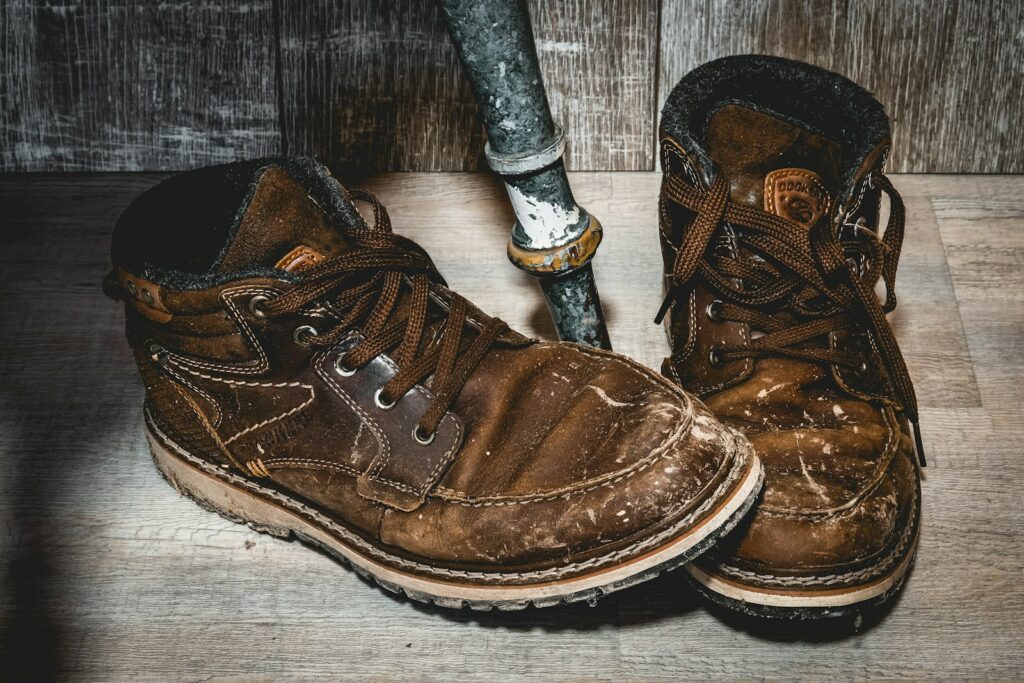
More than four in five models of safety shoes tested in an EU-funded campaign failed to meet EU safety and paperwork requirements, according to findings published in the update on joint market surveillance work.
Testing of 83 models found 82% were non-compliant once both performance checks and documentary inspections were combined, the European Commission informed on Tuesday.
The most common problems were weak anti-static properties and inadequate resistance to impact and punctures.
Inspectors also found issues with paperwork and labelling, including missing or unclear instructions for use, absent or incorrect protection category information, missing EU Declarations of Conformity, and CE markings that were not affixed or not indelible. CE marking is the label used to show a product meets EU rules.
Authorities took enforcement action against several products after the checks, including banning or withdrawing 24 models from sale and issuing warnings and fines to 15 economic operators.
Four models were recalled, and some online marketplaces were told to remove listings.
One economic operator was fined EUR 7,000 over shoes that did not have the protective features claimed in promotional material, and was instructed to remove the product from its website. Six models were brought into conformity as a result of the investigation.
Tests carried out in eight countries
Market surveillance authorities sampled the shoes in eight countries — Cyprus, Germany, Luxembourg, the Netherlands, Norway, Portugal, Spain and Sweden — with 65% bought online and 35% purchased from physical shops, according to the campaign’s findings.
The Commission said several results suggested problems with production consistency, where prototype shoes may pass certification but production versions sold to customers do not.
The issue appeared particularly relevant for anti-static performance and puncture resistance, where how protective components are integrated into the finished shoe can affect results.
The work was carried out under the 2025 edition of the Joint Actions on Compliance of Products (JACOP) campaign in EU and EFTA countries.
The European Commission finances and co-ordinates the co-operation, enabling national authorities to share methods and compare findings.
“Market surveillance campaigns help to protect businesses from unfair competition and ensure that products sold on the single market are safe for consumers,” DG GROW policy officer Vanessa Capurso said.
