
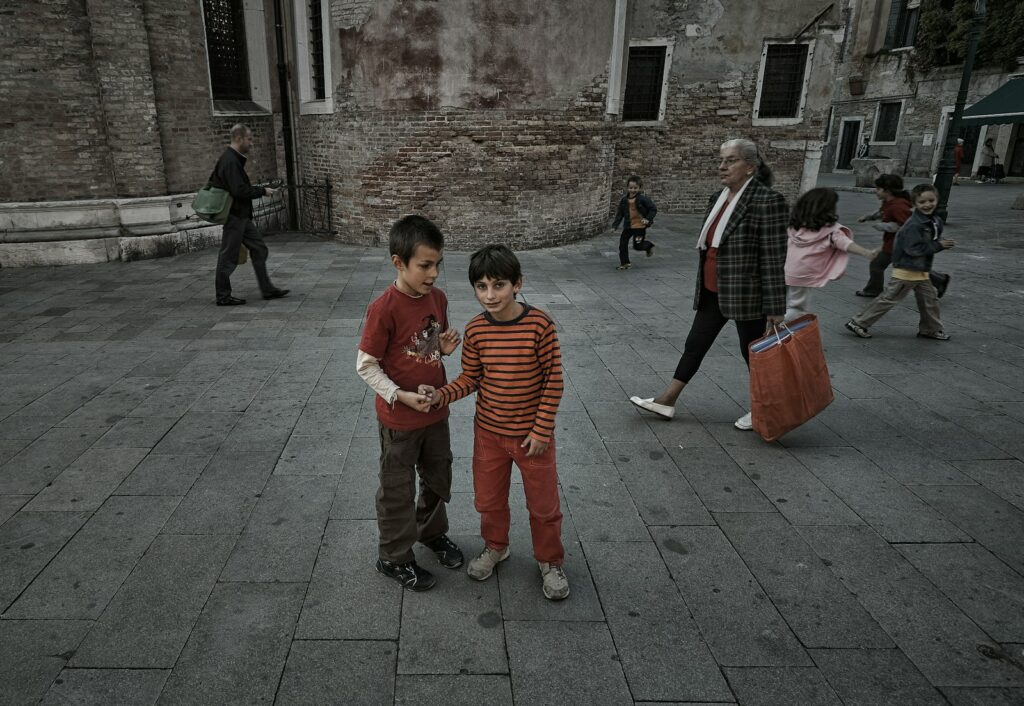
One in five people in the EU is at risk of poverty or social exclusion, including 19.3 million children, European Commission Executive Vice-President Roxana Mînzatu said ahead of the International Day for the Eradication of Poverty.
In a statement released on Friday, Mînzatu said many people across Europe cannot afford basics such as housing, heating, food, healthcare or education, and said more than 1.4 million people are homeless or do not have secure housing.
The European Commission adopted its first EU Anti-Poverty Strategy earlier this year, setting out work towards an existing EU target to cut the number of people at risk of poverty or social exclusion by at least 15 million by 2030, and to help eradicate poverty by 2050.
Five months after adoption, work to implement the strategy is “well under way.”
Housing, jobs and children
EU ministers in the Council are expected to soon approve a Commission proposal for a recommendation on fighting housing exclusion, which the Commission described as the first EU legal act on homelessness.
Mînzatu also said the Commission estimates that almost 50 million people are outside the labour market, adding that “quality jobs” are the best route out of poverty for people who can work.
A first-stage consultation with European social partners — organisations representing employers and workers at EU level — was launched in July to gather views on possible EU action to support people who face major barriers to entering the labour market.
Mînzatu stated that the European Commission would soon launch a “Coalition against Poverty” with the private sector and philanthropy, and would test a European Child Guarantee Card, described as a digital tool intended to help children in need access support they are entitled to.
An ESF+ call — part of the European Social Fund Plus, an EU funding programme — was launched in May to support member states in implementing their national Child Guarantee action plans, including measures for Roma young people aged 15–29 who are not in employment, education or training.
