
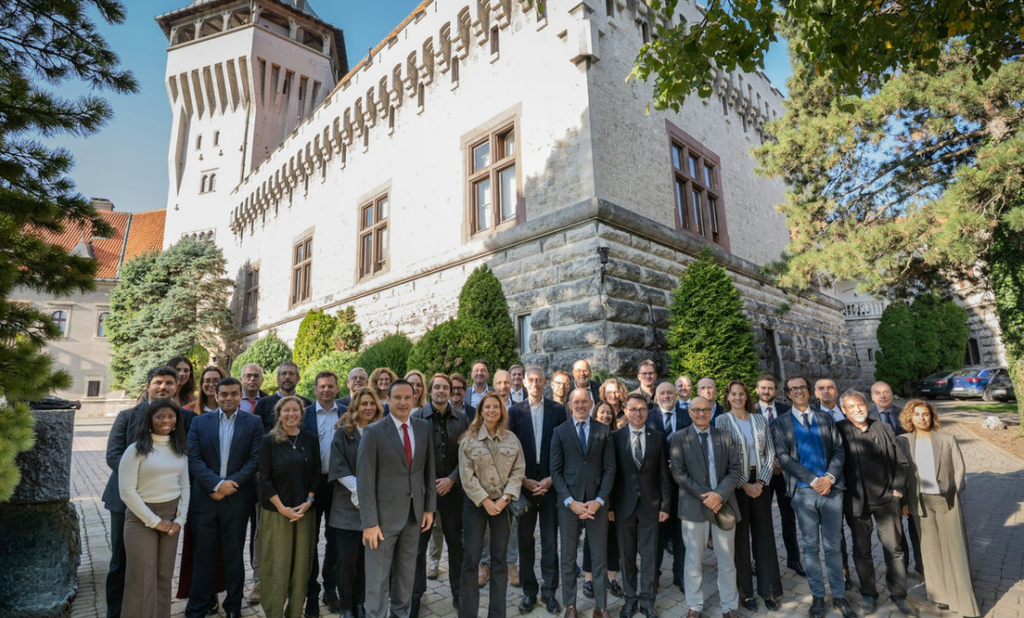
NATO’s Science for Peace and Security Programme held an Information Day in Bratislava on 8 October to strengthen engagement with Slovakia’s scientific and innovation communities.
The event was hosted by the Slovak Academy of Sciences and supported by Slovakia’s Ministry of Foreign and European Affairs and Ministry of Defence, NATO informed on Friday.
Academics, researchers, government representatives and NATO officials attended to discuss technological developments and scientific cooperation linked to security challenges.
Piers Cazalet, director of NATO’s Defence and Security Cooperation Directorate, told participants that technological innovation and scientific research were key to strengthening the alliance’s deterrence and defence capabilities.
The Information Day also highlighted work by Slovak scientists involved in NATO-supported projects in quantum technologies and secure communications, humanitarian demining, biotechnology, and resilience and civil preparedness.
Review of 92 proposals
Earlier in the same week, NATO said members of its Independent Scientific Evaluation Group met in Smolenice, Slovakia, to review 92 project proposals submitted under the programme.
The proposals covered areas including counter-uncrewed aerial systems — measures to detect or stop drones — as well as emerging and disruptive technologies, the resilience of critical infrastructure, countering hybrid threats, and chemical, biological, radiological, nuclear and explosive hazards management.
During the visit, the group met Slovak colleagues, toured Slovak Academy of Sciences research facilities in Bratislava and met young scientists.
The Science for Peace and Security Programme was established in 1958 and links researchers and experts from NATO member and partner countries on security-related projects.
