
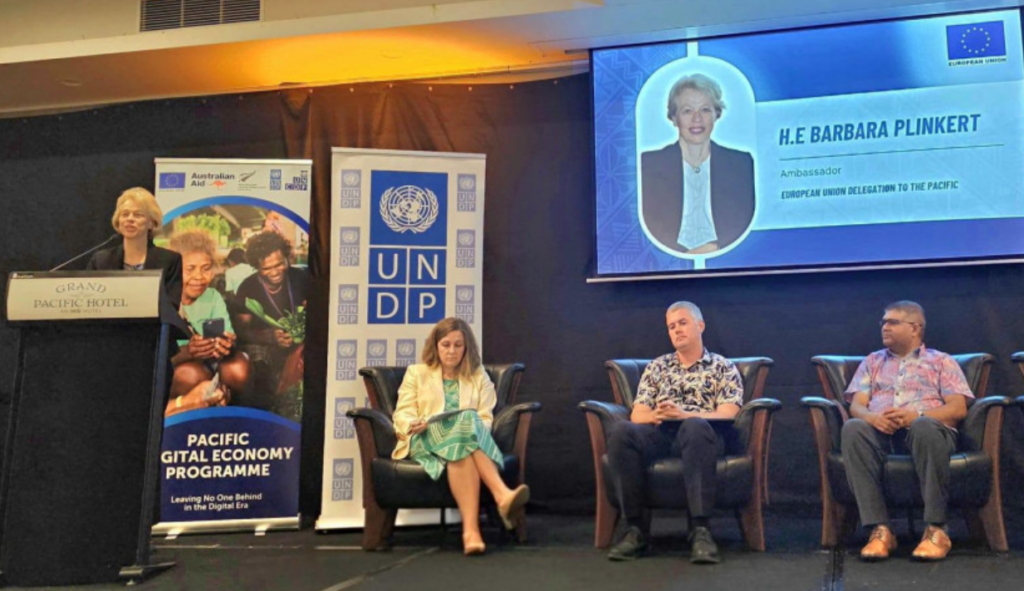
Pacific central banks, regulators, banks and payment firms met in Fiji's capital Suva on Tuesday to discuss ways to reduce barriers that make sending money across Pacific borders complex and costly.
The Pacific Regional Conference on Cross-Border Remittances brought together representatives from Fiji, Tonga, Samoa, Solomon Islands, Vanuatu and Kiribati, alongside commercial banks, remittance providers and payment service providers, the European External Action Service (EEAS) reported.
Remittances — money sent home by people working abroad — are a key source of household income across the region, but small and dispersed markets, different regulations and limited links between payment systems can make cross-border transfers difficult and expensive.
Ariff Ali, Governor of the Reserve Bank of Fiji, said Pacific countries had made progress modernising domestic payment systems, but cross-border payments remained more complex, and “greater regional cooperation and interoperability will be key to delivering pragmatic solutions and shared benefits”.
Support from the EU, Australia and New Zealand
The conference was convened by the UN Capital Development Fund (UNCDF), the UN Development Programme (UNDP) and the Reserve Bank of Fiji, and supported through the Pacific Digital Economy Programme, which has onboarded more than 375,000 new users in digital financial services across Fiji, Samoa, Solomon Islands, Tonga and Vanuatu since 2021.
Barbara Plinkert, the EU Ambassador to the Pacific, said the EU was supporting efforts to make remittance services “less costly, faster, safer and more inclusive” by reducing transaction costs, improving transparency and expanding access to digital financial services.
Australia’s High Commissioner to Fiji, Peter Roberts, said Fijian workers sent home an average of A$1,459 per month, contributing an estimated A$90.6 million in remittances in 2025 (January to December), adding that Australia remained committed to working with Pacific partners.
Sam Cox, New Zealand’s Deputy High Commissioner to Fiji, said making remittances work better required cooperation between sending and receiving countries, as well as the financial institutions and payment providers connecting them, and added that “greater transparency, competition and connectivity” could help families receive more value from the money sent to them.
A regulatory dialogue among Pacific central banks was also held to explore where greater cooperation could reduce cross-border friction while maintaining supervision and financial integrity.
