
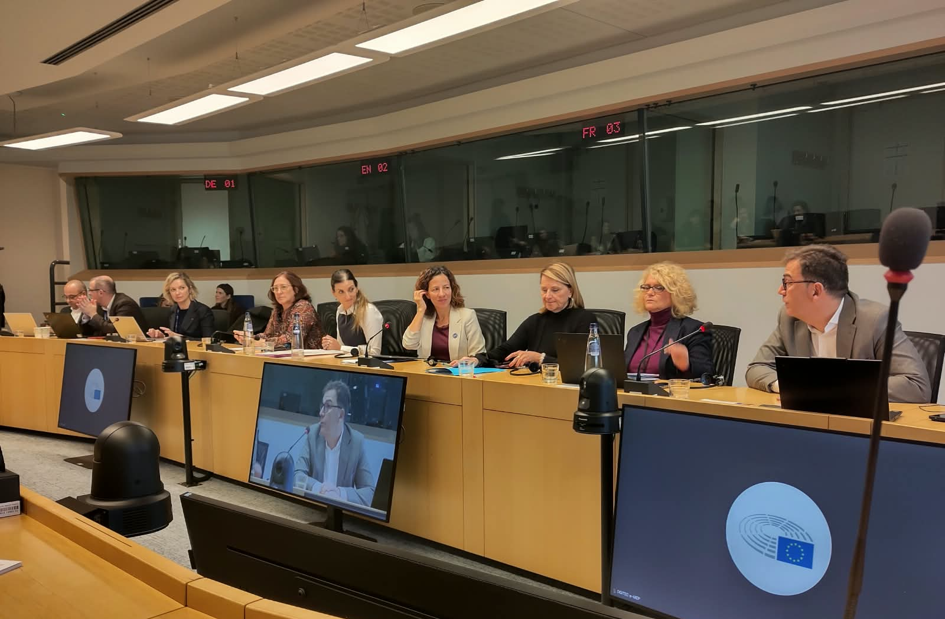
As the EU budget is under negotiation, four Spanish social organisations presented a joint report to the European Parliament on Thursday to warn about the impact of cuts to the European Social Fund (ESF) in the EU's next Multiannual Financial Framework for 2028.
As it now stands, the ESF is a stand-alone item in the MFF, but in the next budget it is expected to be integrated into a larger budget item that will contain funding for items like infrastructure, security and defense.
According to the "Investing in Inclusion: The Impact of the European Social Fund" report, this loss of funding could jeopardise years of progress made in employment and social inclusion, and it calls for the ESF’s budget, core objectives and priority target groups to be safeguarded in the future MFF budget currently under negotiation.
"We are really afraid that the ESF is going to be diluted in this big framework," Beatriz Iraeta Gascón, the manager of the ESF for Caritas Spain, told the Brussels Times.
"How the European Social Fund has been managed for the last 25 years, at least in Spain, we know that it has been good for people, and it is also good for economy," she said. "So, why change it?"
Changes to the European Social Fund
The European Social Fund Plus is how the EU's supports the implementation of the European Pillar of Social Rights to support fair and well-functioning labour markets and welfare systems.
With an EU budget of around €95 billion for the period 2021-2027 the European Social Fund operated with a budget of around €95 billion.
However, in the proposed 2028-2034 MFF, instead of standing alone, it will now be one of the funds grouped under the 27 National and Regional Partnership Plans (NRPPs). The new NRPP fund currently doesn't clearly establish social objective in line with the current work of the ESF.
The report, published by Caritas Spain, the Red Cross Spain, Fundación ONCE and Fundación Secretariado Gitano, assessed the the impact of their operations supported by the European Social Fund (ESF) between 2016 and 2023 in Spain.
In their report, they found that participation in the programmes funded by the ESF increased the likelihood of participants finding employment by 58% on average, and by up to 79% among previously inactive people experiencing social exclusion. These programmes also helped improve the living conditions and prospects for the future of its participants.
“We know that for every euro that the European Union has invested in these programmes in Spain, there has been a return of three euros,” Iraeta Gascón said, pointing to increases in employment that leads to a rise in consumption, tax revenue, and a reduction of social spending on unemployment.
“Investing in social programmes is not only good because people improve their lives,” she said, "it's also good for the economy.”
According to a press release for the event, these organisations presented their findings to Roxana Mînzatu, Executive Vice-President of the European Commission, alongside MEPs and stakeholders working on employment and social inclusion.
While there may be little hope for Iraeta Gascón that the ESF will retain its current status as a stand-alone budget item, she still believes there's important work the EU can do to continue the objectives of the ESF.
Among the six demands made in the report, she would like to see the budget commit a concrete number for these programmes rather than a percentage of the fund, and have the EU include concrete social objectives into the NRPP as well.
