
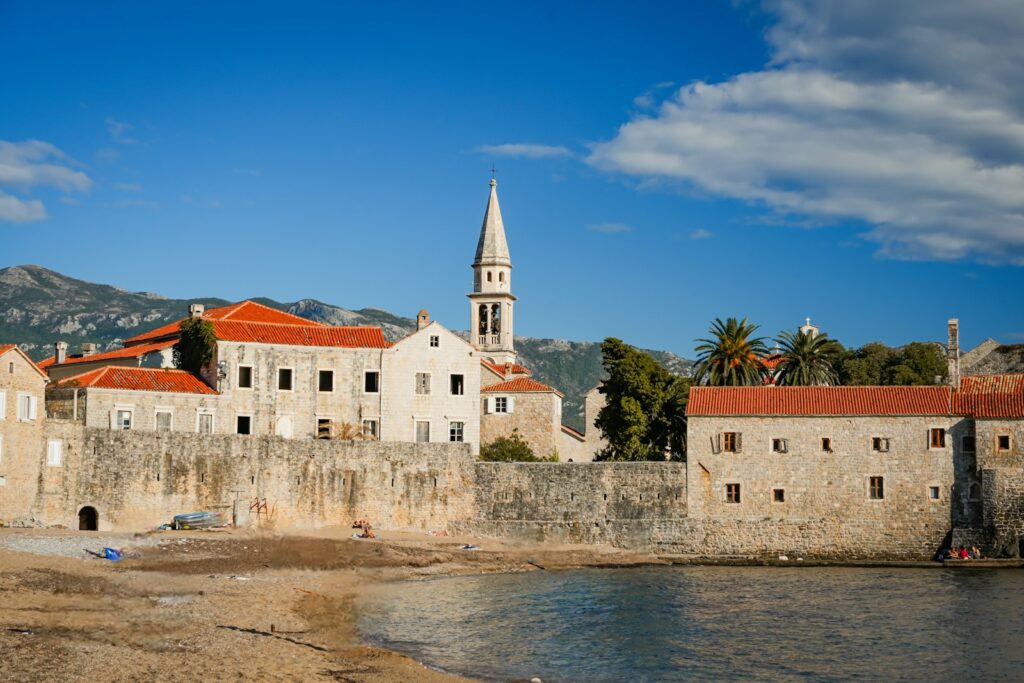
EU and Western Balkan ministers met in Budva, Montenegro, on 5 and 6 November to discuss closer cooperation on online crime, migration and border management.
Ireland’s Minister of Justice, Migration and Home Affairs, Jim O’Callaghan, attended on behalf of the Irish Presidency of the Council of the European Union, alongside European Commissioner for Justice Michael McGrath, according to a joint statement from the EU and Western Balkans Ministerial Forum on Justice and Home Affairs released on Thursday.
Counterparts from the Western Balkans also took part, with representatives from the incoming Lithuanian and Greek EU Council presidencies and the European External Action Service in attendance.
Talks in the “home affairs” session included preventing and investigating crimes committed online, including child sexual abuse, the online solicitation of children, cyberviolence and online fraud.
Participants described cyberattacks, online fraud and online child sexual exploitation as the fastest-growing crimes and said criminal networks exploit gaps in cross-border cooperation and differences between legal systems to operate.
They discussed improving digital investigation and forensic capacities, including with support from Europol — the EU’s law enforcement cooperation agency — and CEPOL, the EU agency that trains police and other law enforcement officials.
Ministers also discussed newer technology threats, including deepfake and AI-generated child sexual abuse material, and stressed cooperation with online platforms to report illegal content and enable lawful access to data.
The forum referenced continued work through EMPACT, an EU framework for coordinated action against serious organised crime, and noted the role of the Western Balkans Cyber Capacity Centre in strengthening cyber expertise in the region.
Migration and border cooperation
On migration, participants said they welcomed progress on the EU Action Plan on the Western Balkans adopted in December 2022 and reaffirmed their commitment to tackling illegal migration by reinforcing border protection and combating migrant smuggling and trafficking in human beings.
The forum highlighted cooperation with EU agencies including Frontex, the European Border and Coast Guard Agency, the EU Agency for Asylum and Europol, and also mentioned work in the Global Alliance to Counter Migrant Smuggling.
Ministers said efforts were needed to address increasing violence linked to migrant smuggling networks, while ensuring protection and support for victims of trafficking and smuggled migrants subjected to abuse or crime.
The EU also informed partners about developments to set up a new sanctions regime targeting migrant smuggling, trafficking in human beings and other serious organised crime, allowing asset freezes and travel bans against perpetrators.
The EU reiterated political and financial support for the region on migration, asylum and border management and said alignment with EU visa policy should continue as a priority, noting that such alignment has had a positive impact on reducing illegal border crossings.
Discussions also covered implementing the EU Pact on Migration and Asylum, as well as cooperation on returns and readmission.
