
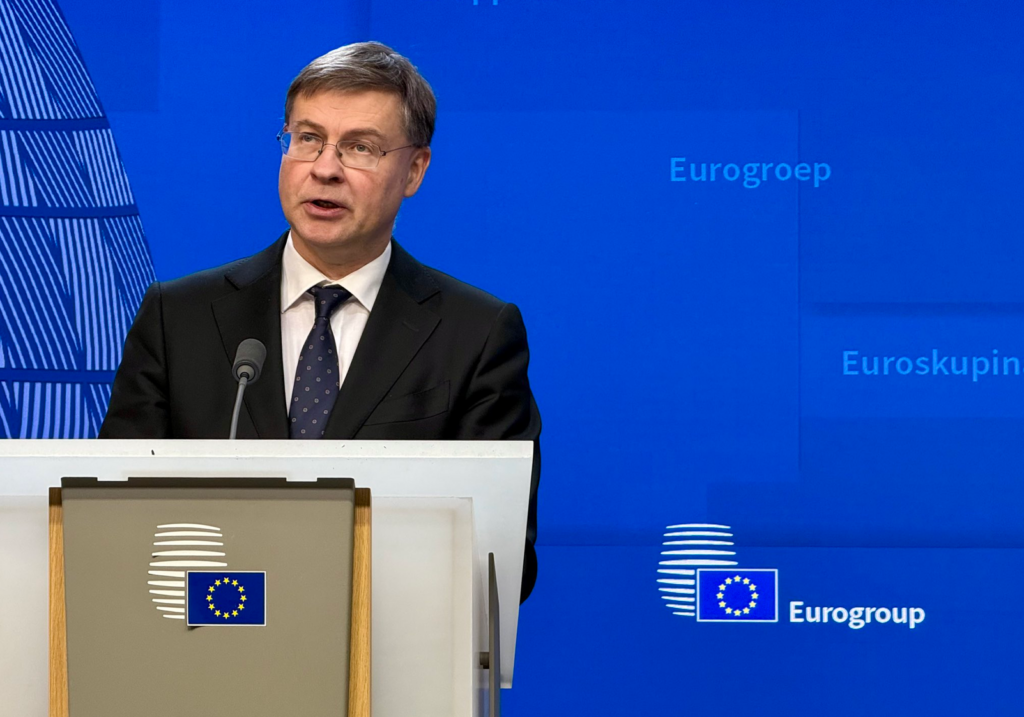
EU Economy Commissioner Valdis Dombrovskis has stated that growth data this year had been more positive than previously expected but that the outlook remained uncertain, with energy prices still “very high and volatile.”
Dombrovskis said the European Commission will publish its Autumn Economic Forecast on 17 November, followed by the European Semester Autumn Package on 24 November, which will include an assessment of EU countries’ compliance with the bloc’s fiscal rules, according to his remarks delivered at a Eurogroup press conference on Monday.
He noted that EU member states’ deficits “remain high” and that debt levels continue to increase in some countries with high debt, adding that interest rate spreads had widened and pointed to concerns about those countries’ fiscal positions.
Dombrovskis said this called for “very prudent” fiscal policies and that compliance with the fiscal rules was “imperative” for the credibility of the EU’s fiscal framework.
Defence spending, digital euro and banks
The Eurogroup also held a discussion with NATO Secretary-General Mark Rutte on defence and defence spending, Dombrovskis informed.
EU defence spending is rising from around 1.2% of GDP in 2021 to an expected 2% by 2027, he said, adding that member states should invest more in defence research and development and increase joint procurement because defence purchasing remains fragmented, with countries “still largely buying nationally”.
He added that higher defence spending would need to be supported by gradual reprioritisation of national budgets, and that a “national escape clause” provides flexibility until 2028.
On the proposed digital euro — a planned form of central bank-issued digital money — Dombrovskis said legislative negotiations were moving at a steady pace, and that the Commission’s objective is to reach an agreement by the end of this year.
He also pointed out that an assessment presented to ministers by the European Central Bank’s Supervisory Board and the Single Resolution Board found the European banking sector remained financially sound, adding that digitalisation and artificial intelligence were creating opportunities for banks to improve efficiency and customer services.
