
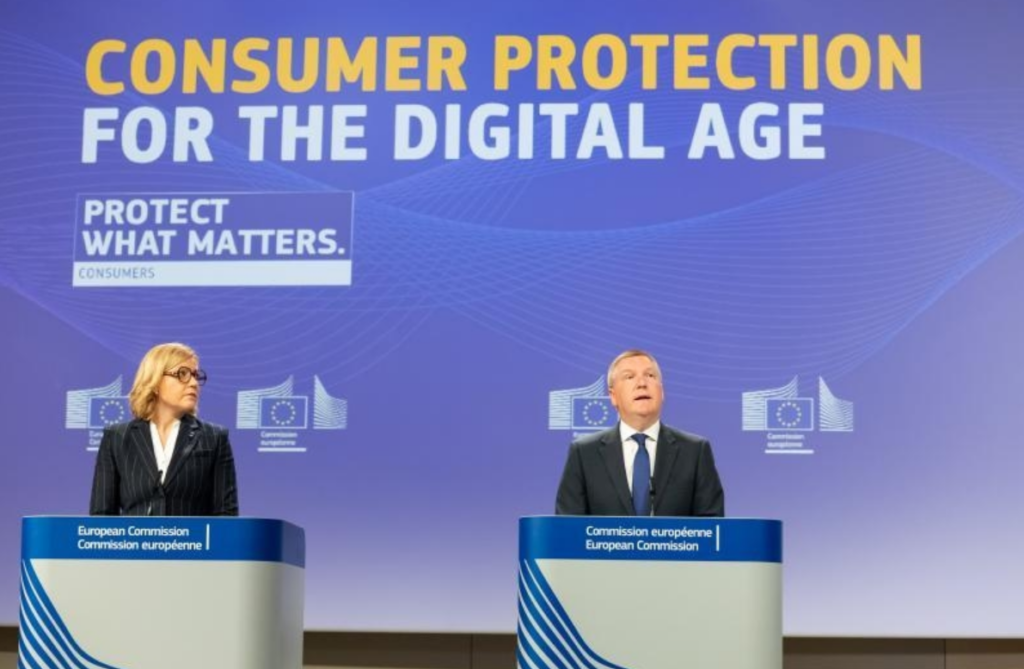
The European Commission has proposed a new Digital Fairness Act to update EU consumer protection rules for online shopping and digital services.
The package also includes a proposed revision of the Consumer Protection Cooperation (CPC) Regulation, which coordinates national consumer authorities in cross-border cases, the Commission informed in a statement on Wednesday.
It said that the plans are intended to give consumers the same level of protection online as offline, as e-commerce and digital services continue to expand.
It noted that unfair practices such as manipulative design and hidden fees can affect people’s ability to make informed choices.
Under the proposal, “dark patterns” — design tricks used to push people into decisions they might not otherwise make — would be banned, including false claims that a product is almost sold out.
The Commission said the draft law would require clearer pricing, including for purchases made using virtual in-app currencies, and for “dynamic pricing” for cultural and sporting events, where prices change in response to demand.
Companies running virtual queues would have to show the current price in real time and the highest possible price.
The proposal would also allow consumers to switch off “addictive design features” such as persistent prompts that can encourage excessive or compulsive spending, and would ban gambling-like features for minors such as “pay-to-win” and “pay-to-progress” mechanics.
A restriction would be introduced on unfair personalised advertising and pricing that targets minors or uses sensitive data, the Commission said.
Influencers would also have to clearly disclose commercial content, it added.
Stronger enforcement and fines for major cross-border cases
Alongside the Digital Fairness Act, the Commission proposed new enforcement powers in large-scale cases affecting consumers across the EU single market.
If agreed, the changes would allow the Commission to directly investigate certain cases and impose fines of up to 6% of a company’s worldwide annual turnover.
The proposals would also require non-EU companies to appoint a legal representative in the EU to cooperate with authorities.
The Commission said it expects the measures, taken together, to save EU consumers up to €13.7 billion a year.
Both proposals will now be discussed by the European Parliament and EU member states in the Council.
