
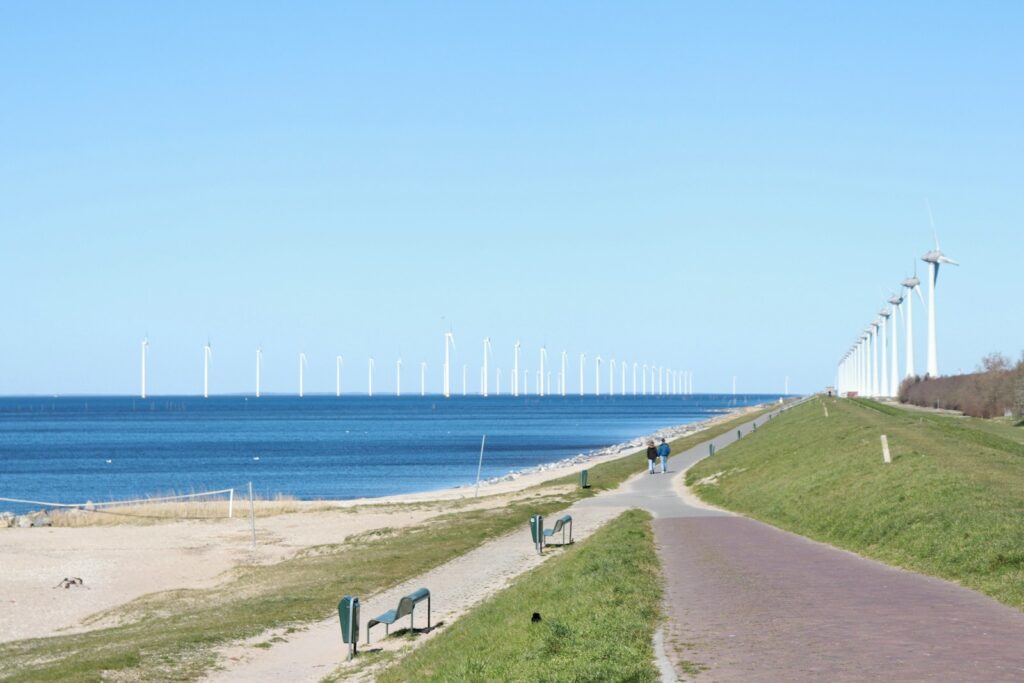
The European Commission has approved up to €9.5 billion in Dutch state aid to support renewable electricity production from two offshore wind farms in the North Sea.
The scheme will support the IJmuiden Ver Gamma-A and IJmuiden Ver Gamma-B wind farms, which together have a combined capacity of 2 gigawatts (GW) — enough to generate up to 7,441 gigawatt hours (GWh) of renewable electricity a year, the Commission informed on Tuesday.
The Netherlands notified the measure under a scheme called Tijdelijk Ondersteuningsmechanisme Windenergie Op Zee, or TOWOZ.
Two offshore wind tenders are due to be organised before July 2027, with any support paid for 15 years from the start of operations, which is expected in 2032.
Under the tender process, companies can either bid to develop the projects without aid by offering a concession payment to the Dutch state, or request an aid premium to develop the sites.
Only if there are no bids offering a concession payment will the Dutch government consider bids that request an aid premium.
How the support would work
If aid is needed, it would take the form of a variable premium paid on top of market revenues when electricity prices are too low to cover production costs, the Commission said.
Safeguards in the scheme include a bid cap and a claw-back mechanism requiring some aid to be repaid if market prices rise above the contracted “strike price” — the agreed price used to calculate support payments.
The Netherlands estimates the two projects together will avoid around 147 million tonnes of CO2 equivalent over their lifetime.
The scheme was approved under EU state aid rules that allow support for certain economic activities under set conditions, and under EU guidelines for climate, environmental protection and energy aid.
